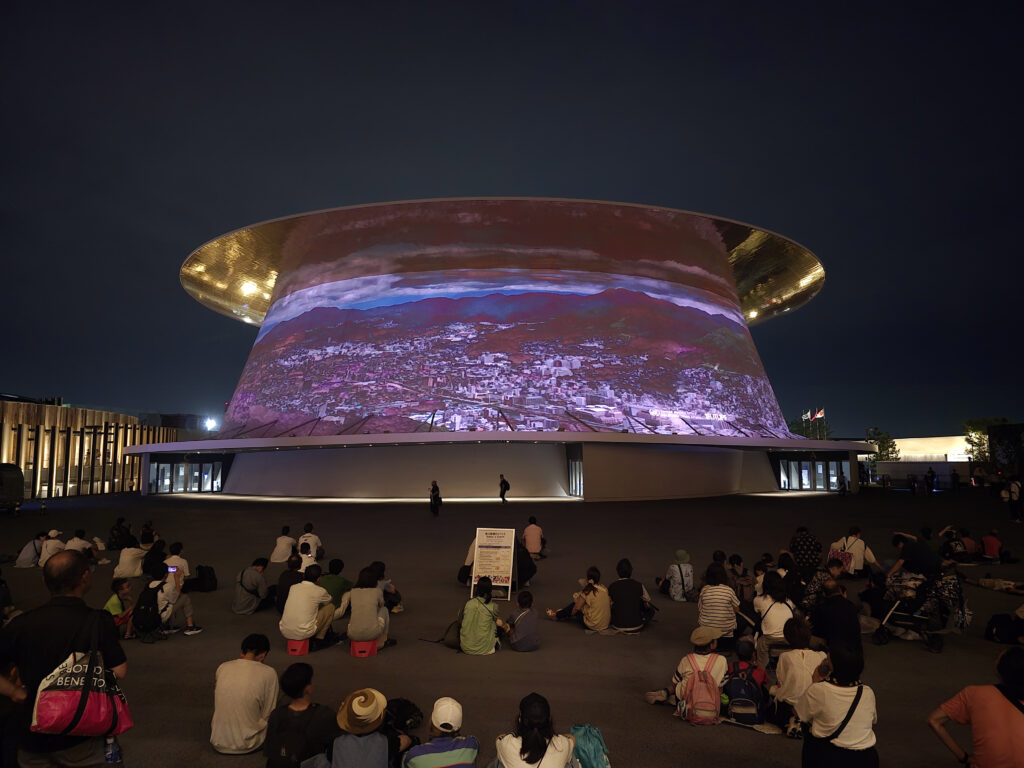
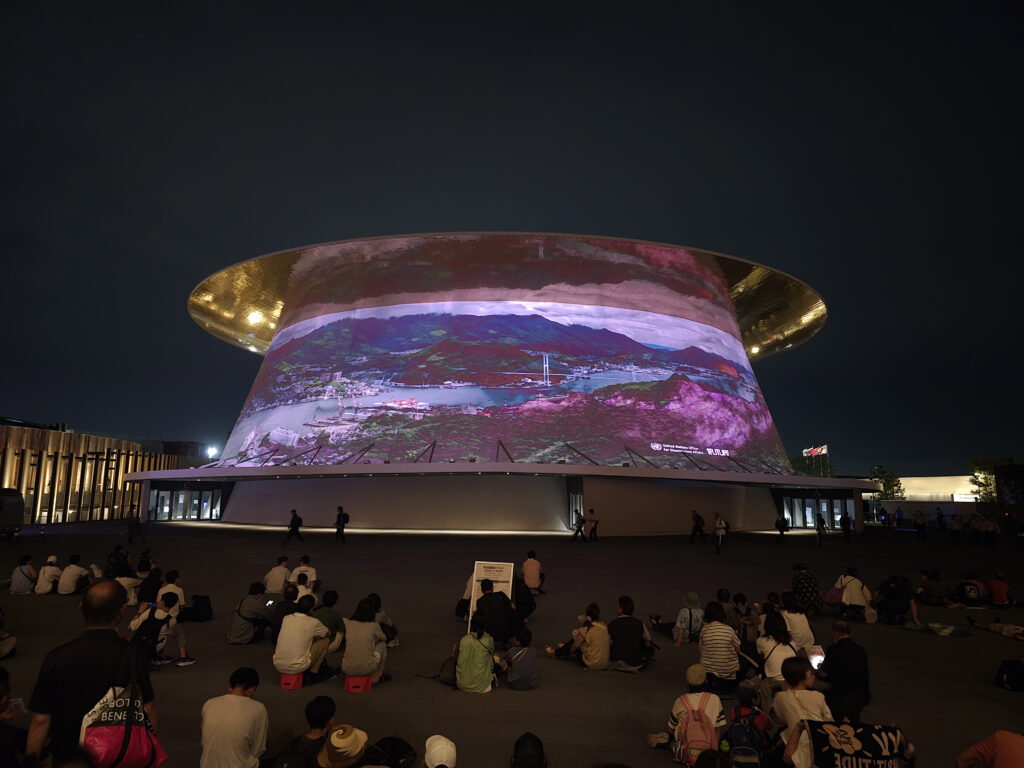
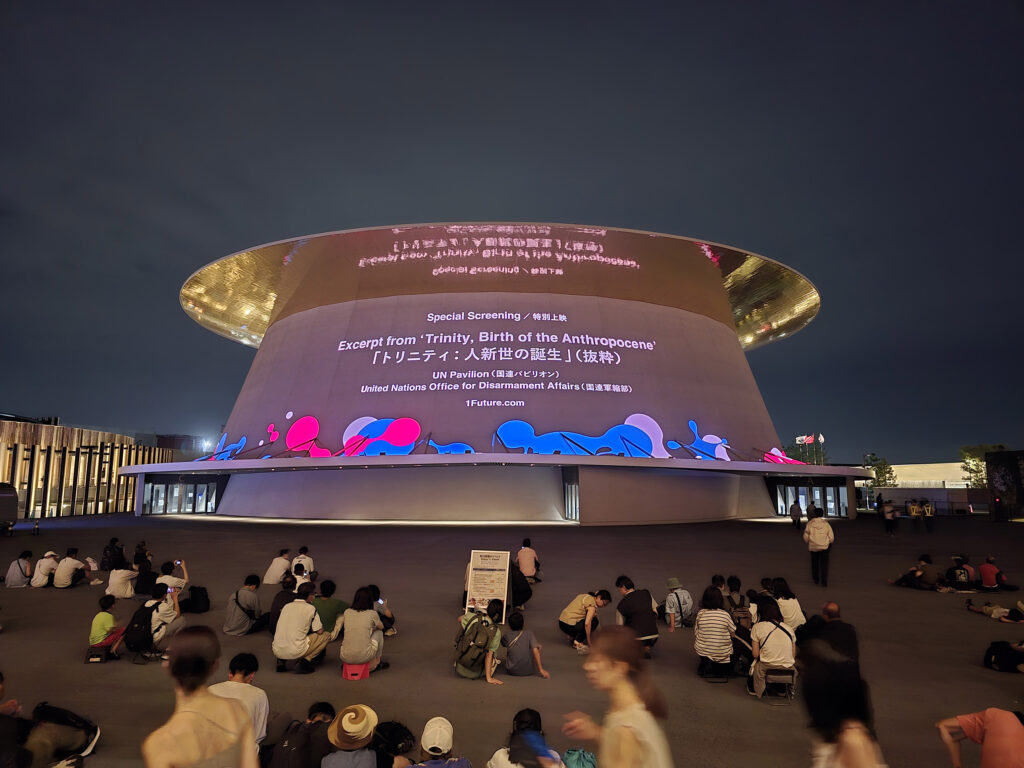
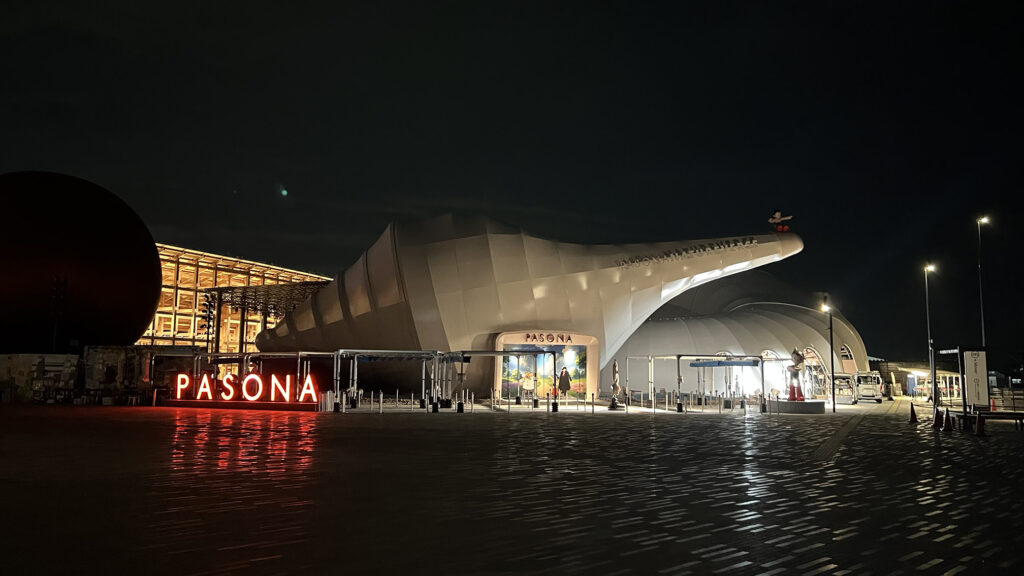
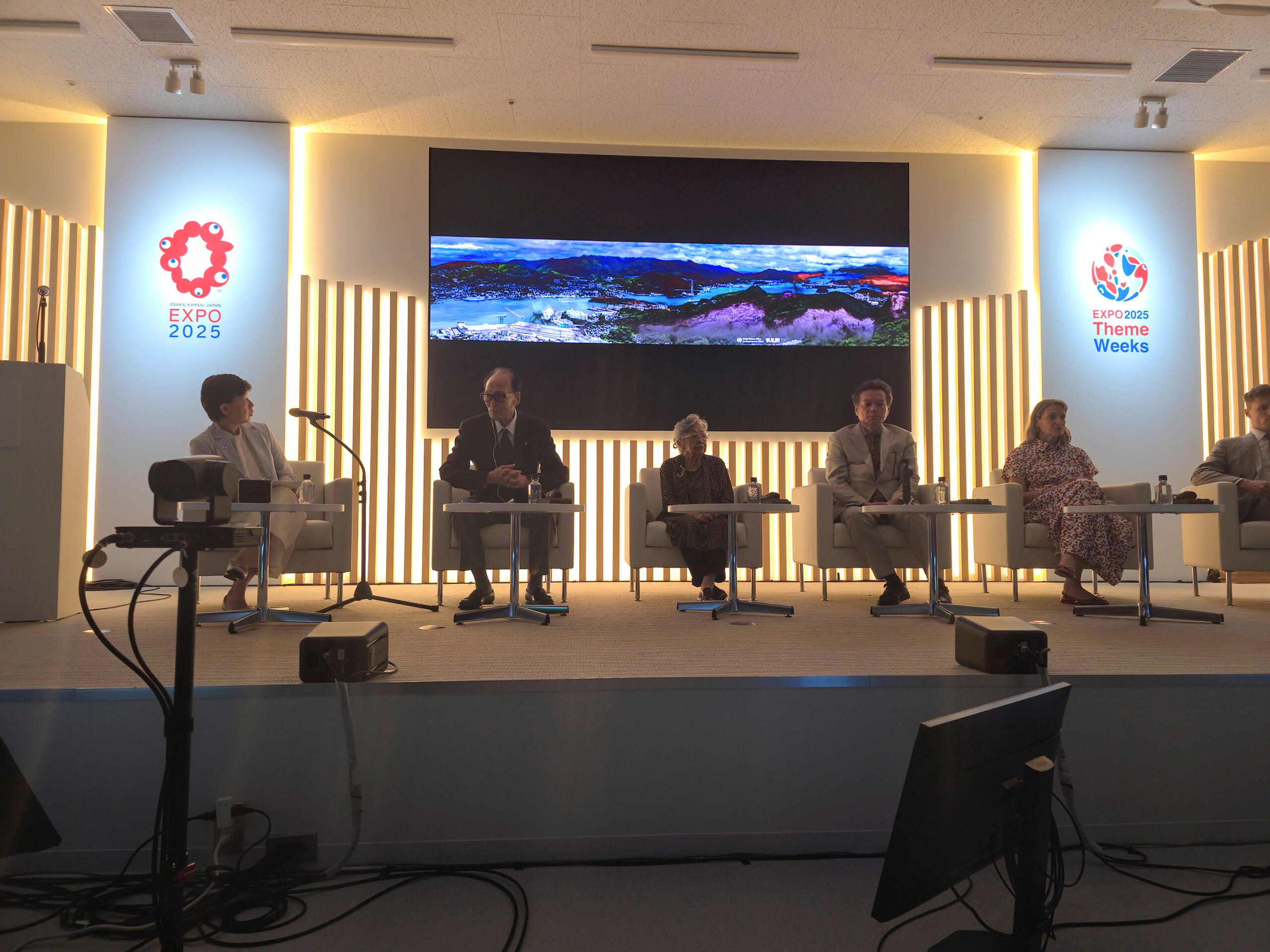
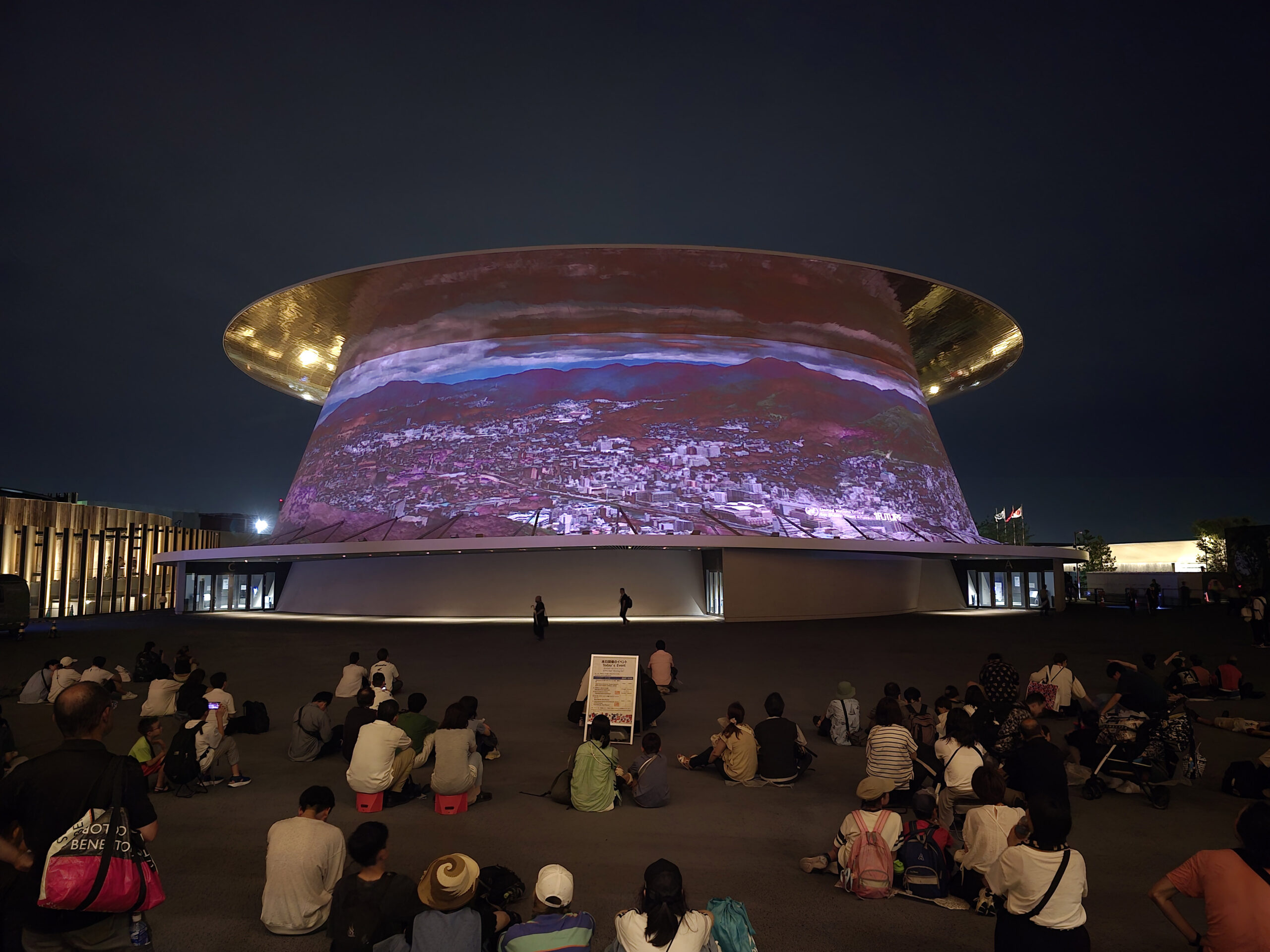
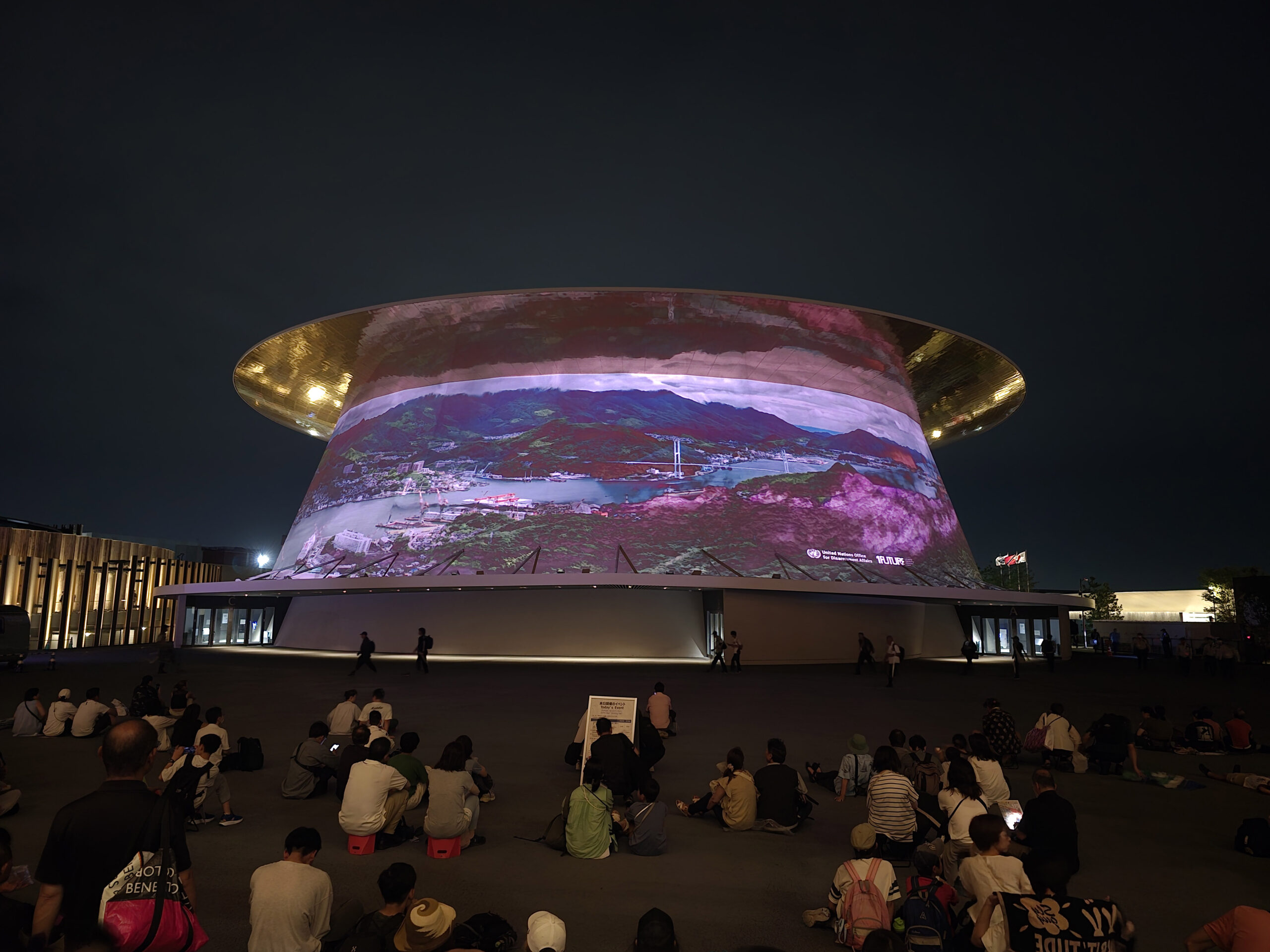
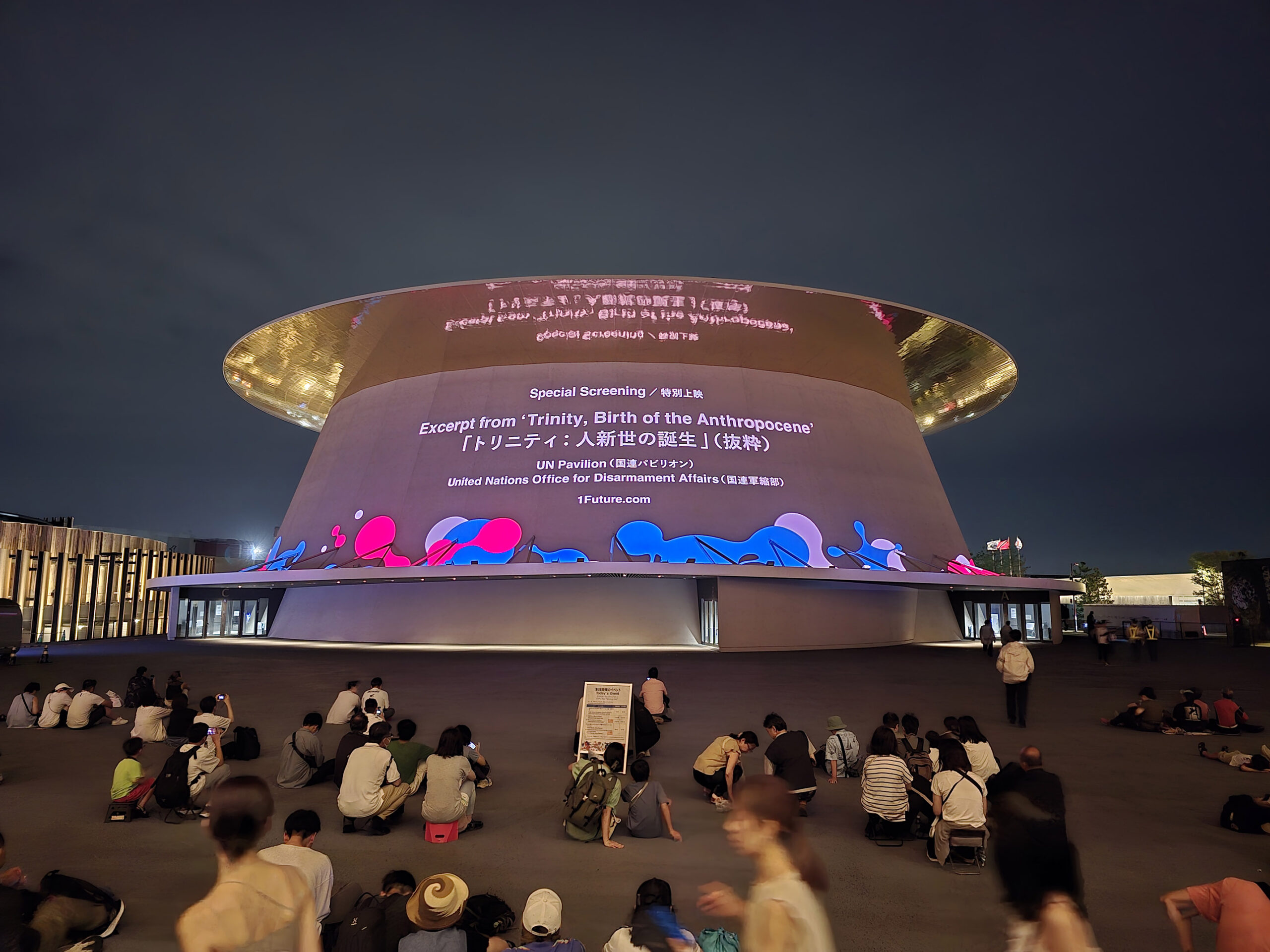
The Osaka World Expo, the enormous world fair built on a harbor island in Osaka, Japan, had a theme of sustainability. Nations and large organizations like the United Nations built pavilions, which represented their interpretation/philosophy of sustainability. Each pavilion had its regional style, generally designed by a national architect. It was pretty fantastic, and very crowded. This may sound cynical, but it was like the Olympics of virtue signaling, with each pavilion showing off what that nation or region was doing to protect our futures (what I take “sustainability” to mean). It is important for us to understand what all of the people of the world consider to be sustainability. I think the only way we will make a sustainable future is by empowering individuals to come to their own solutions, and that means more than separating our plastics for recycling. One really important way for us to sustain our one future is to consider the plight of nuclear disarmament. Once a front page issue, there are currently no official plans for international discussions, nor solid ideas how to convene: the United States (Still the only nuclear power to use an A-bomb in anger); Russia; and China, which is steadily compiling a Cold War era number of bombs. There was a certain stability with 2 main nuclear powers, a balance, that held (with extreme luck on several occasions) for 50 years during the Cold War. Everyone has heard of the inherent instability of the three body problem. This is the world we live in today. We must do everything in our power to reduce, and eventually remove this threat.
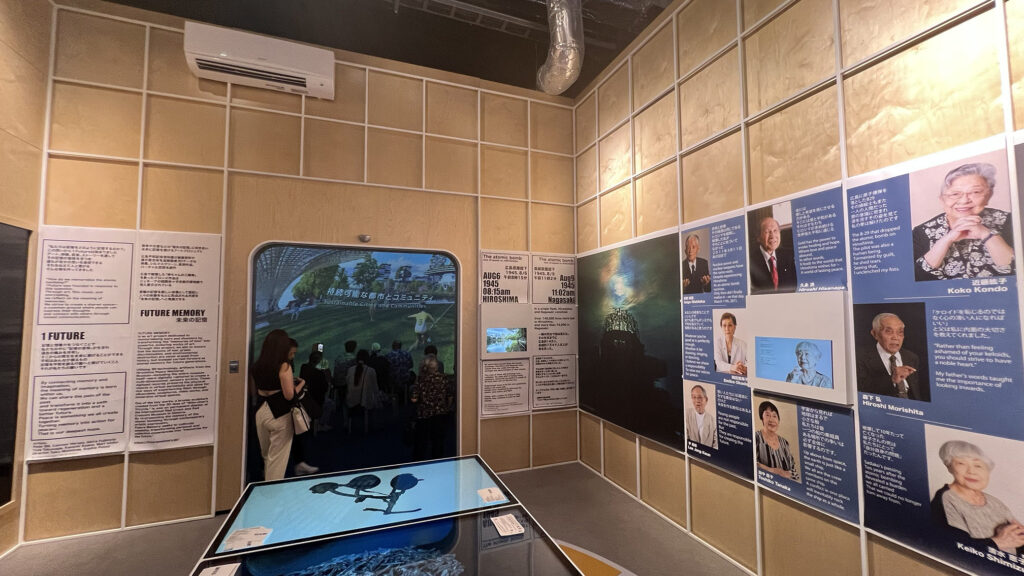
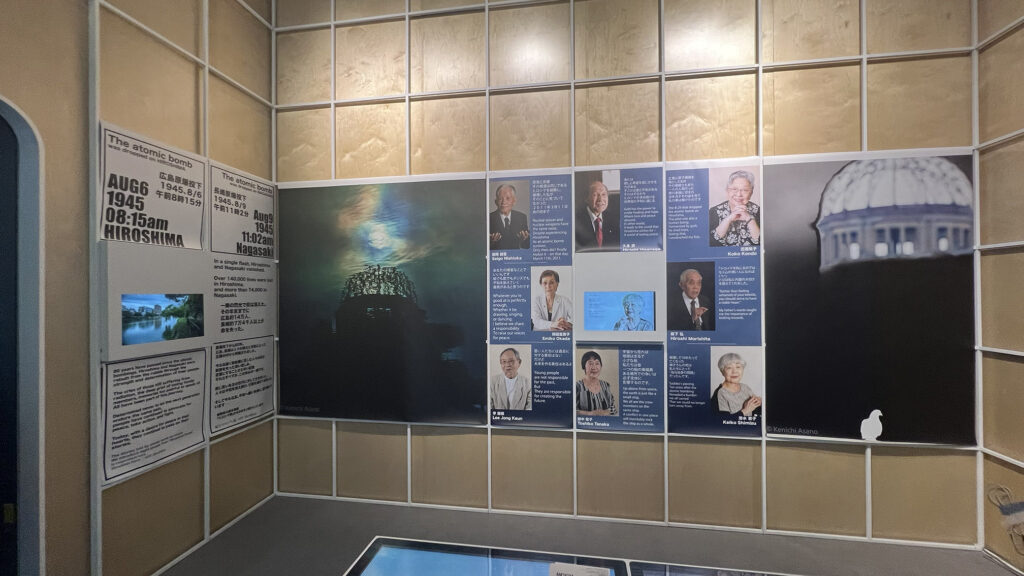
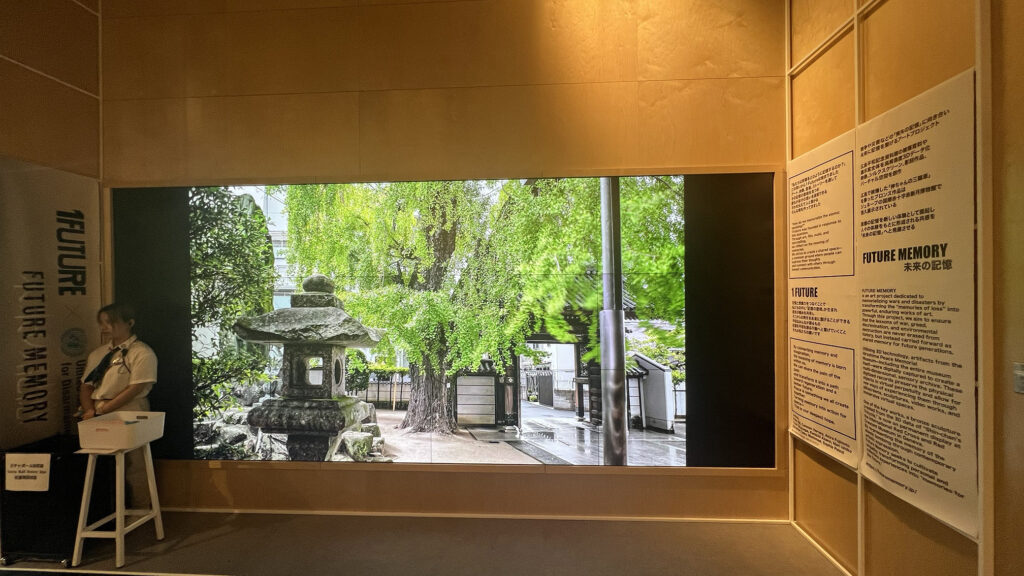
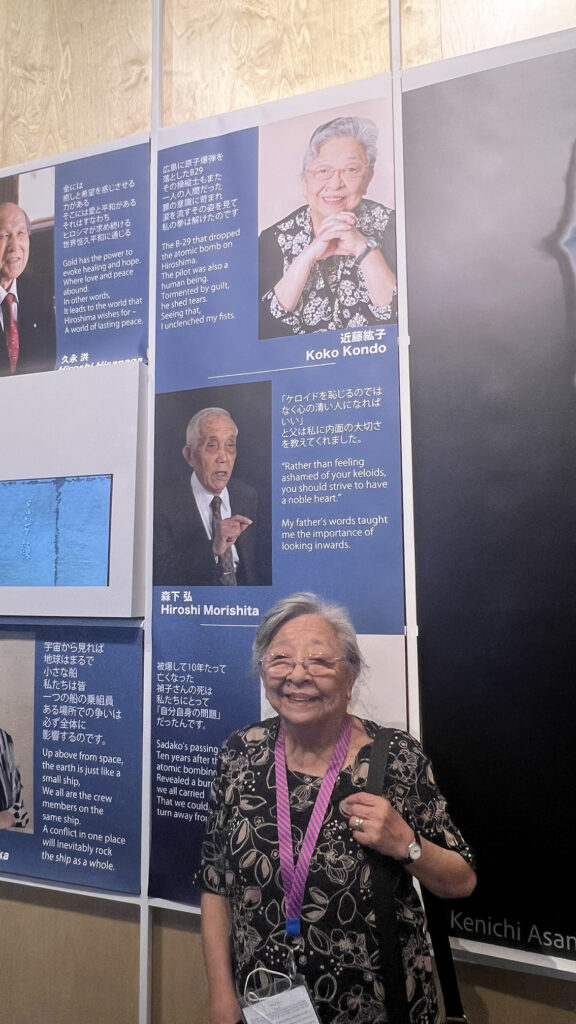
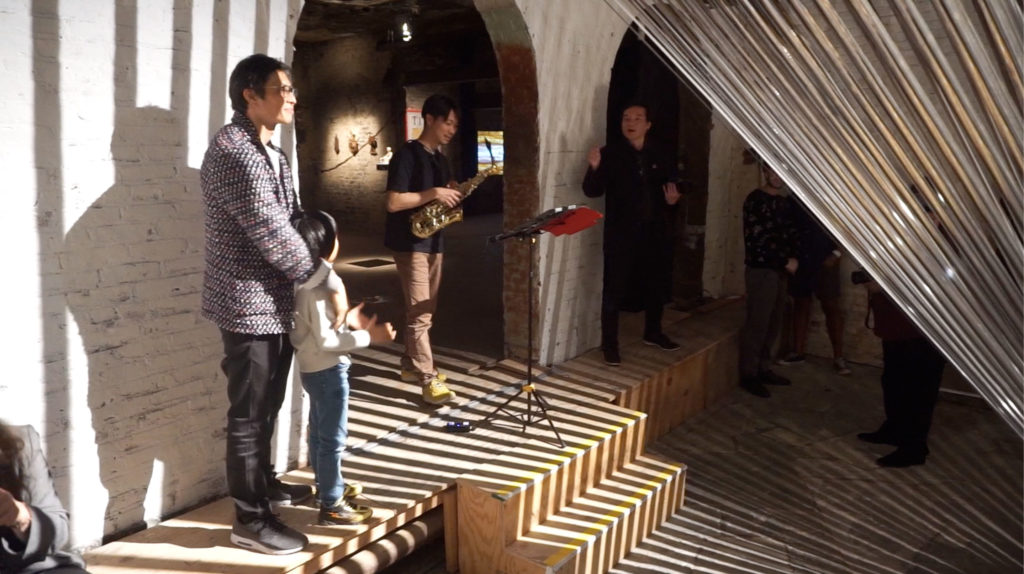
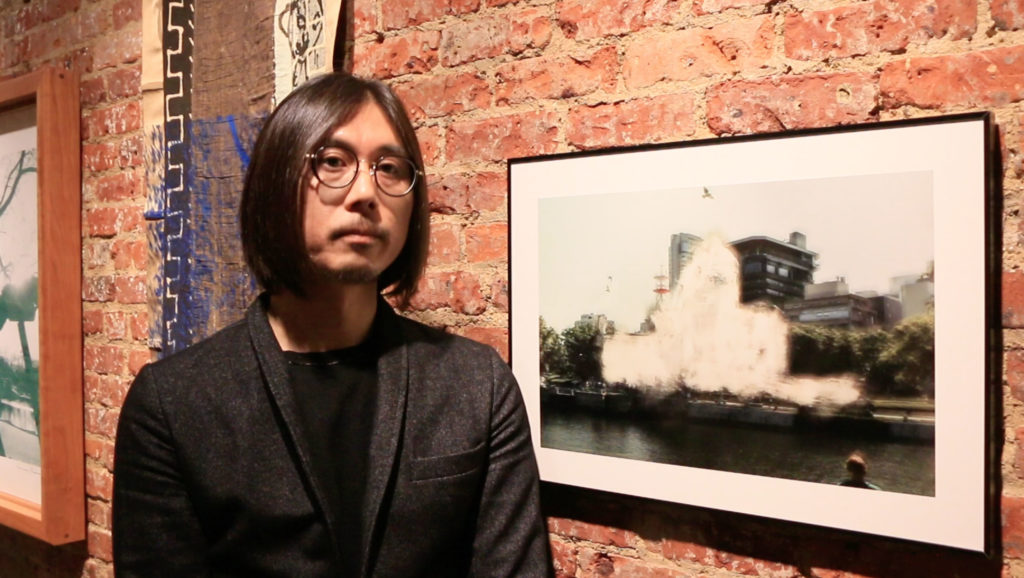
UNODA x 1FUTURE designed and curated by Mari Ishiko:
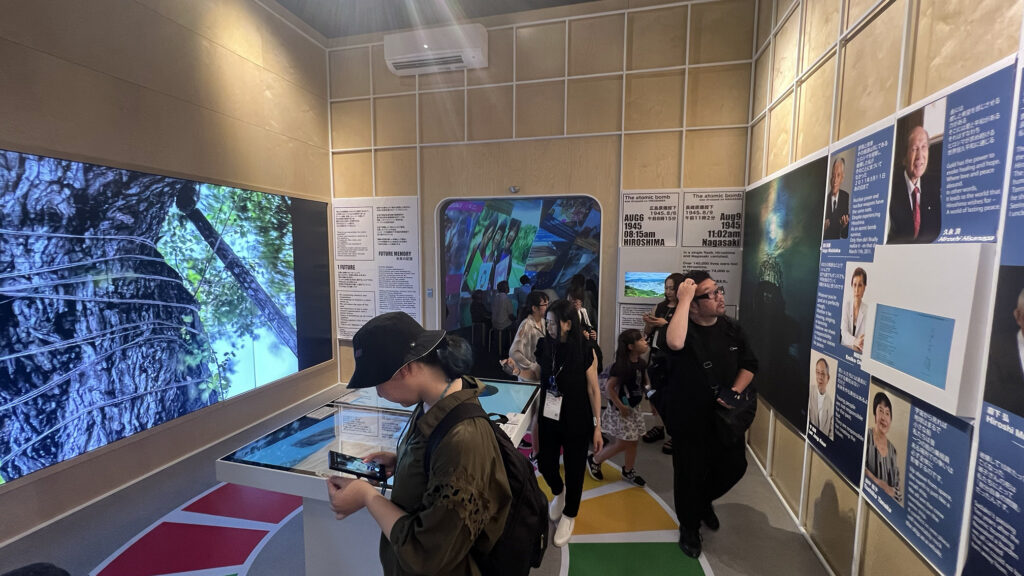
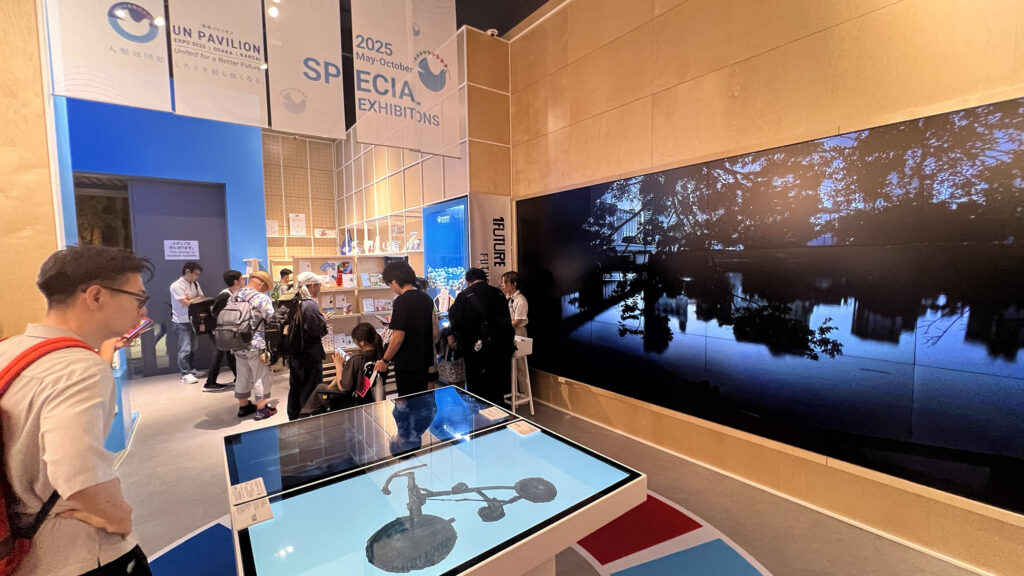
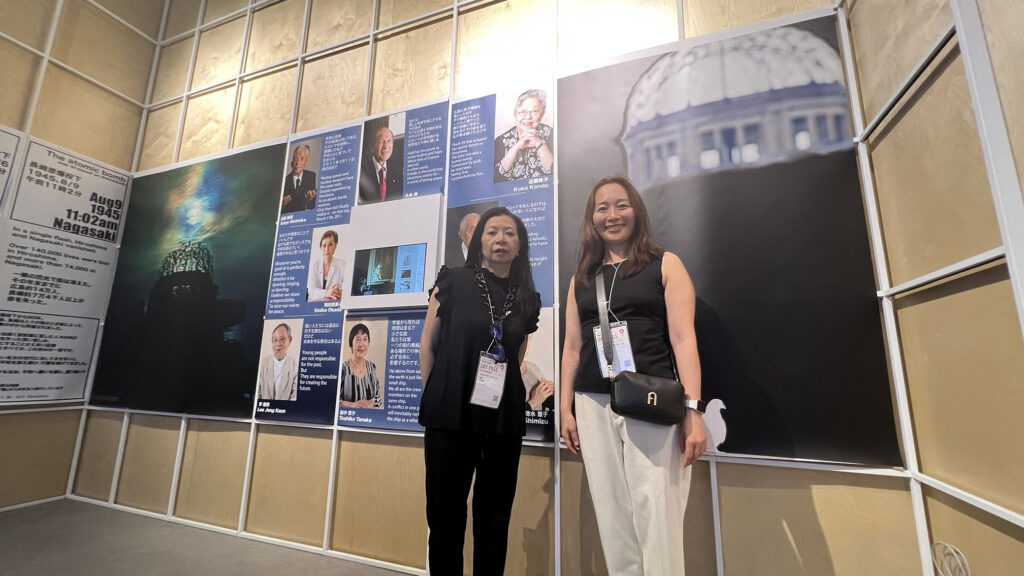
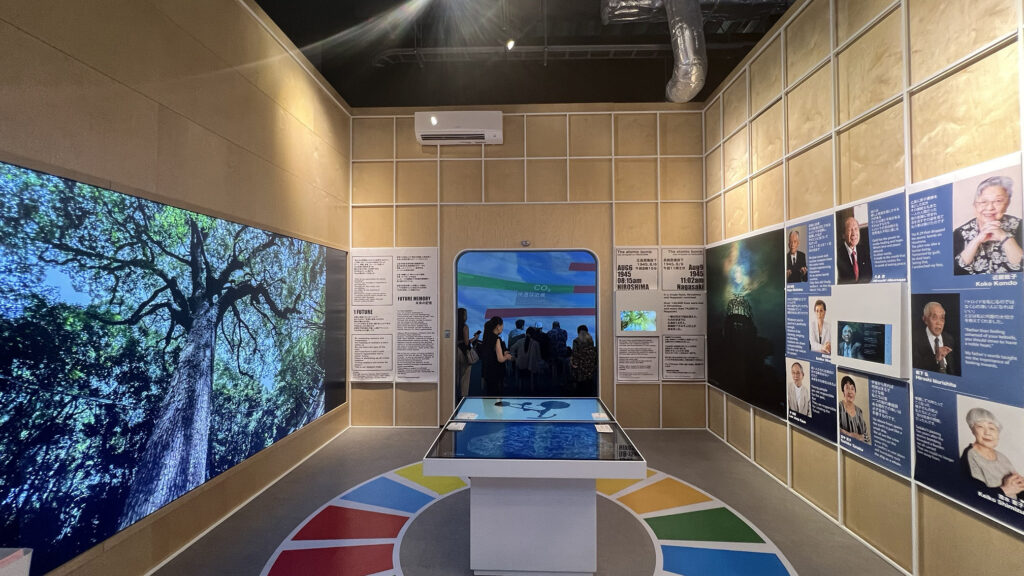
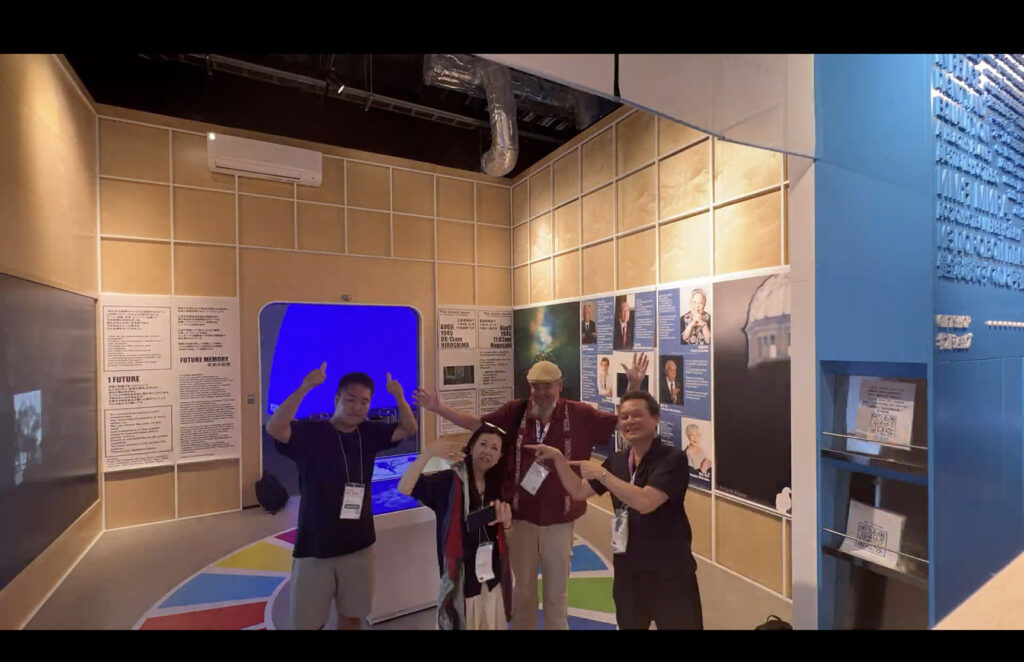
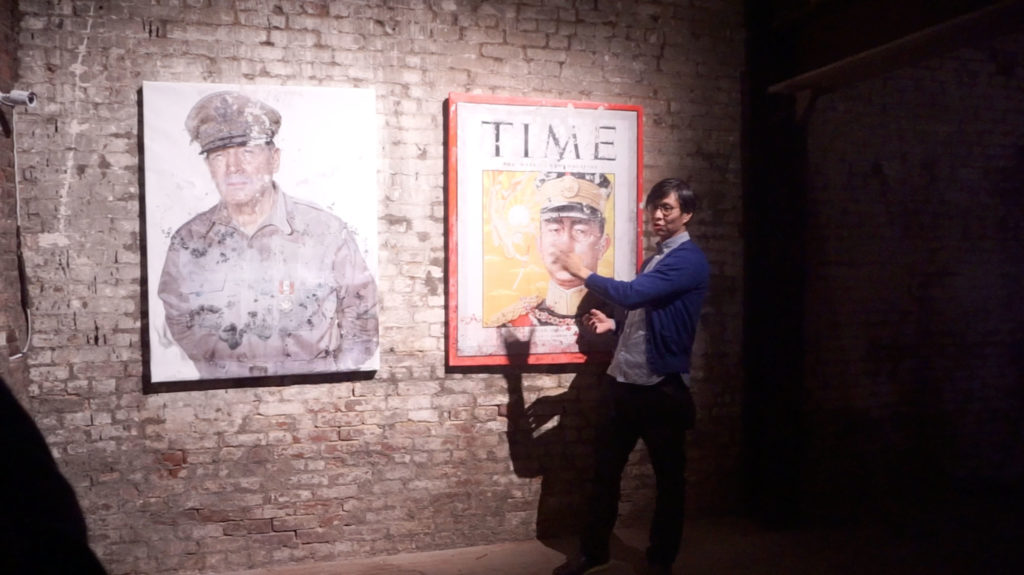
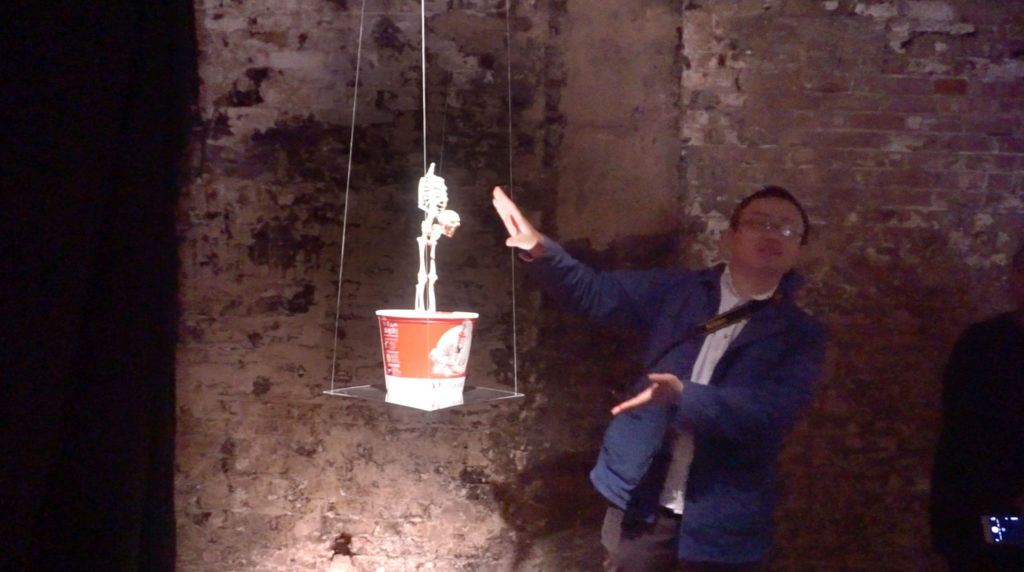
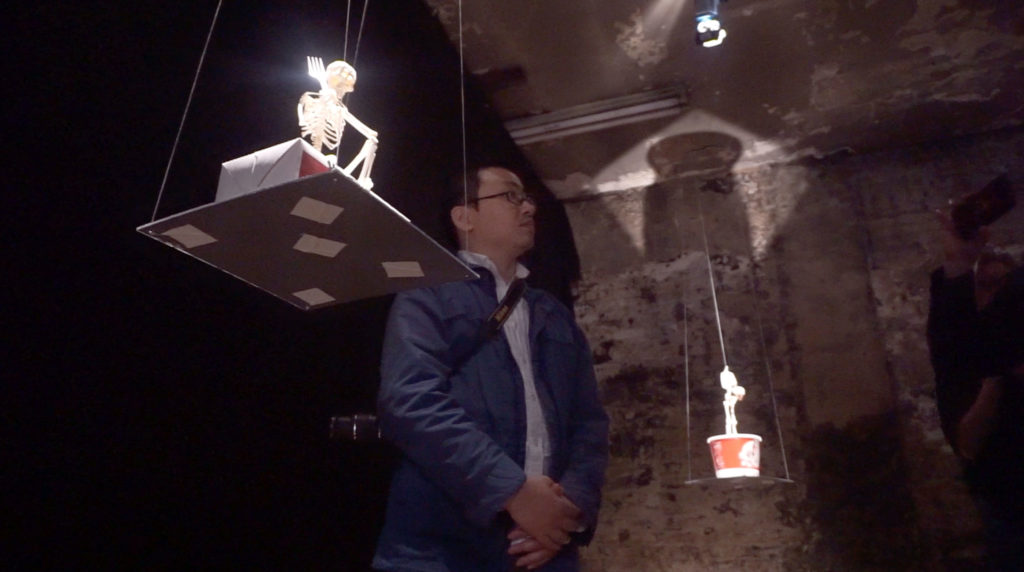
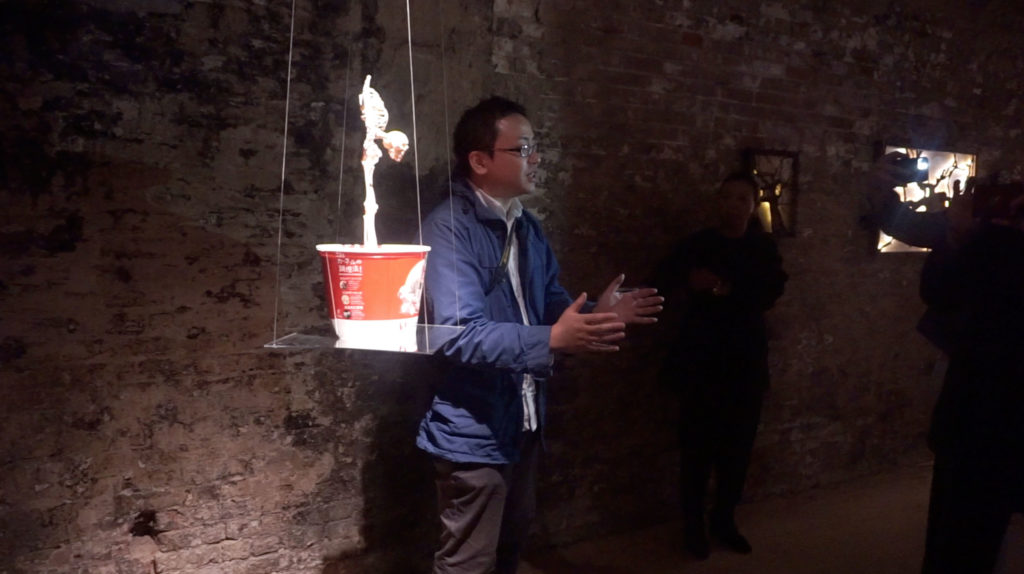
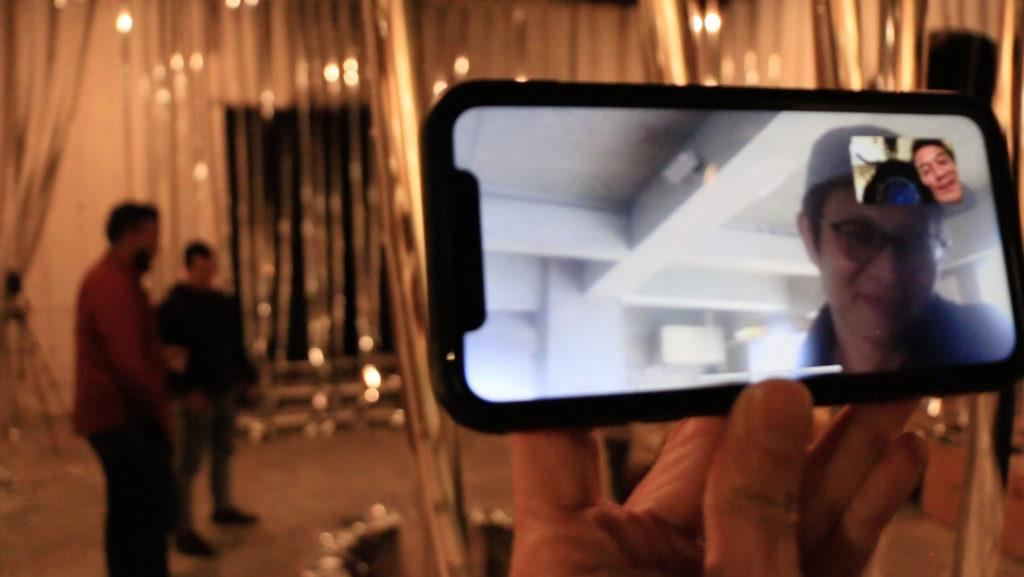
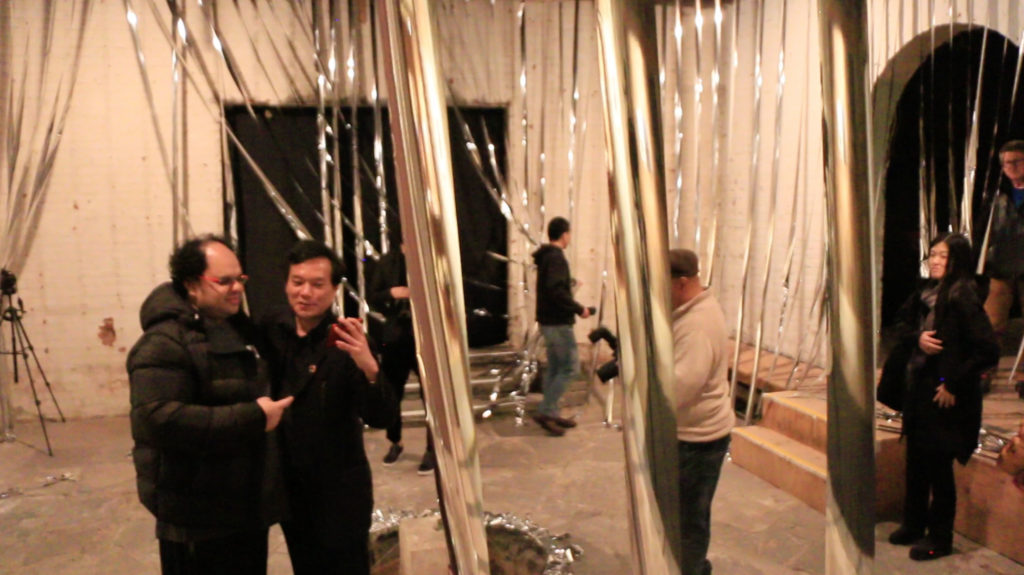
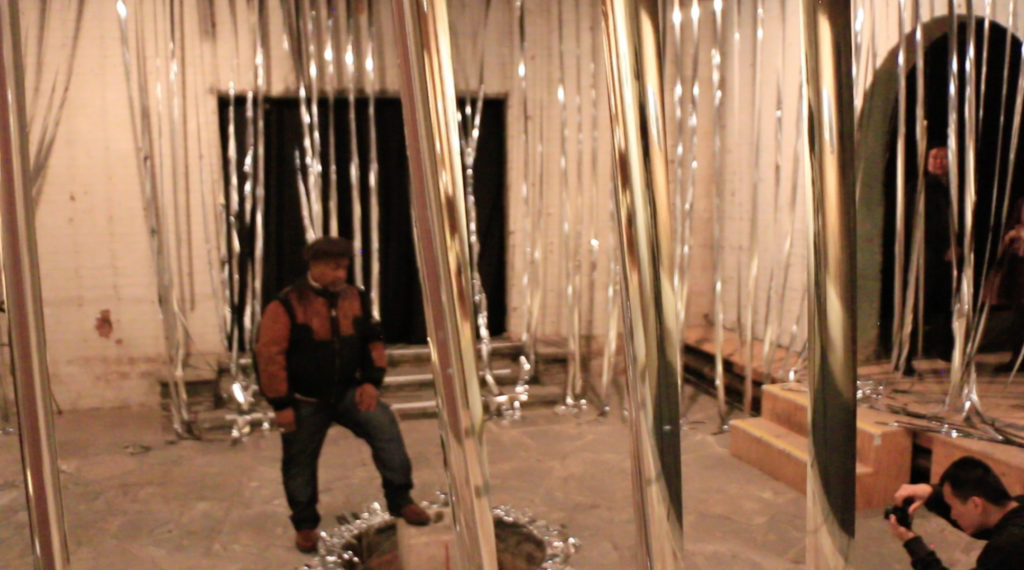
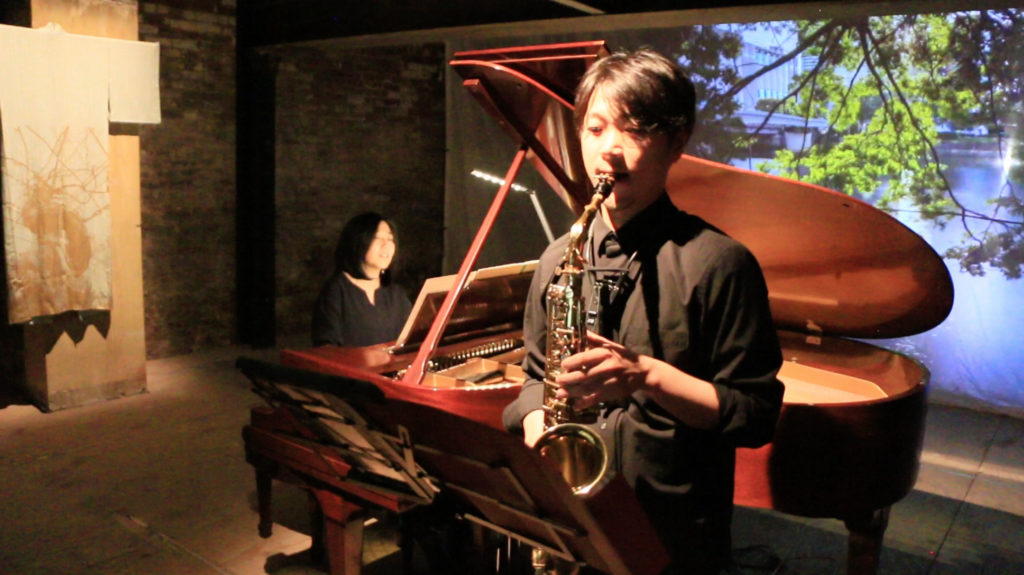
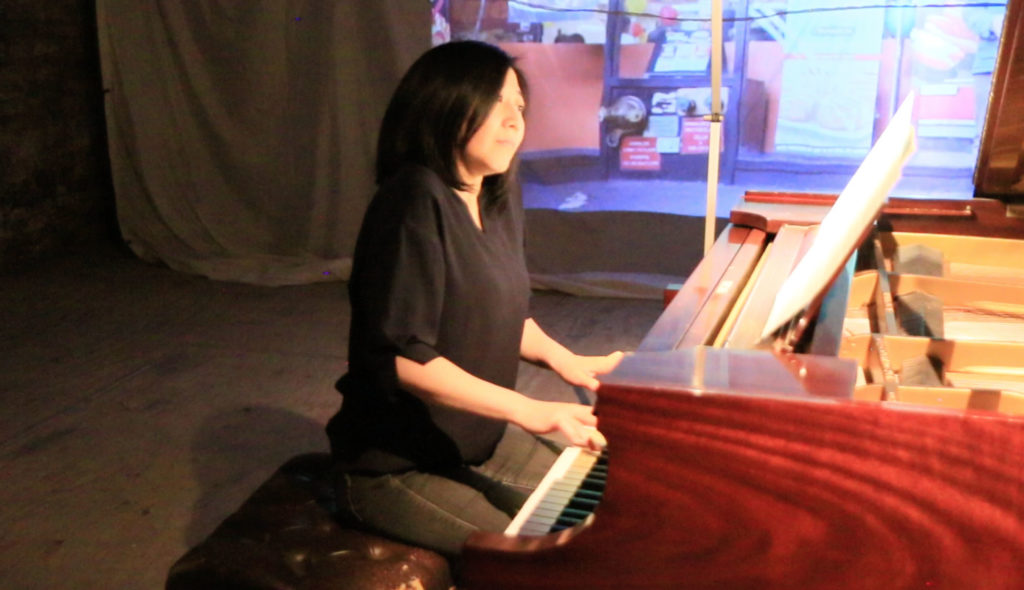
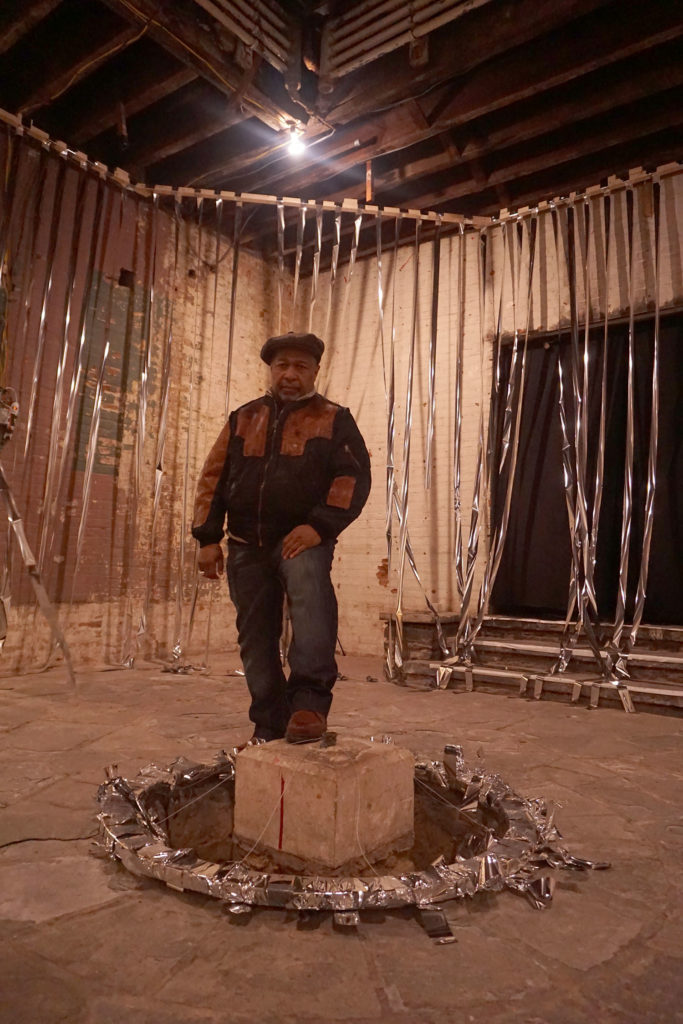
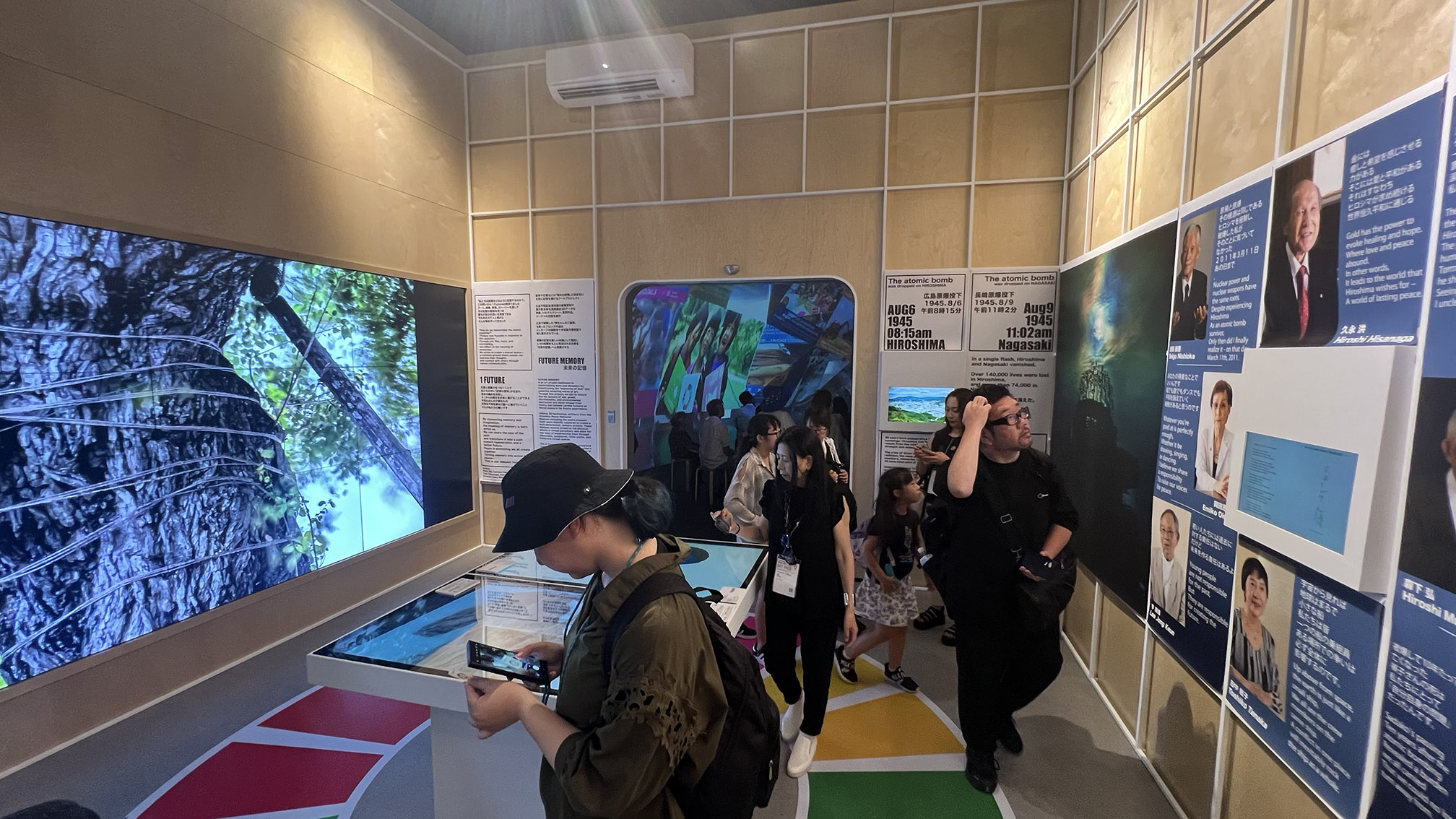
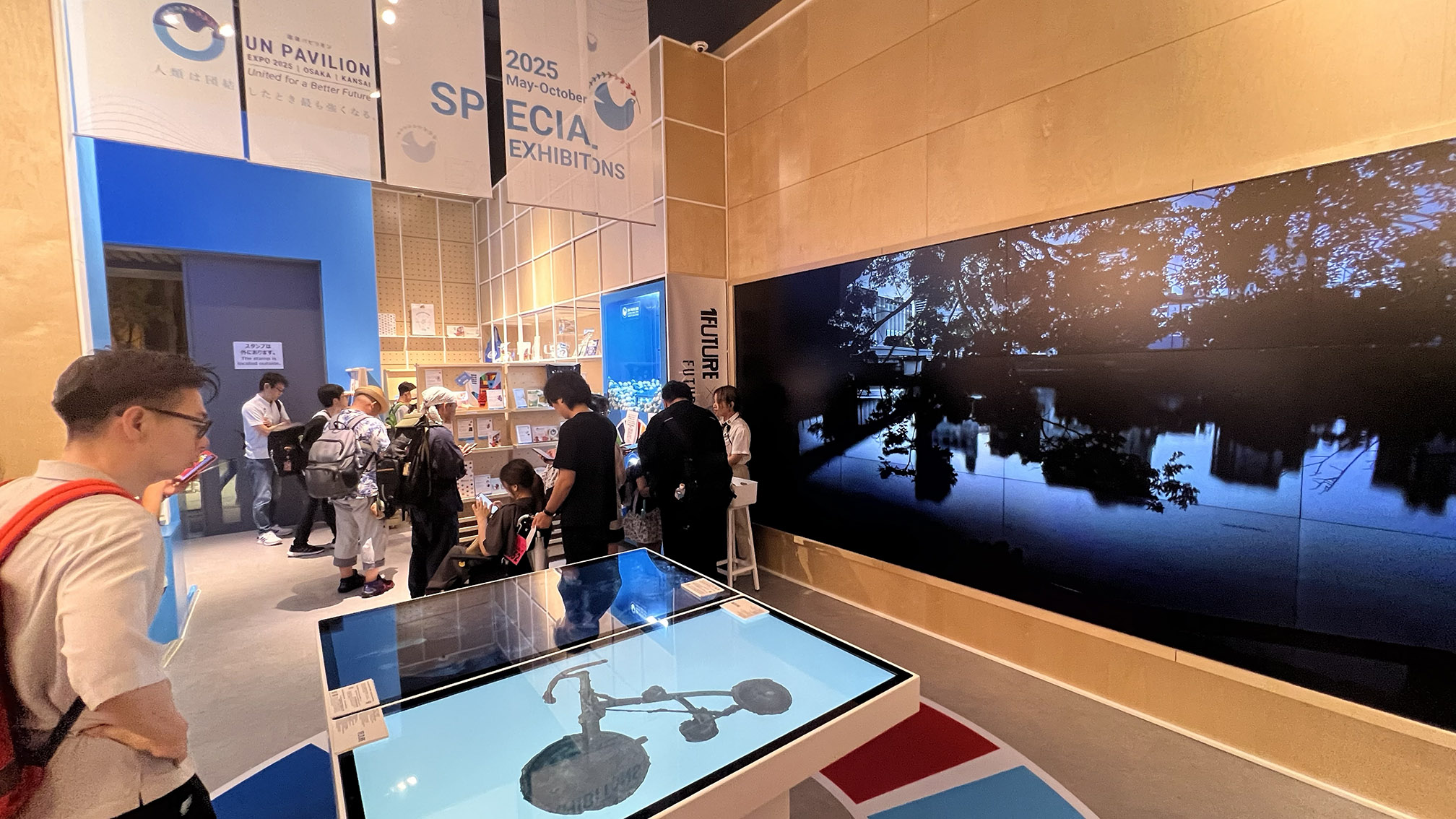
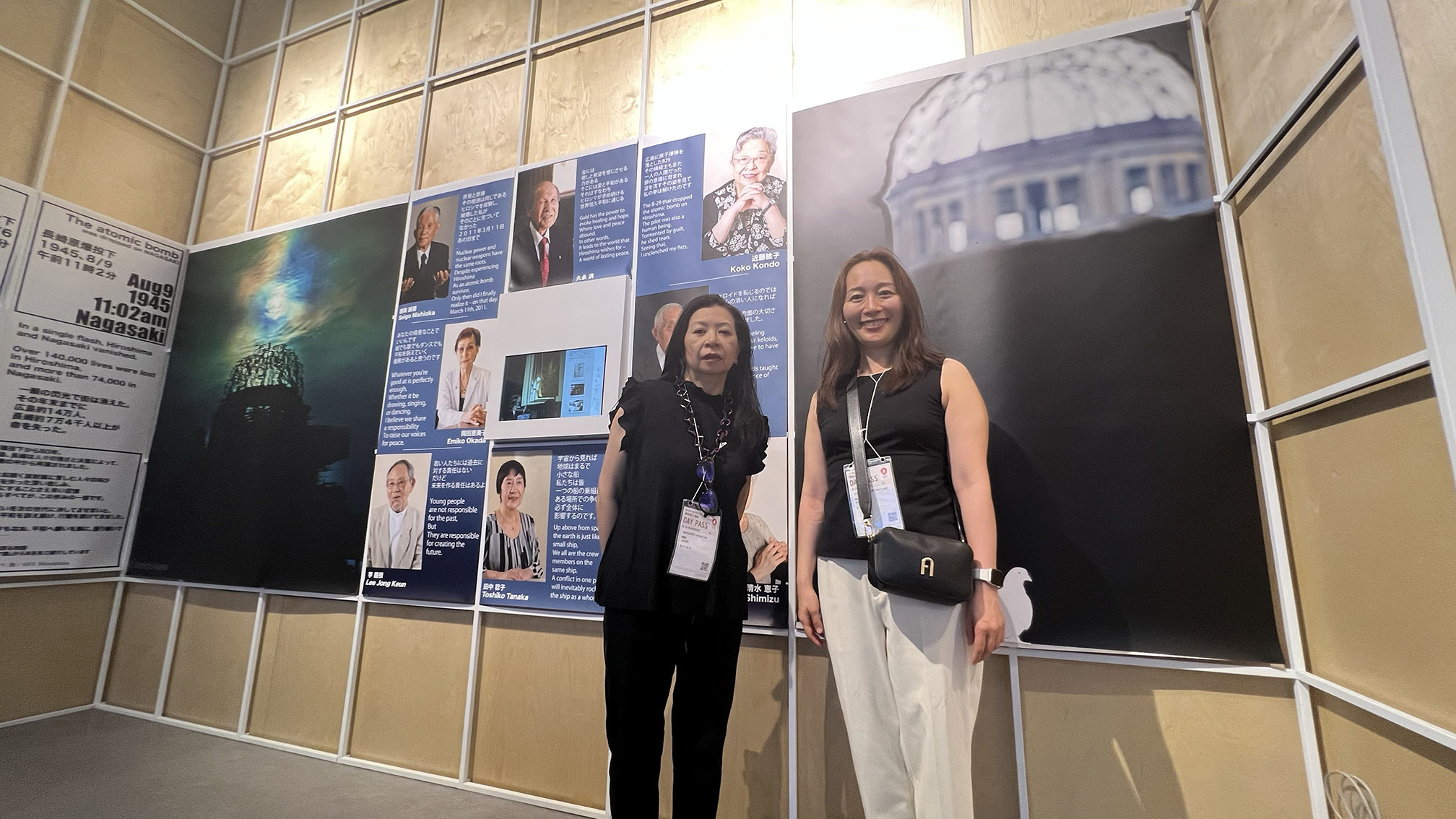
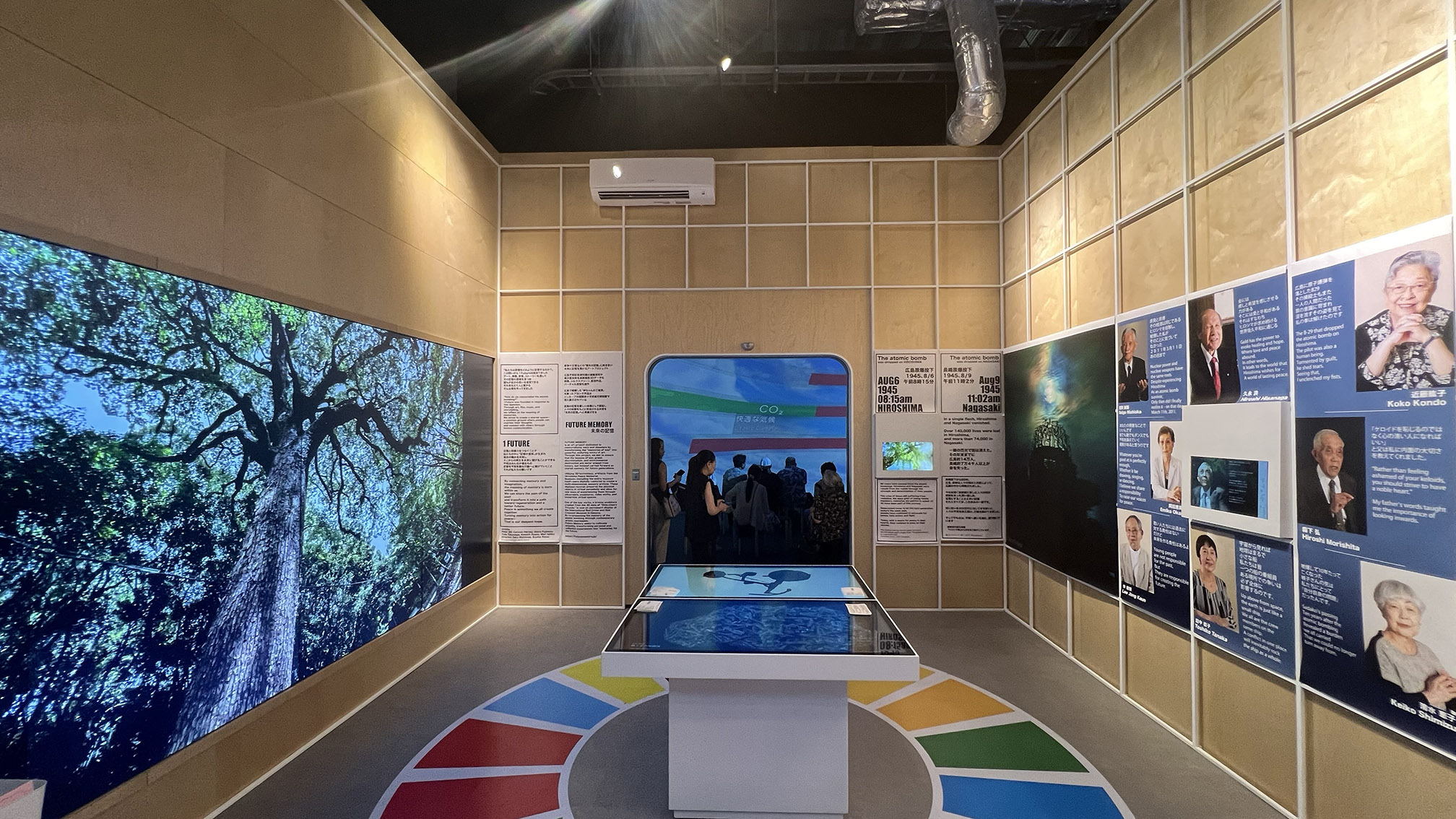
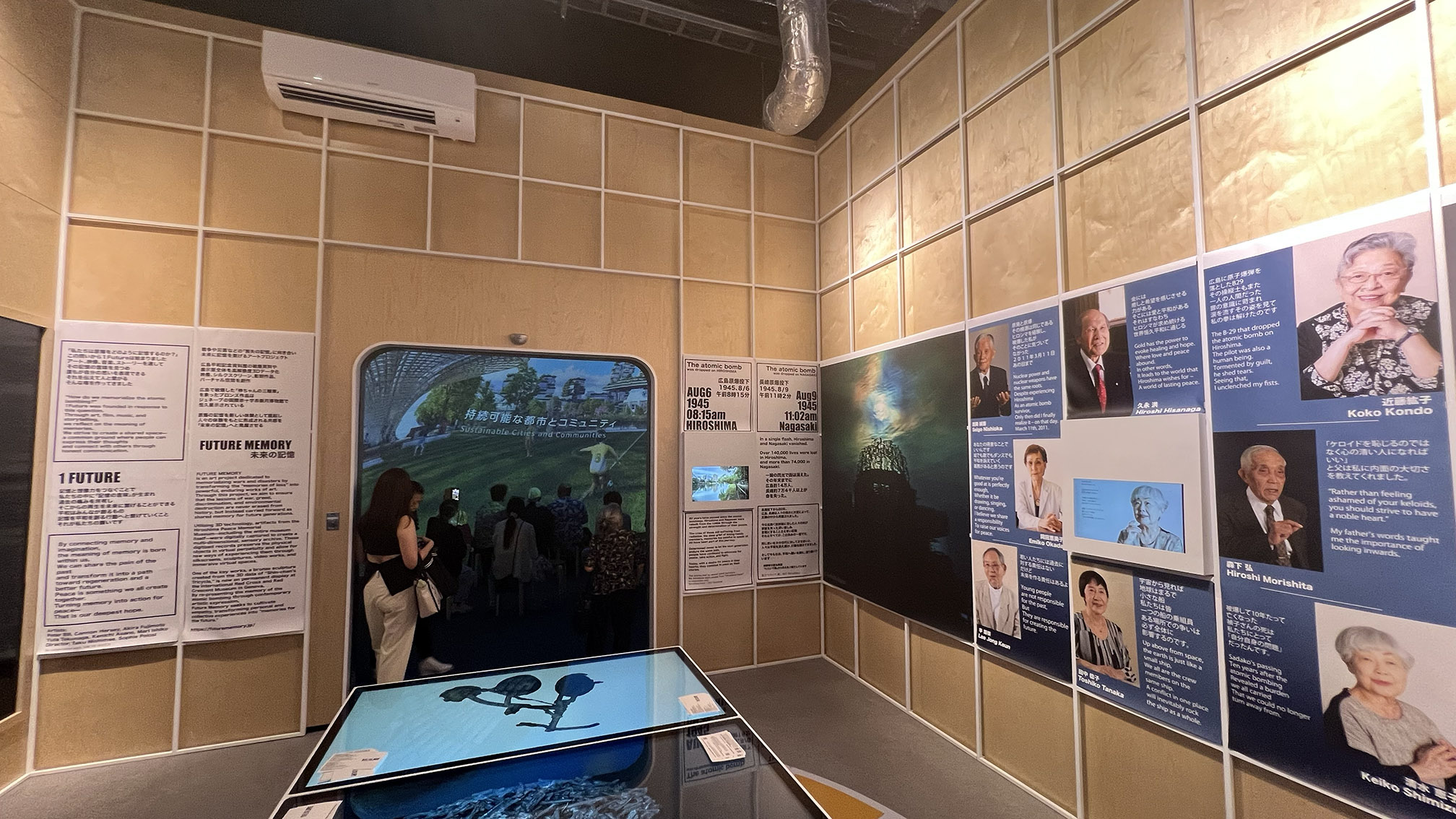
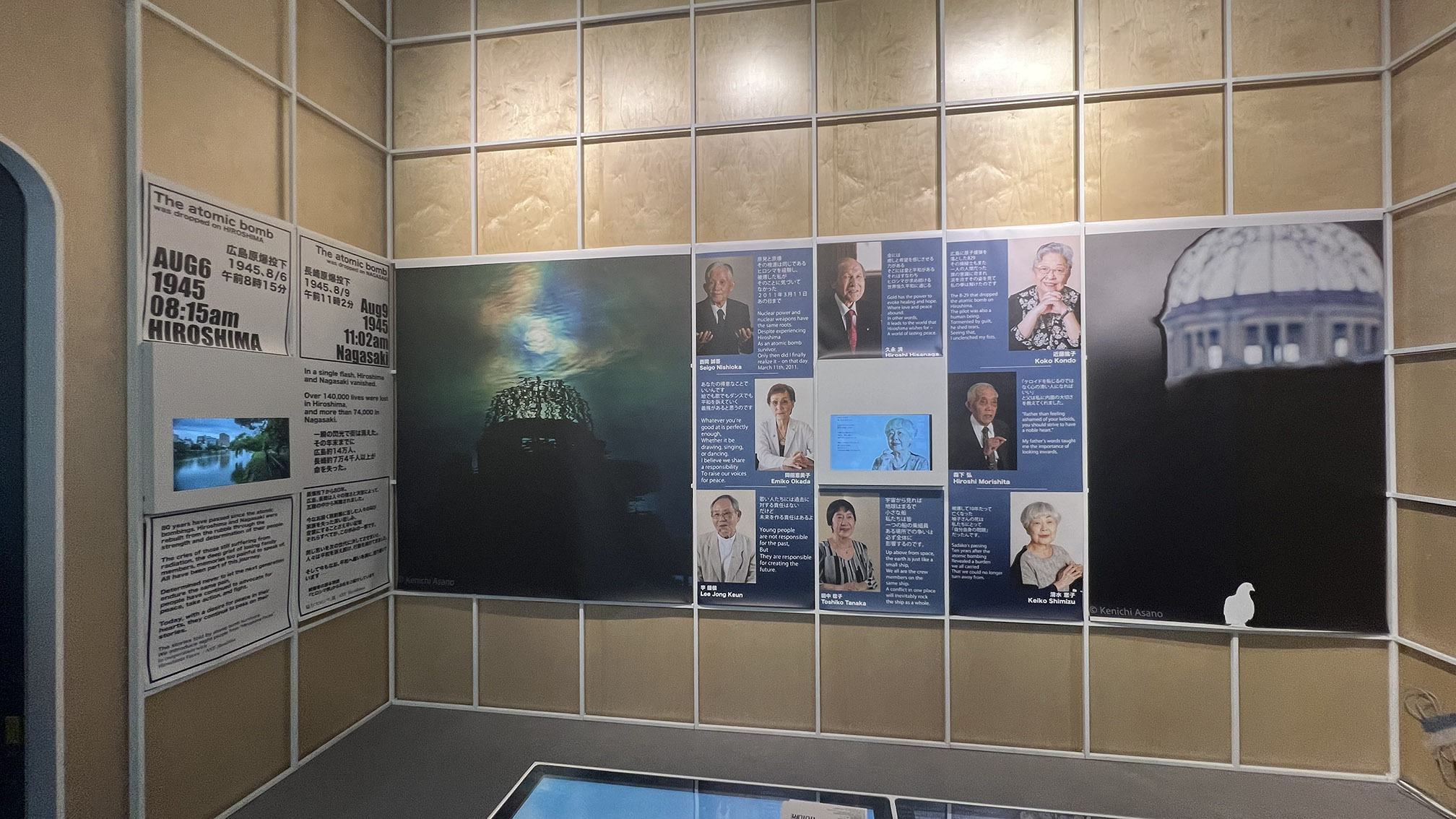
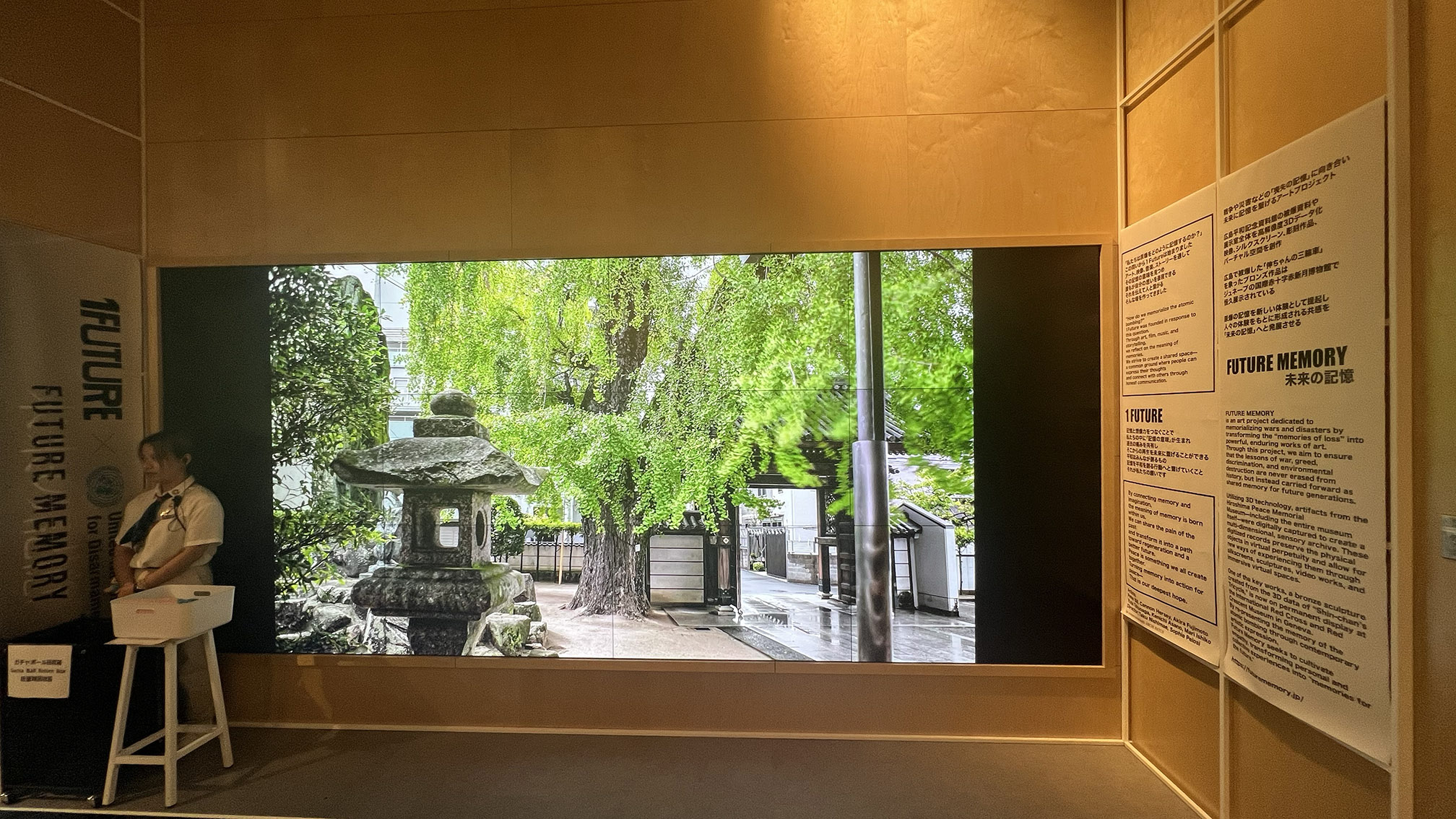
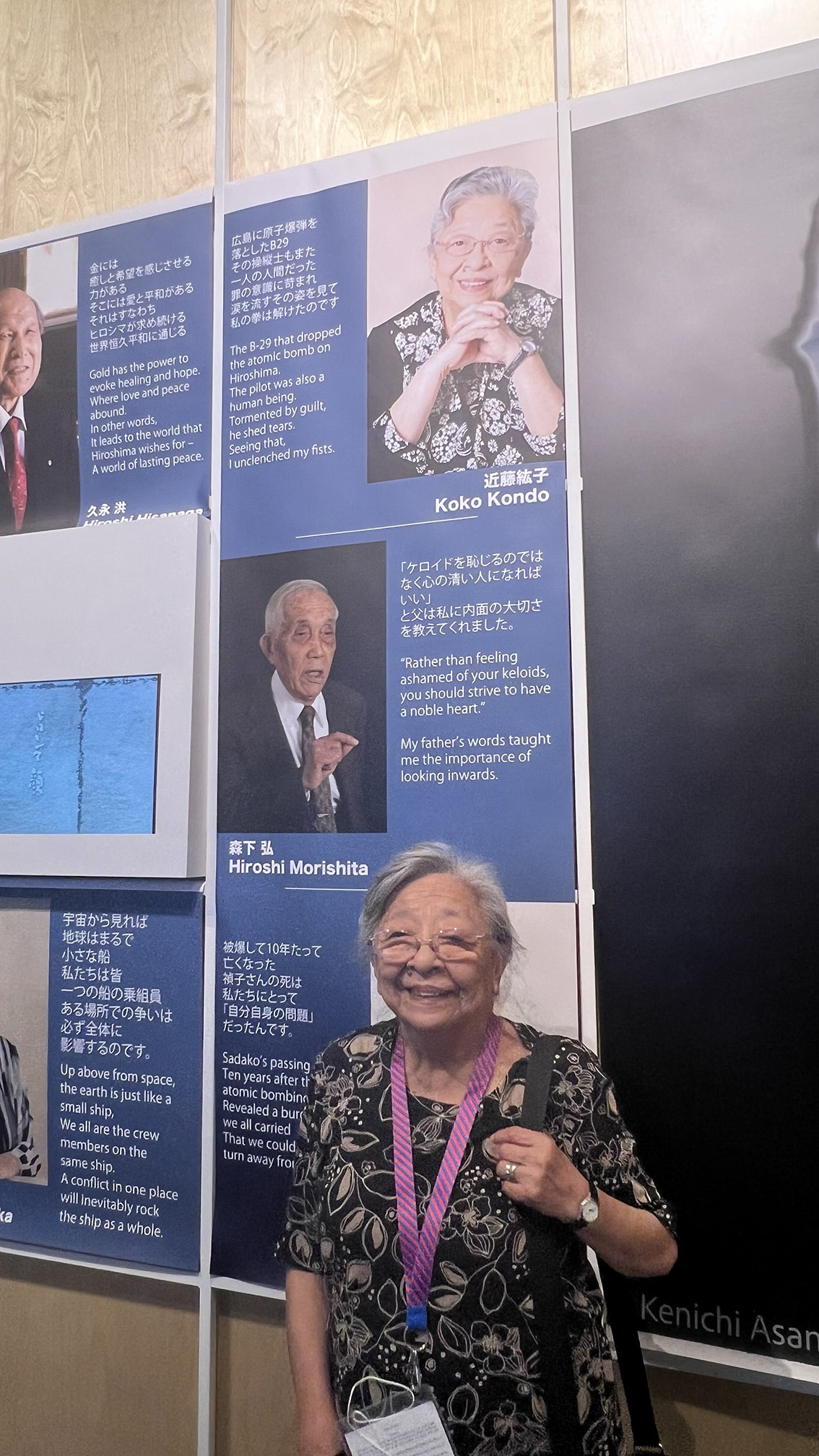
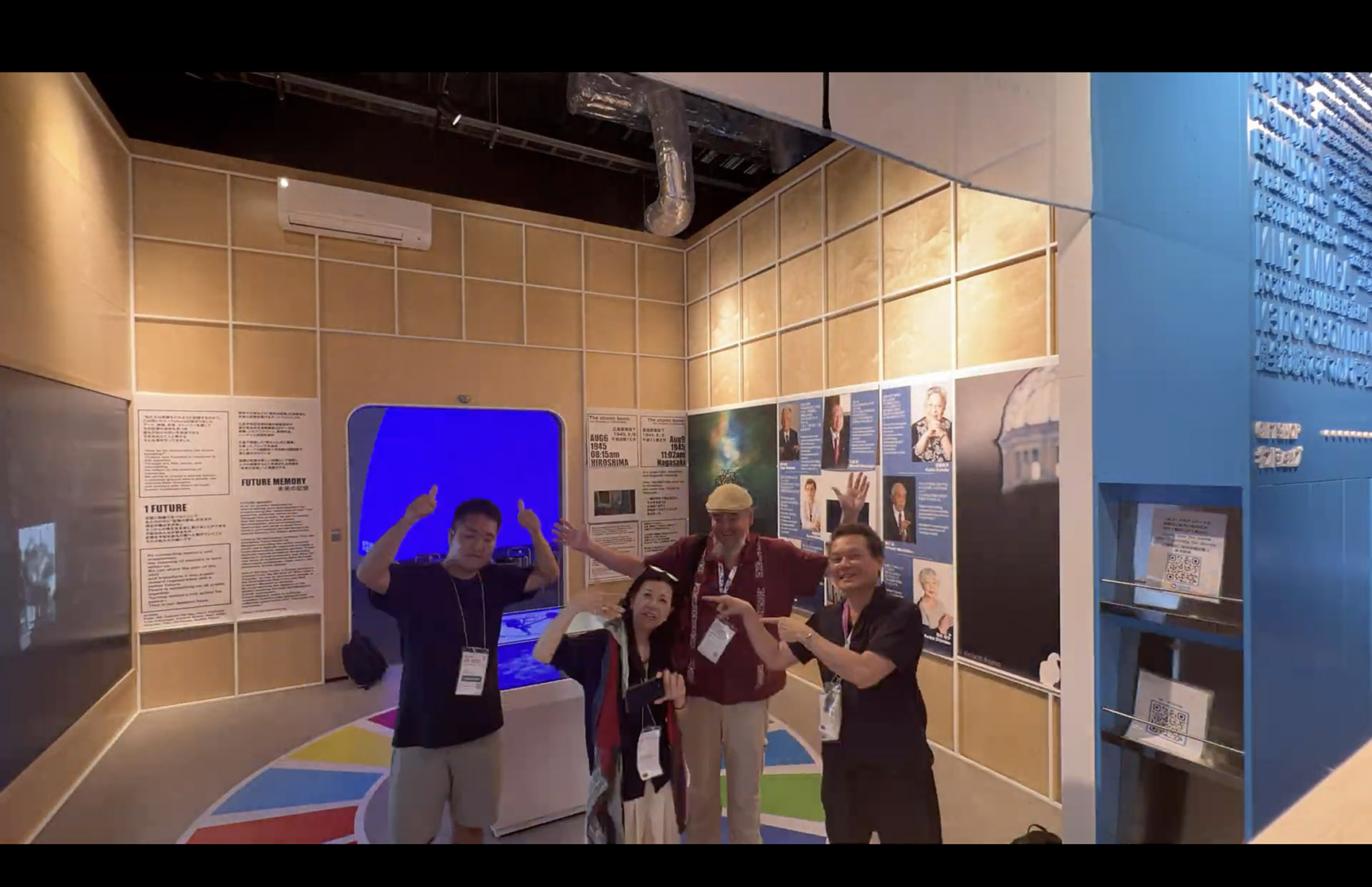
Installation at UNODA pavilion
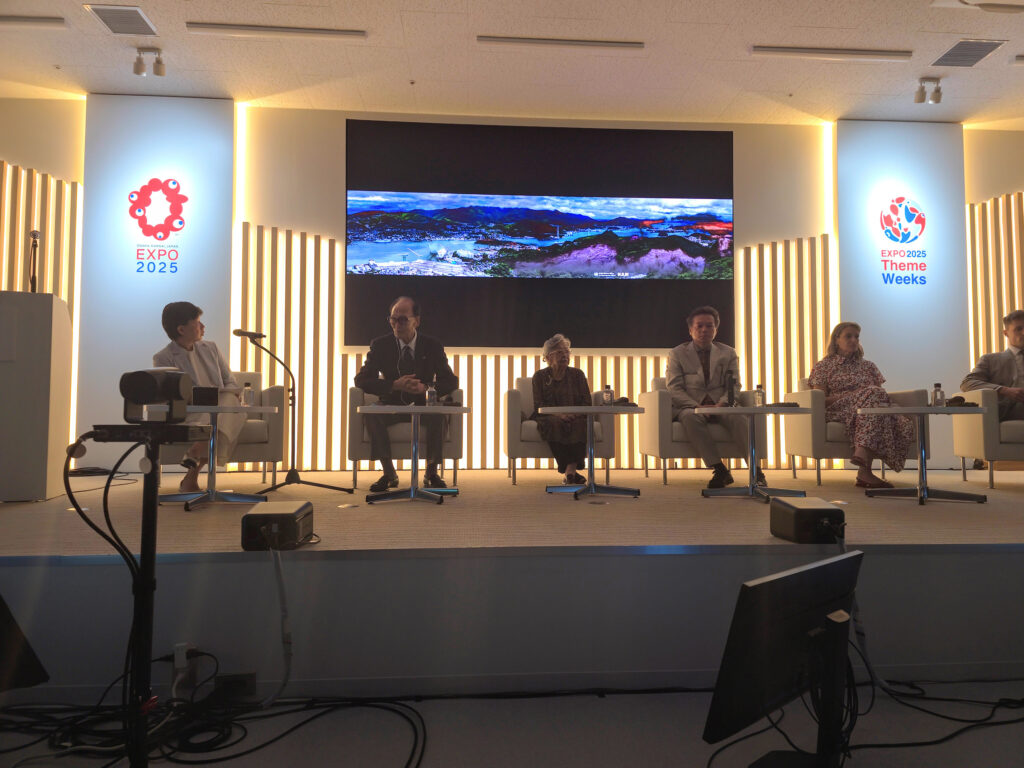
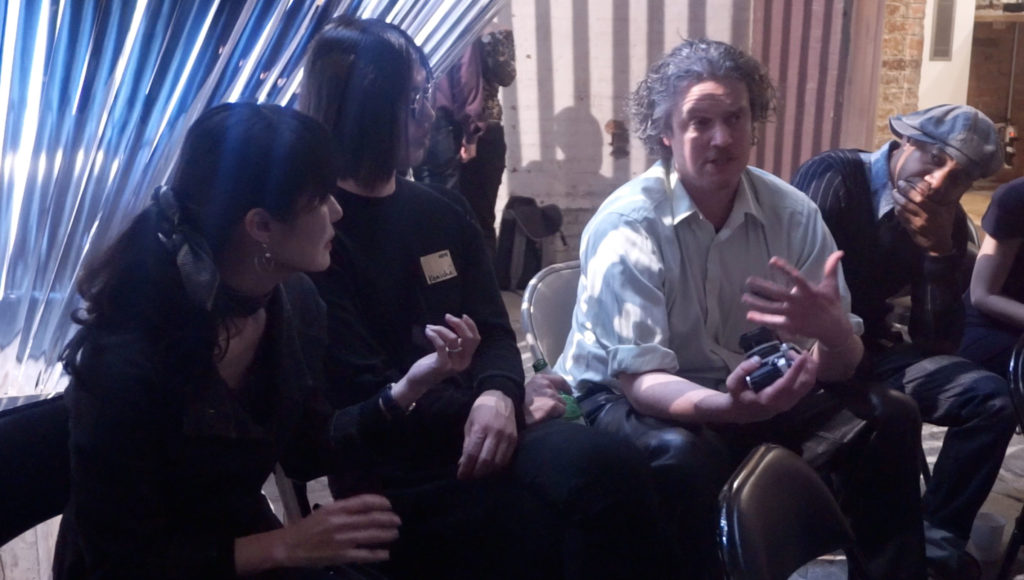
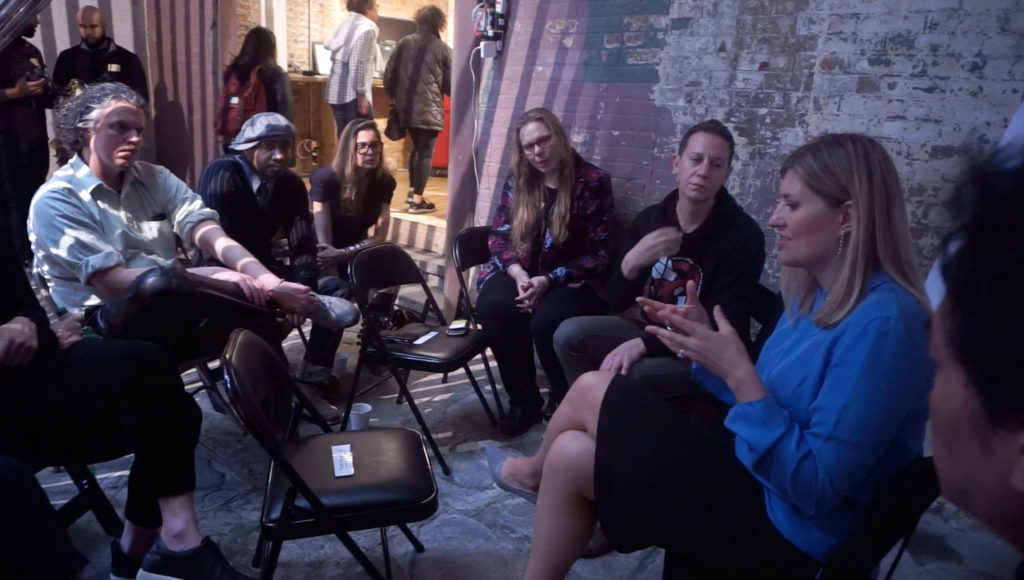
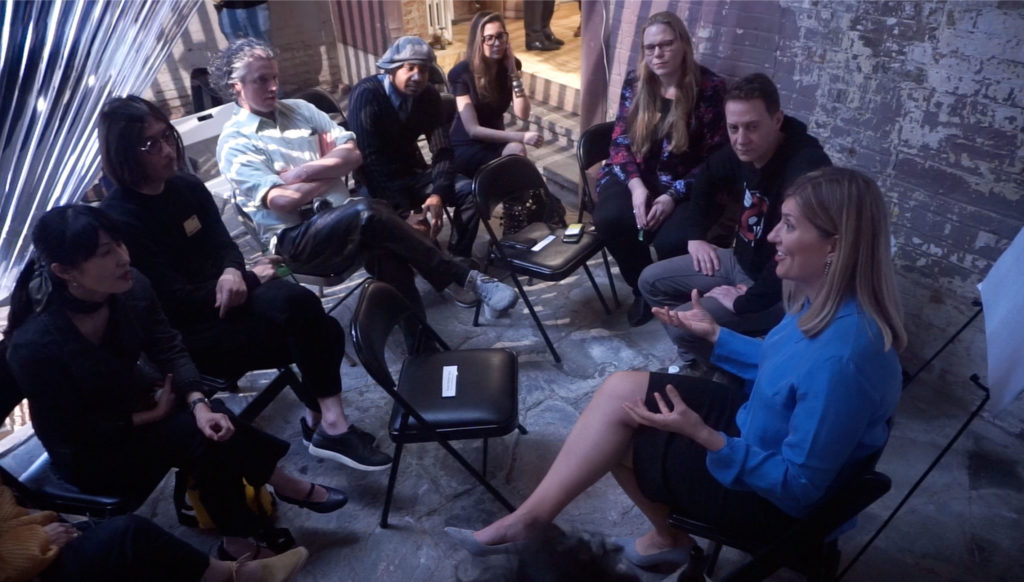
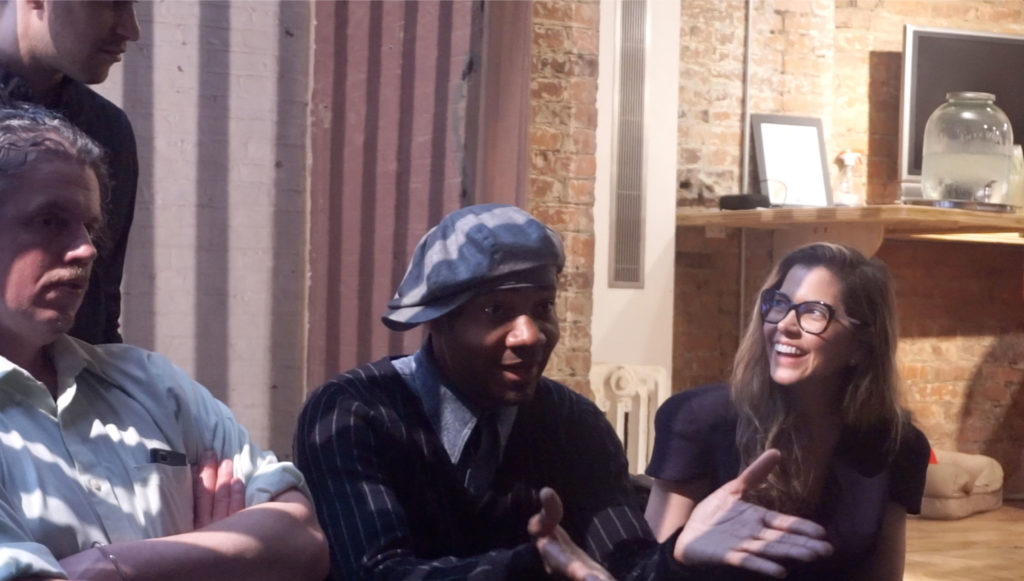
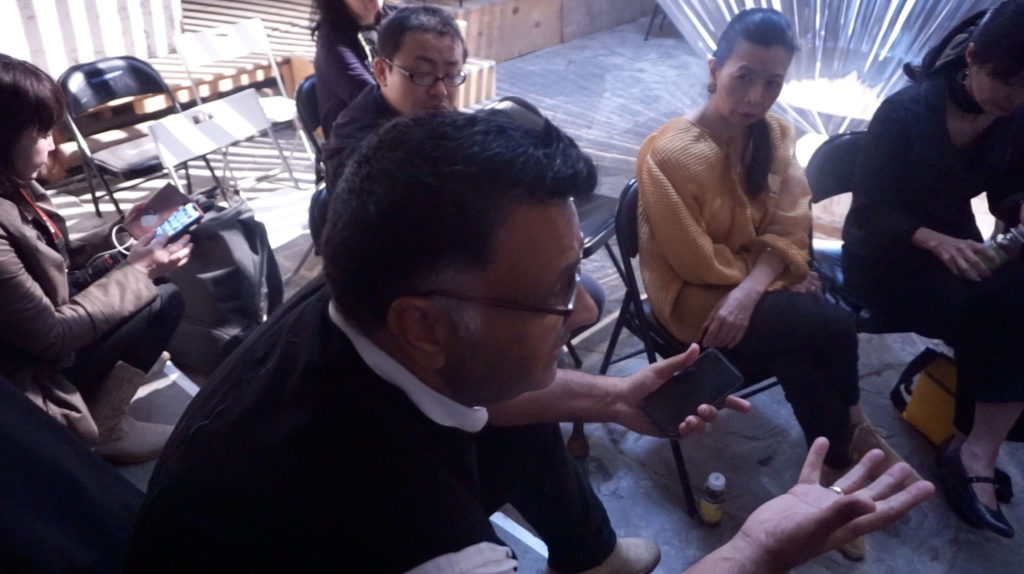
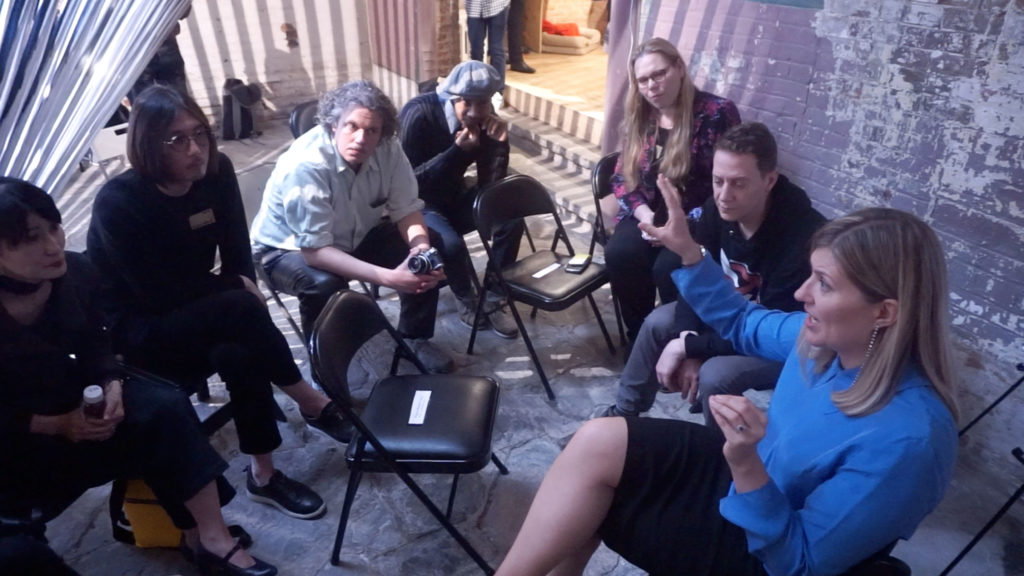
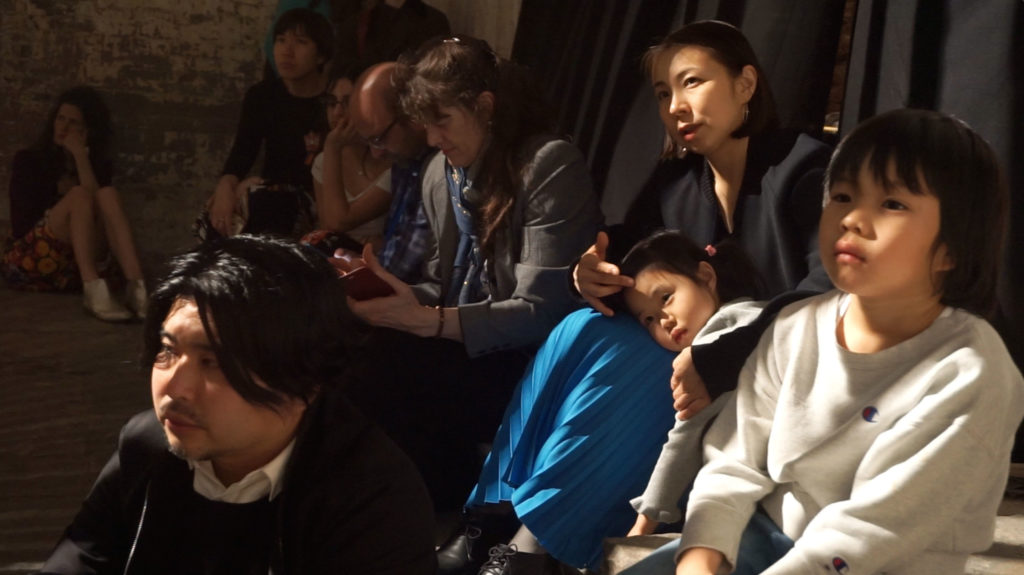
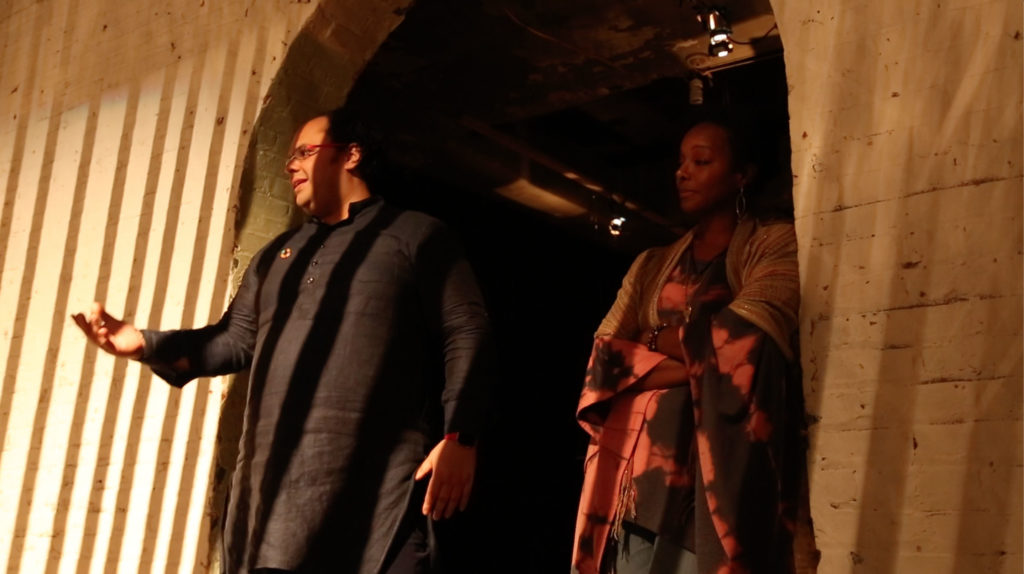
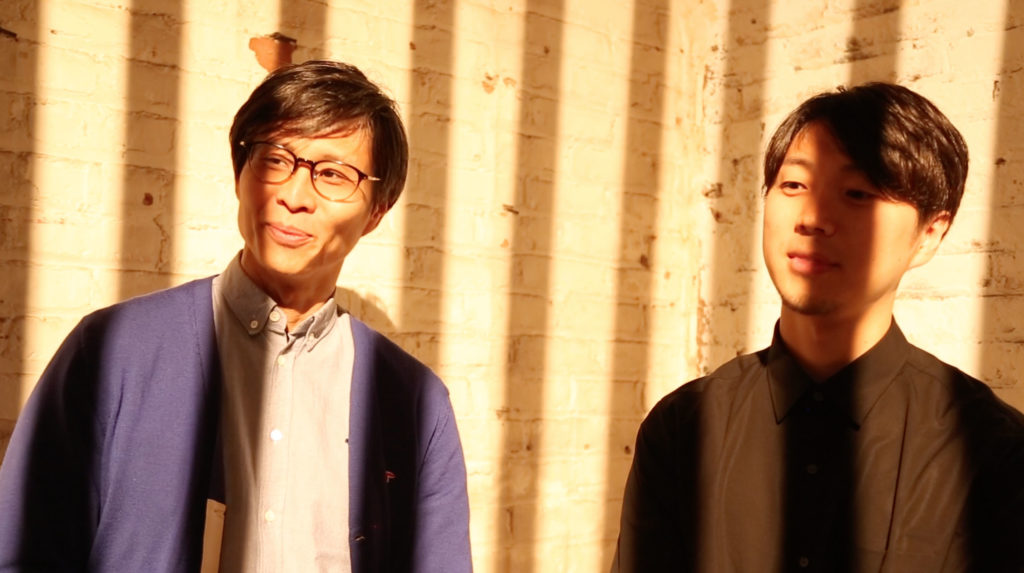
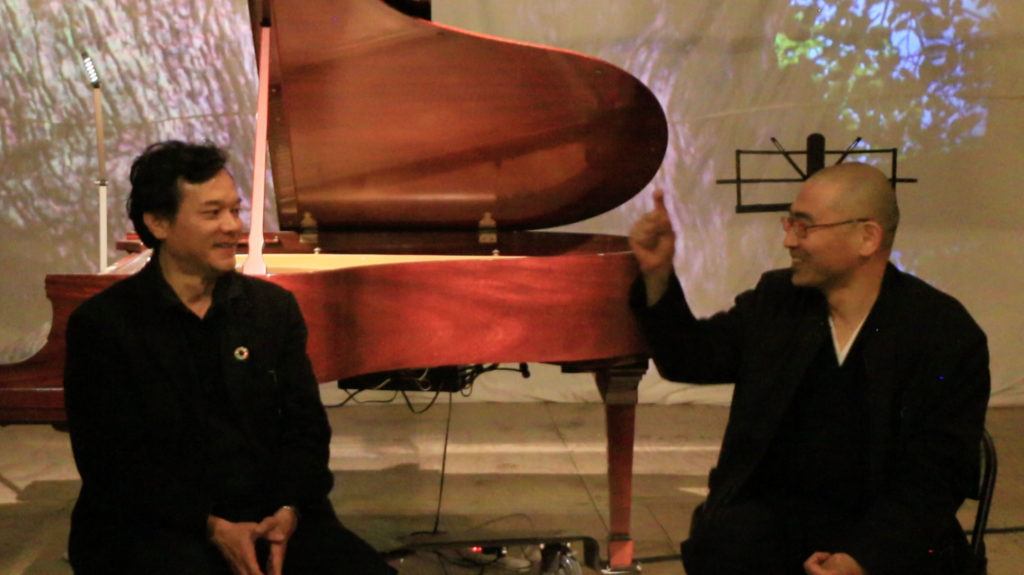
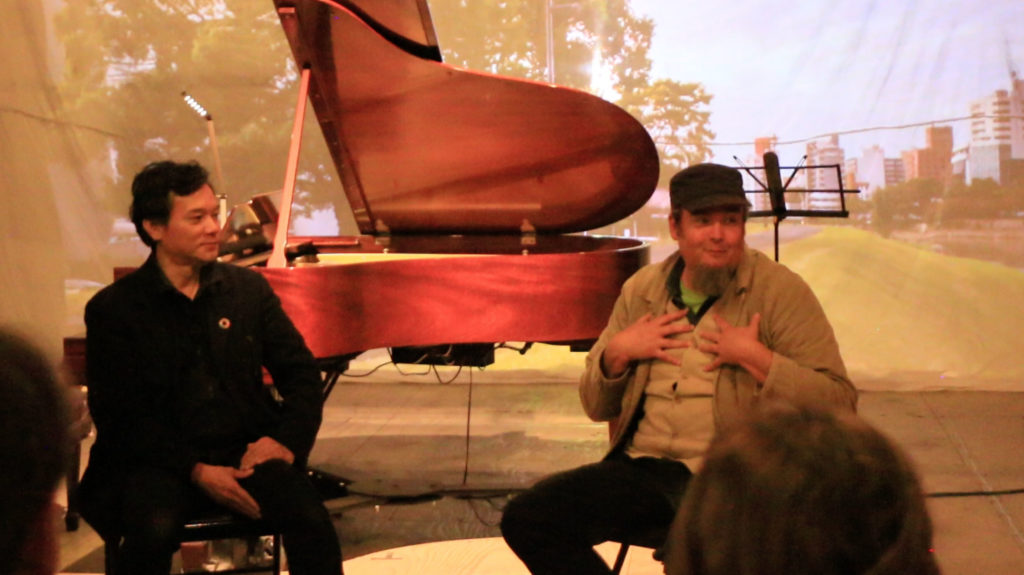
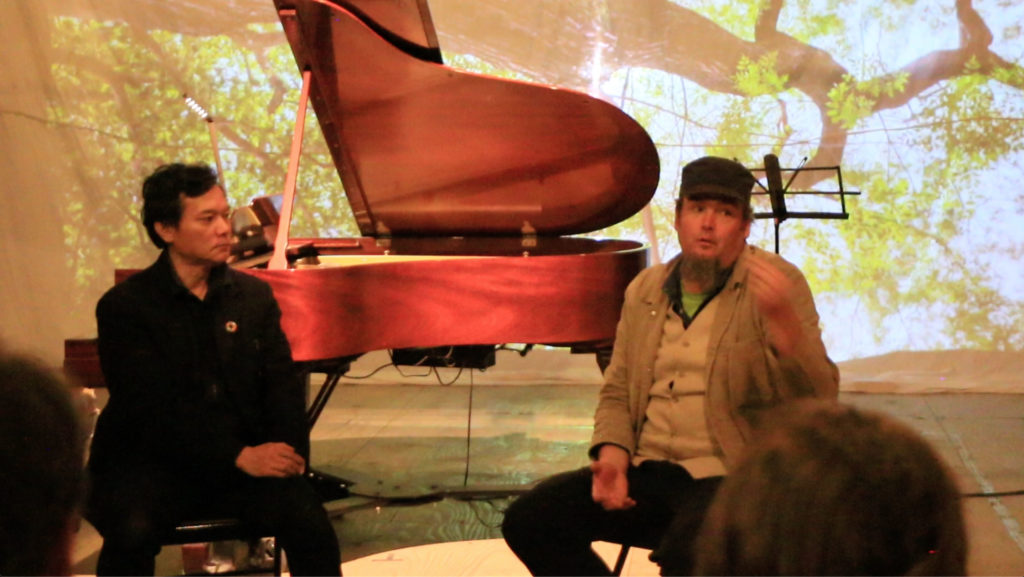
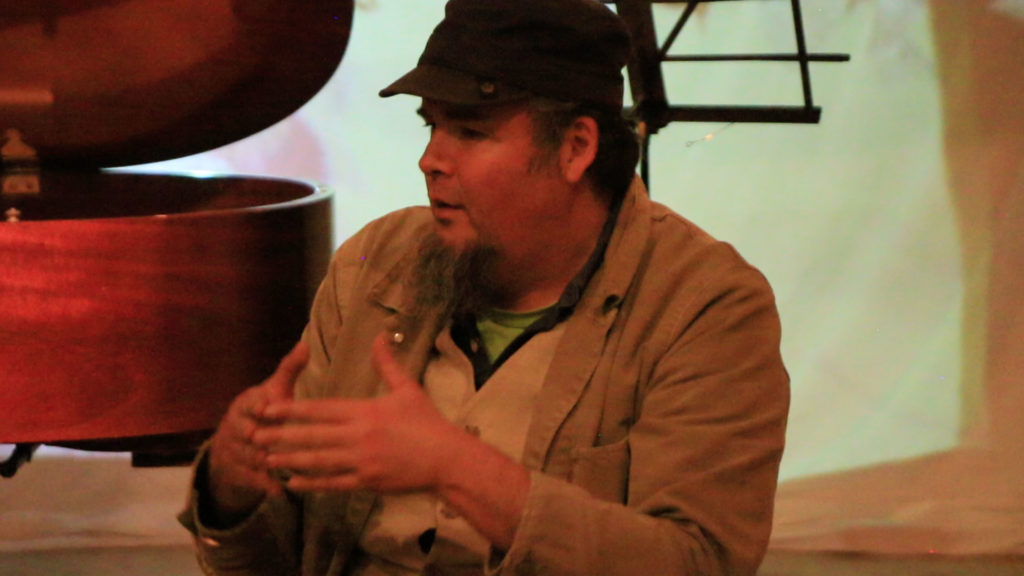
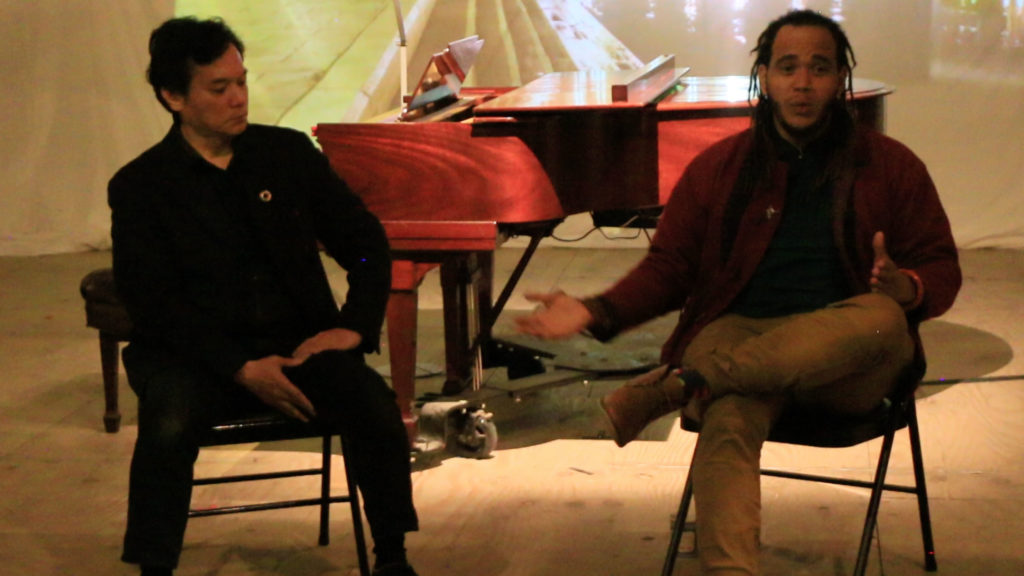
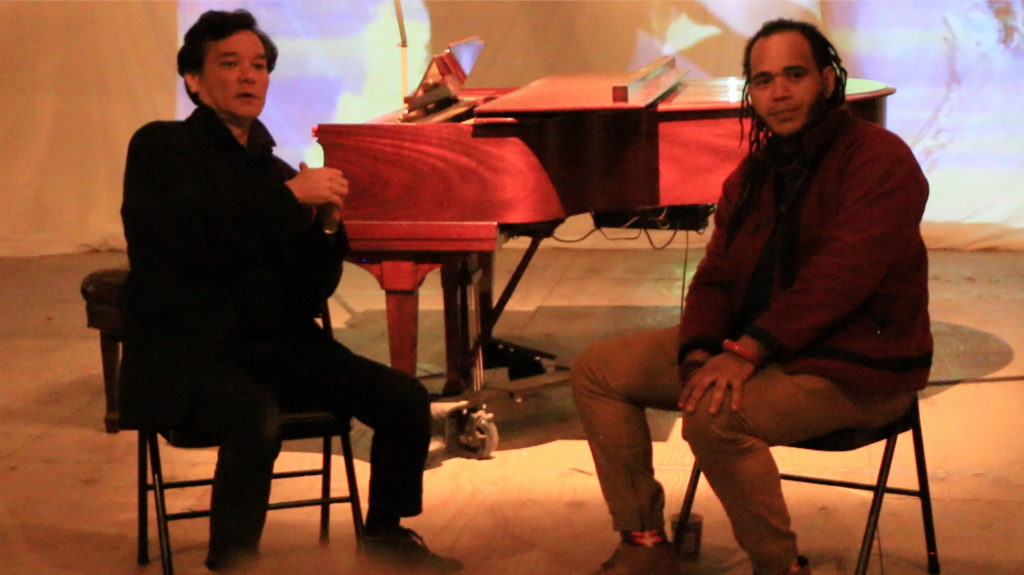
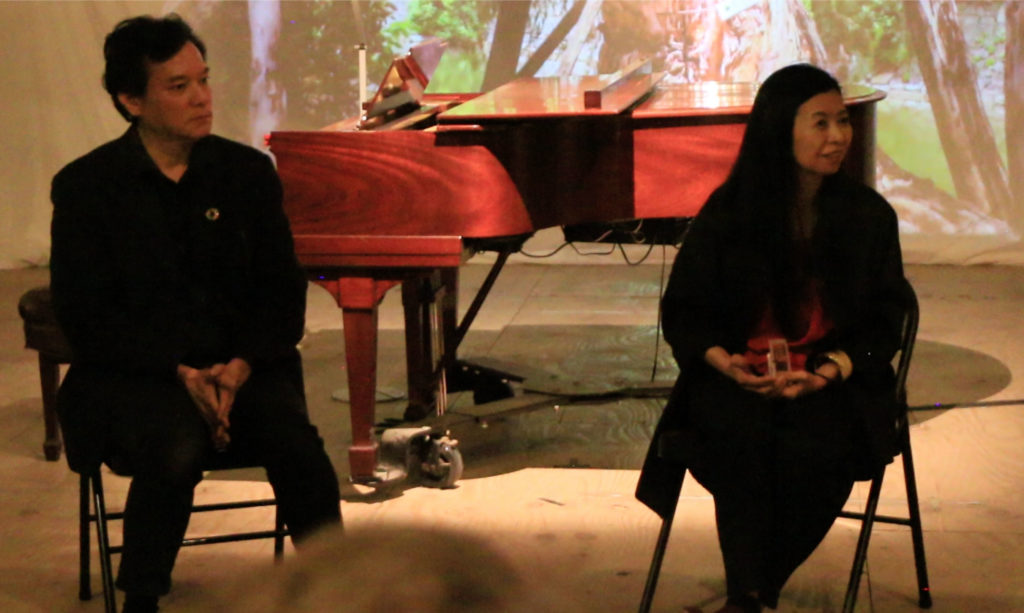
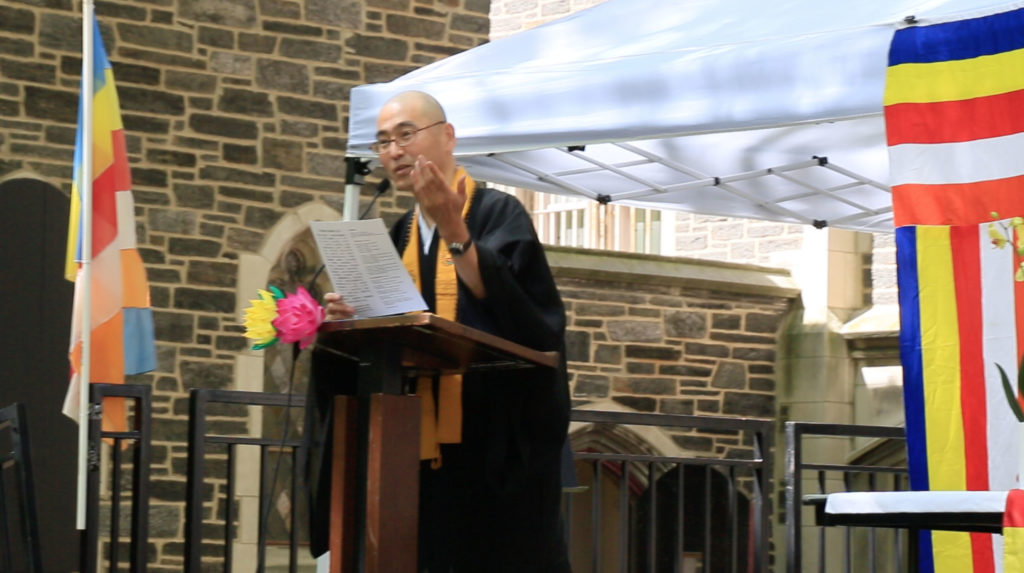
Early morning discussion: Respect and Human rights
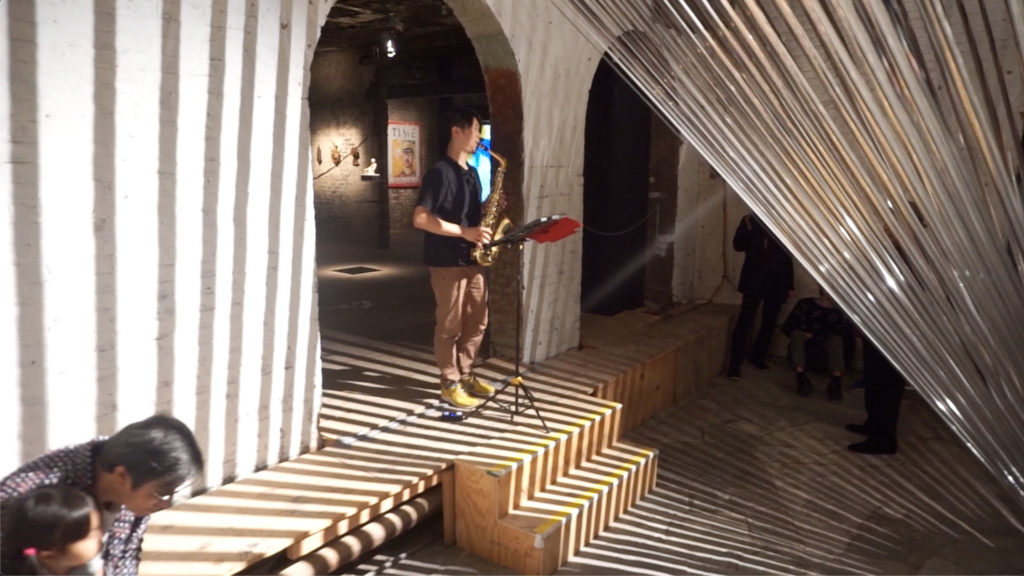
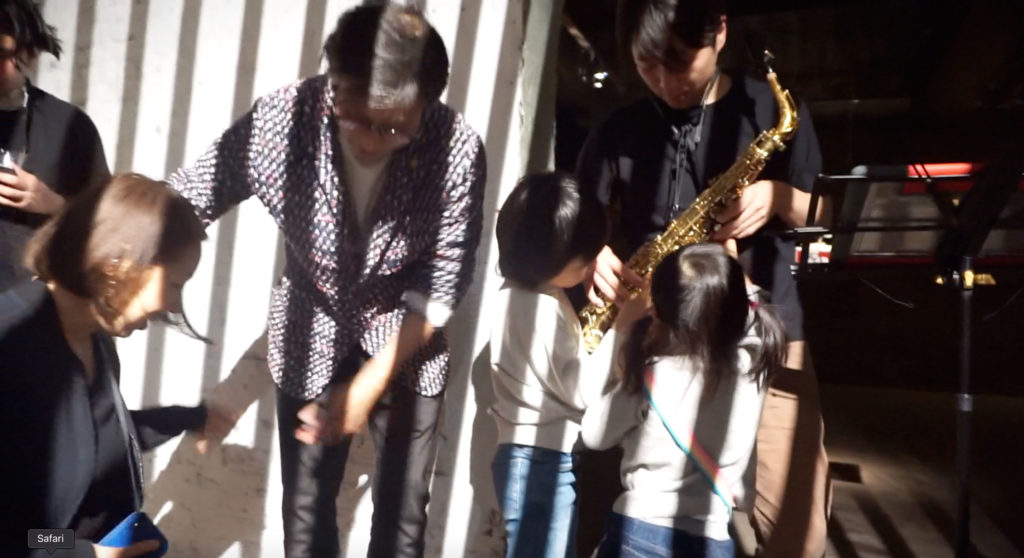
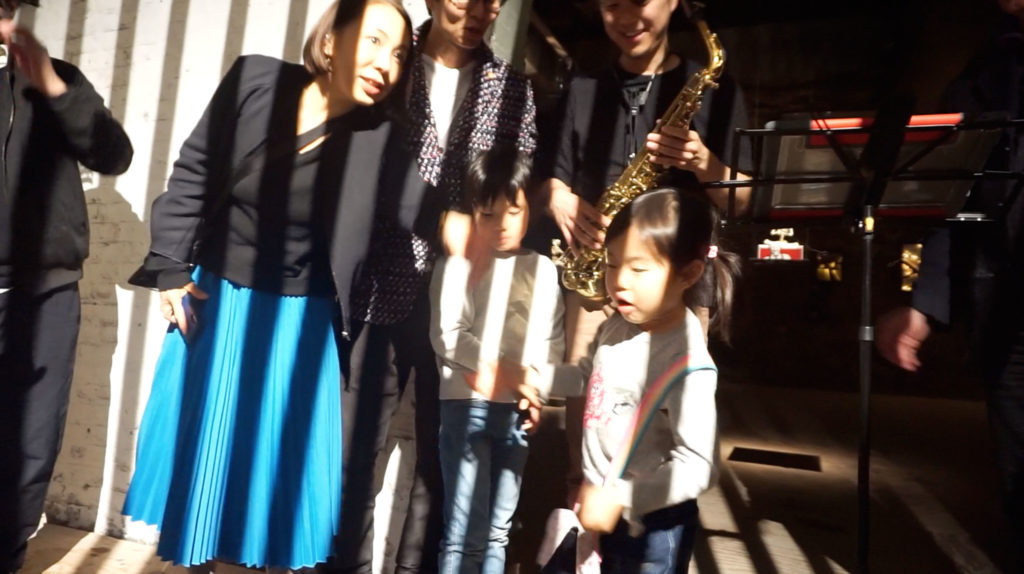
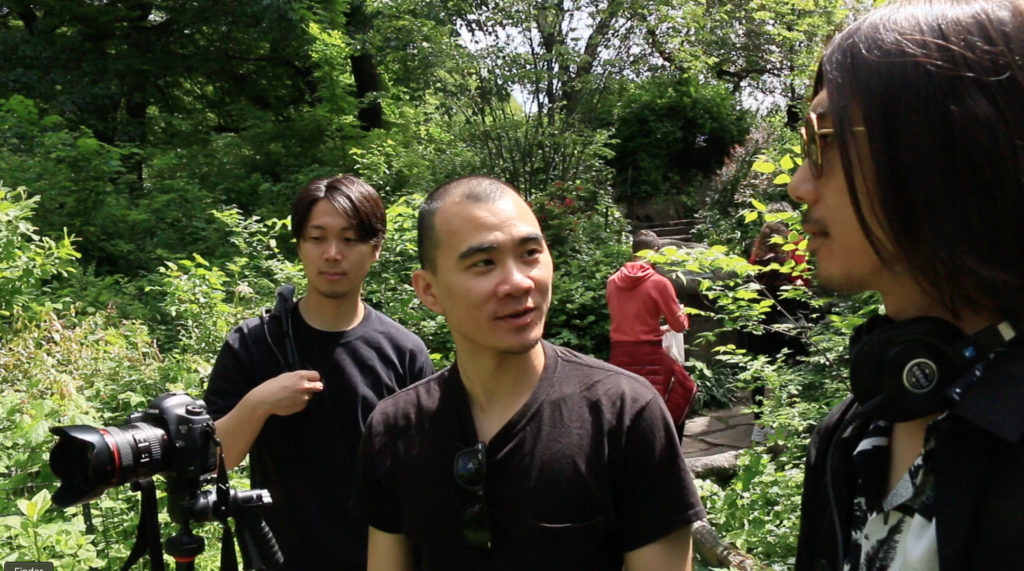
taku and Koko up on stage, and setting up the dome.
The dome set up was technical, and during the afternoon talk, I was running the show, so I did not take any pictures!
Cannon’s message, please note, this is formatted for an 8k dome!
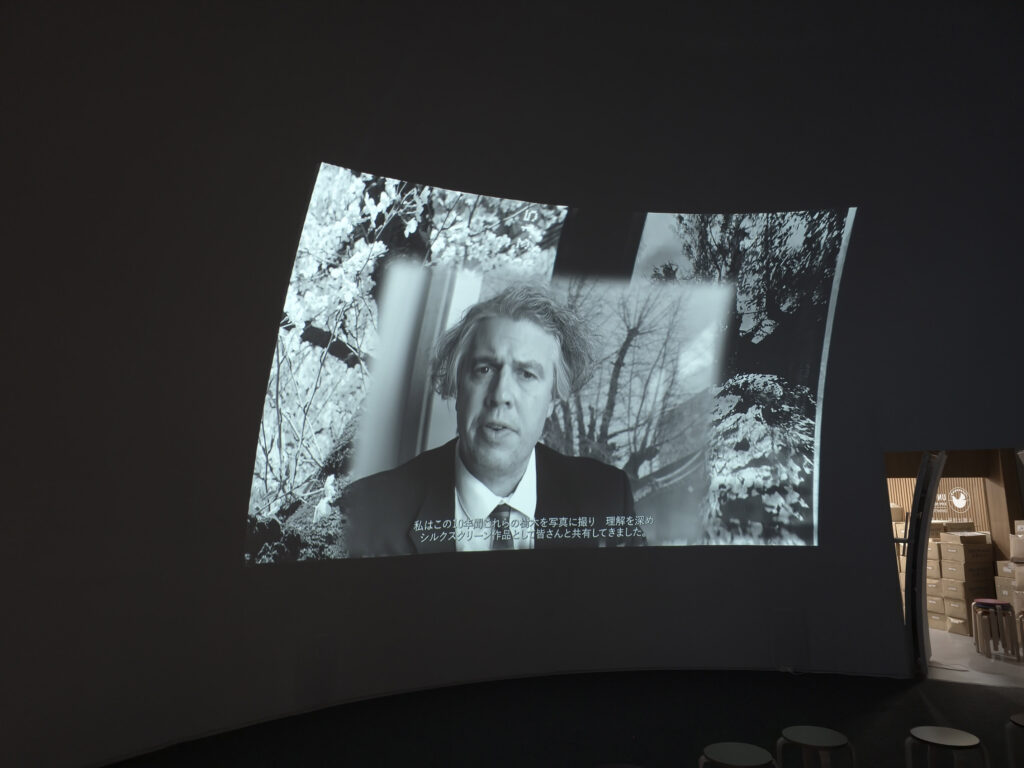
This sweet video, shows Patti Smith singing a song for hibakusha Keiko Ogura. But it was cut from the presentation at the last minute! Filmed by Taku Nishimae and Mari Ishiko, it took a lot of work to bring together!
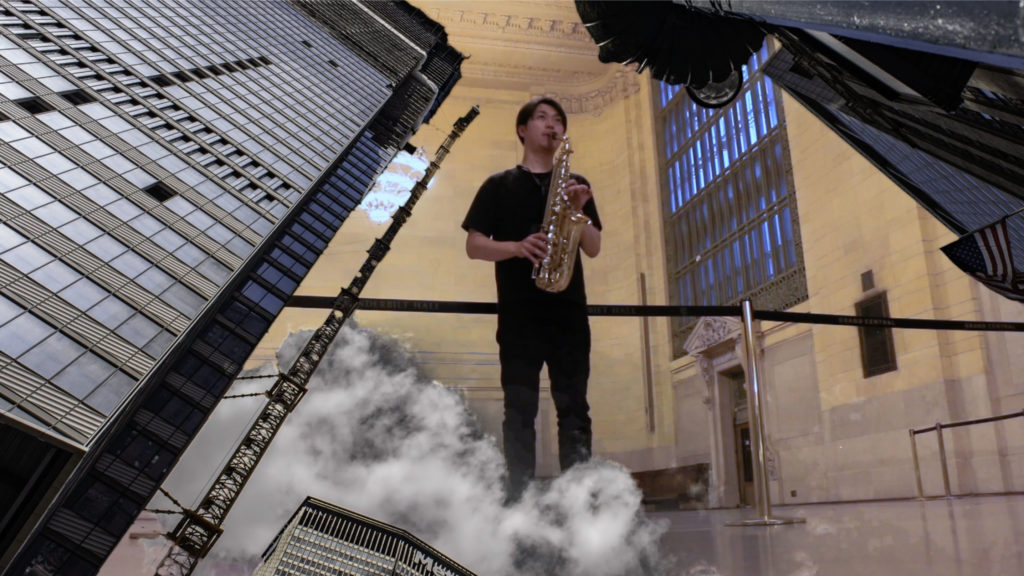
Nagasaki video on the Shining Hat
The Raw Video
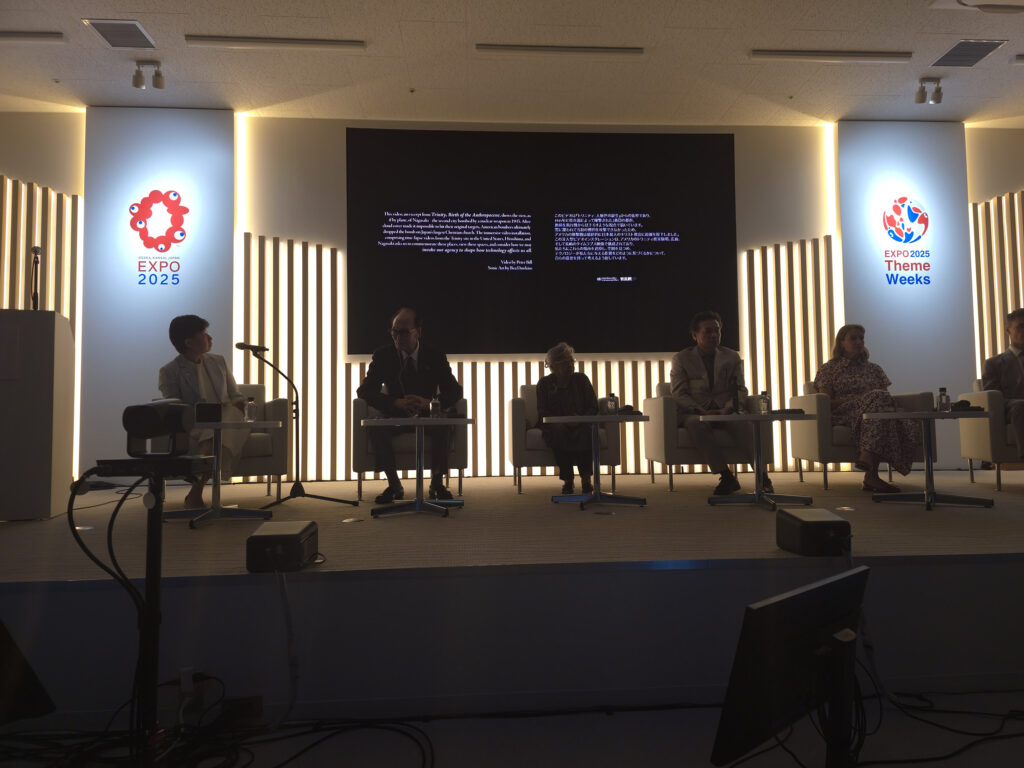
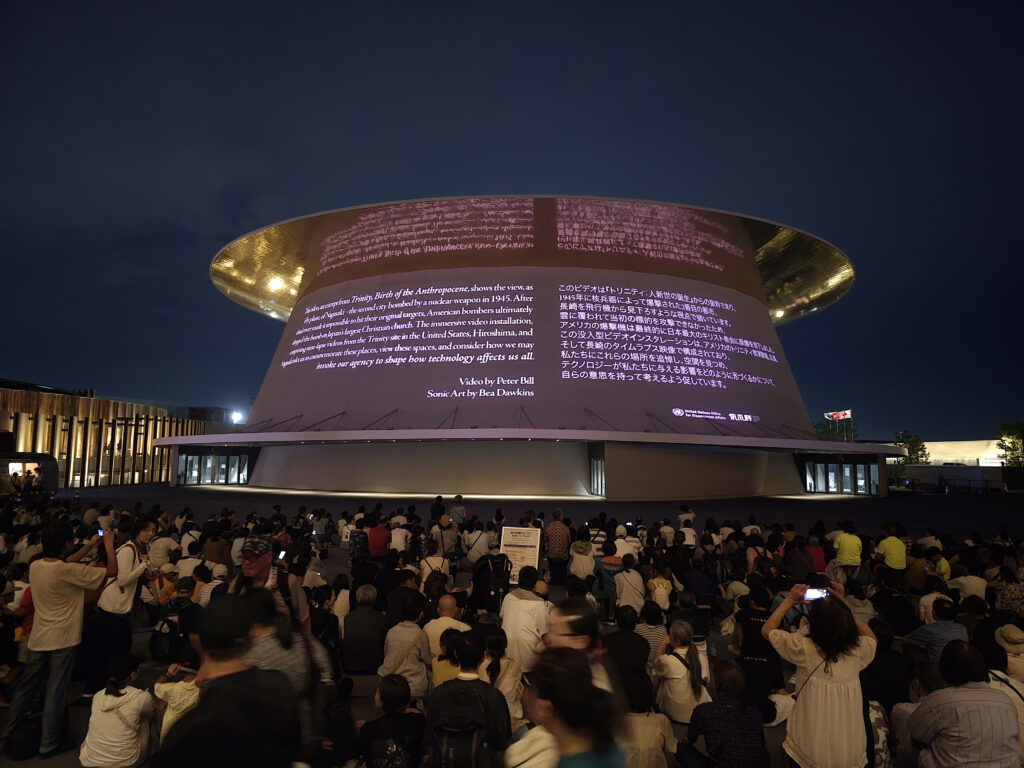
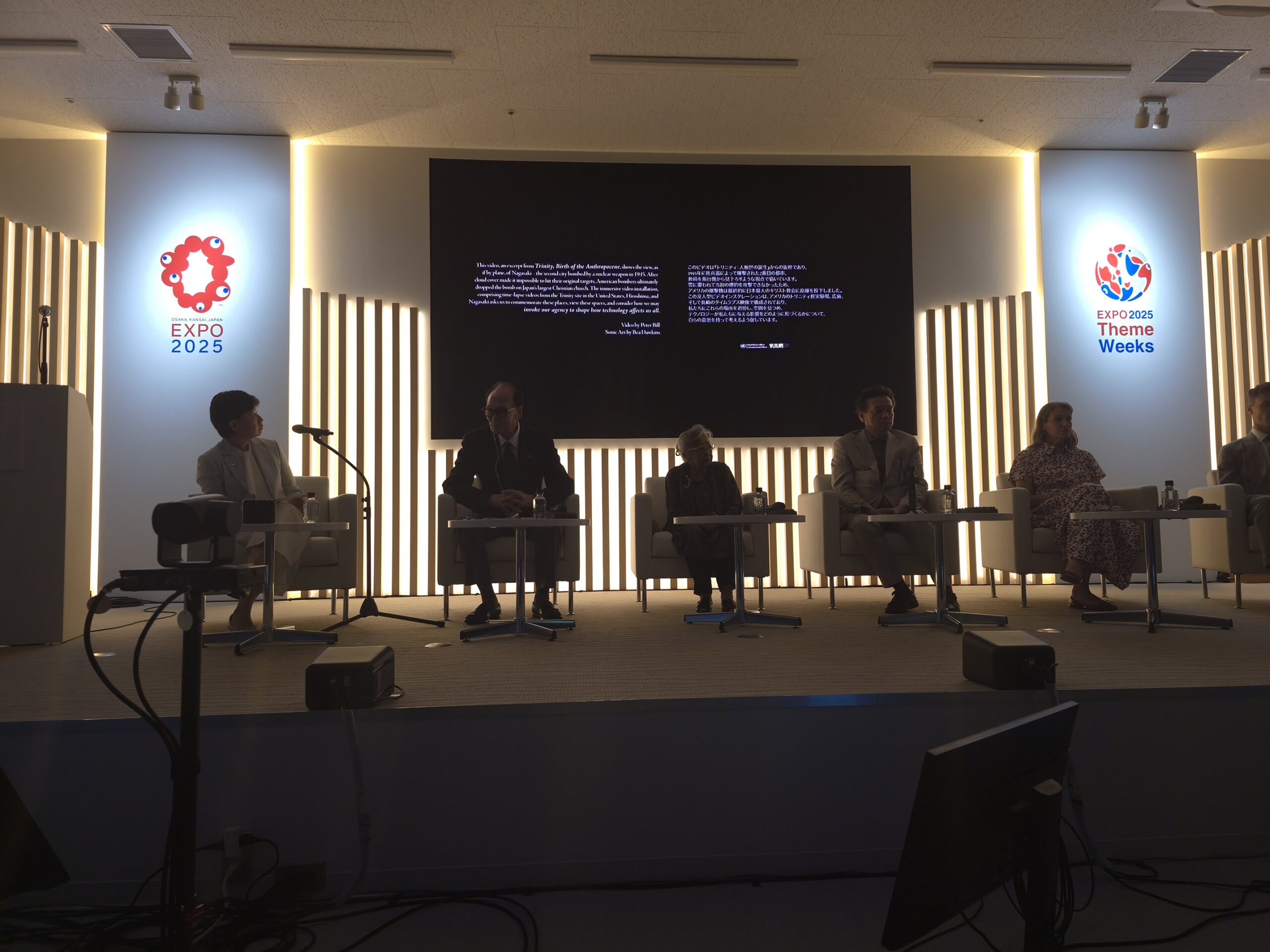
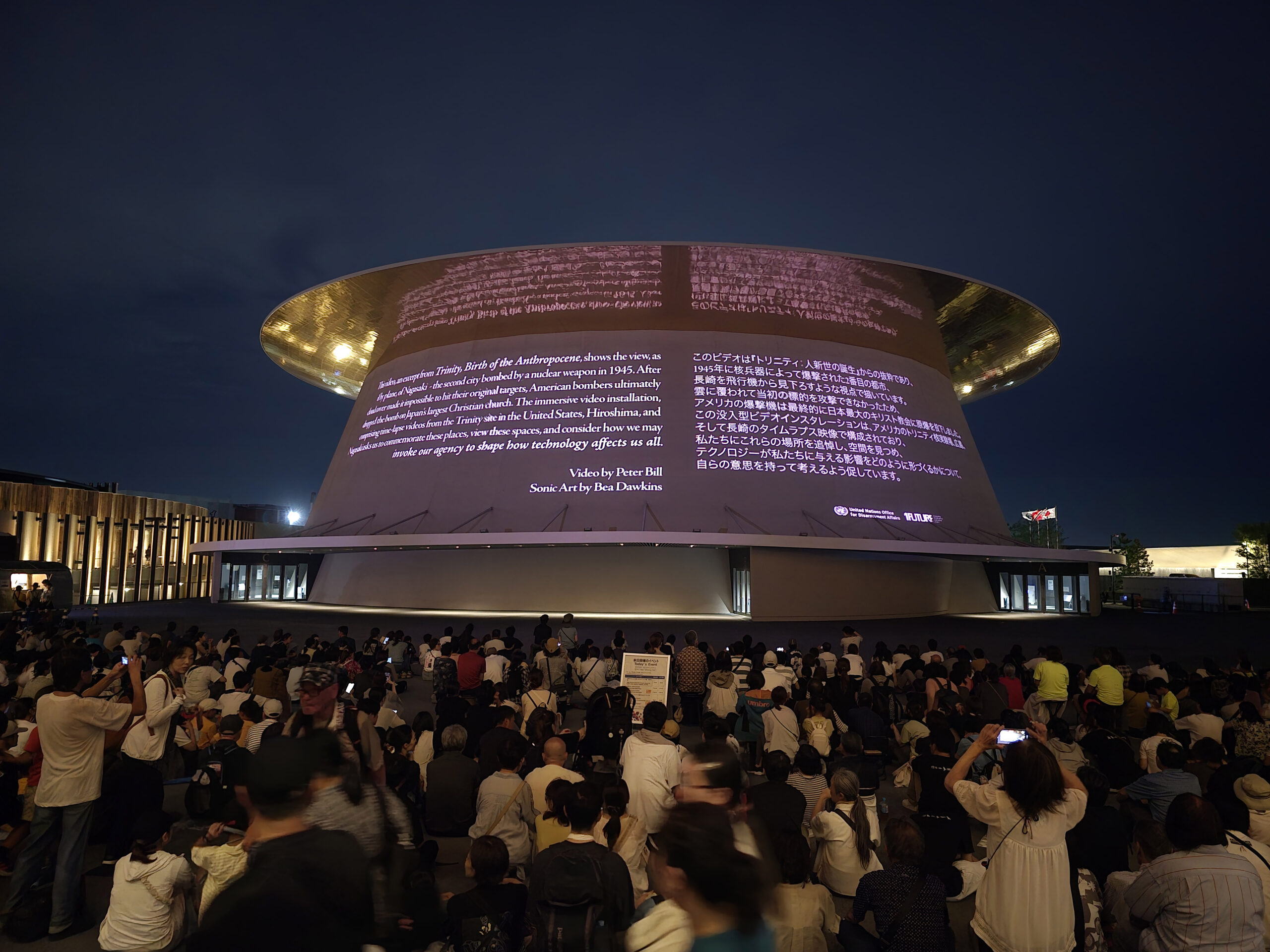
The video was displayed with this text, in english and Japanese: This video, an excerpt from Trinity, Birth of the Anthropocene, shows the view, as if by plane, of Nagasaki – the second city bombed by a nuclear weapon in 1945. After cloud cover made it impossible to hit their original targets, American bombers ultimately dropped the bomb on Japan’s largest Christian church. The immersive video installation, comprising time-lapse videos from the Trinity site in the United States, Hiroshima, and Nagasaki asks us to commemorate these places, view these spaces, and consider how we may invoke our agency to shape how technology affects us all
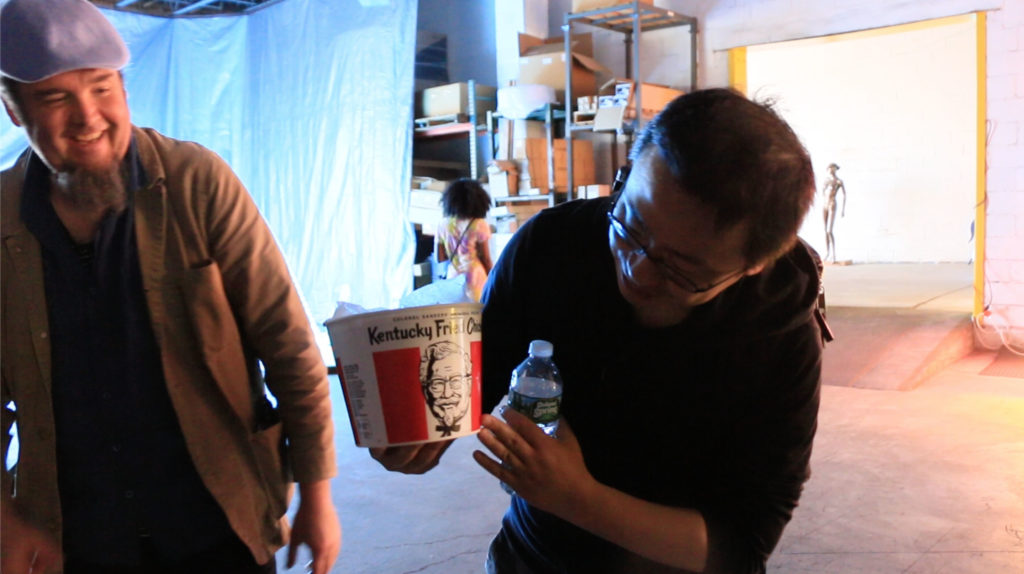
Here are more pictures!
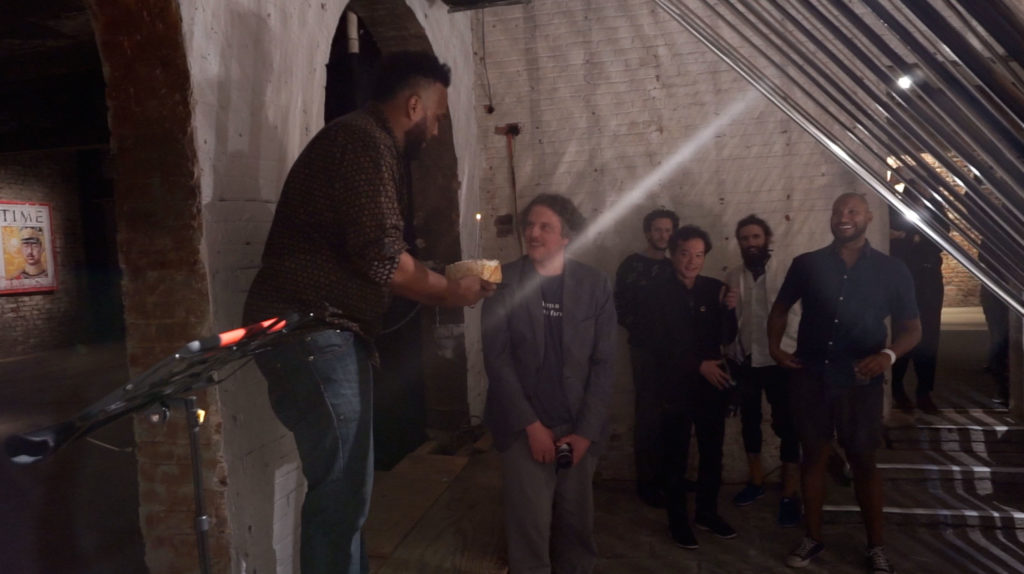
It was a pretty good crowd. The video showed for several days at the expo.
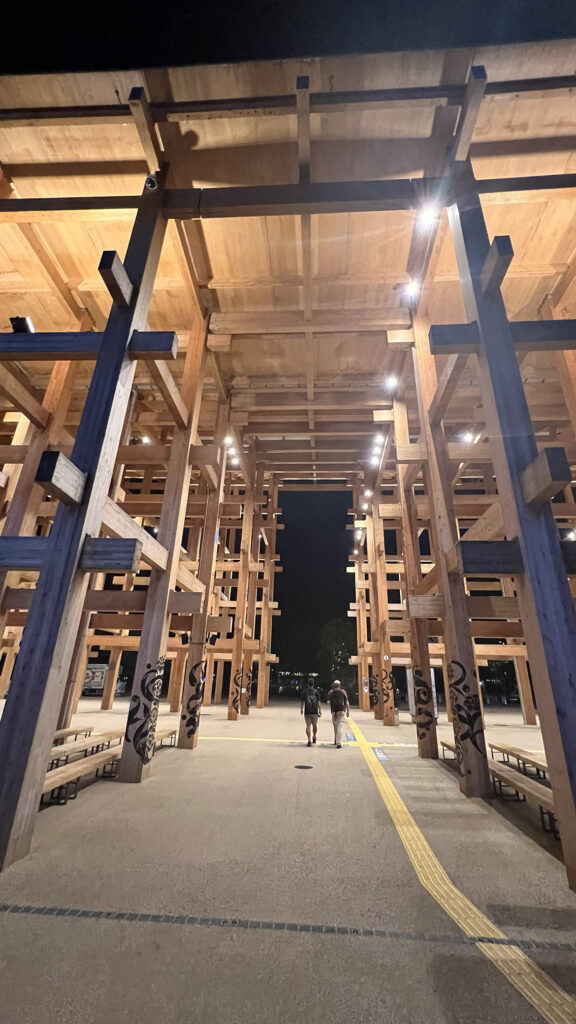
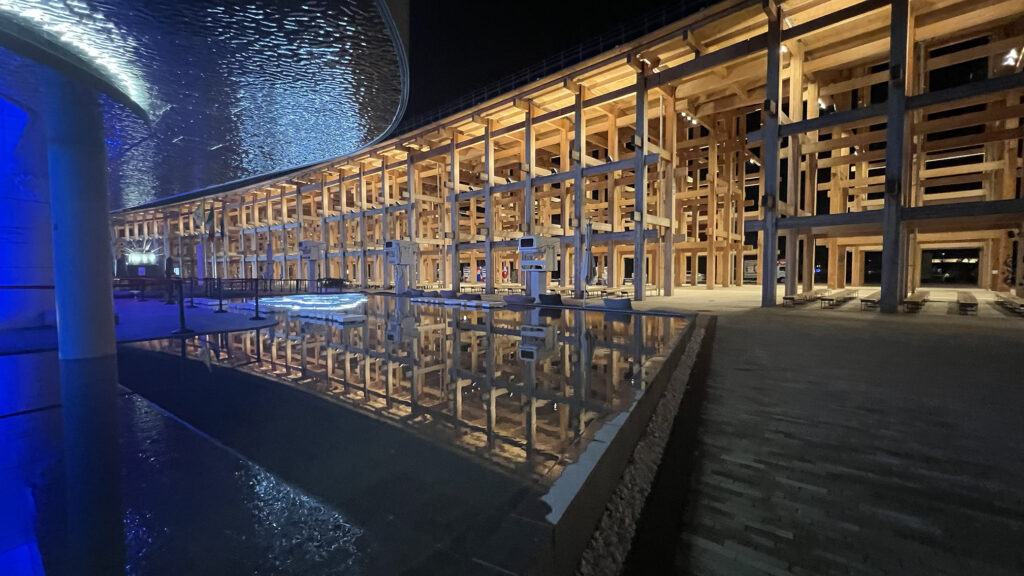
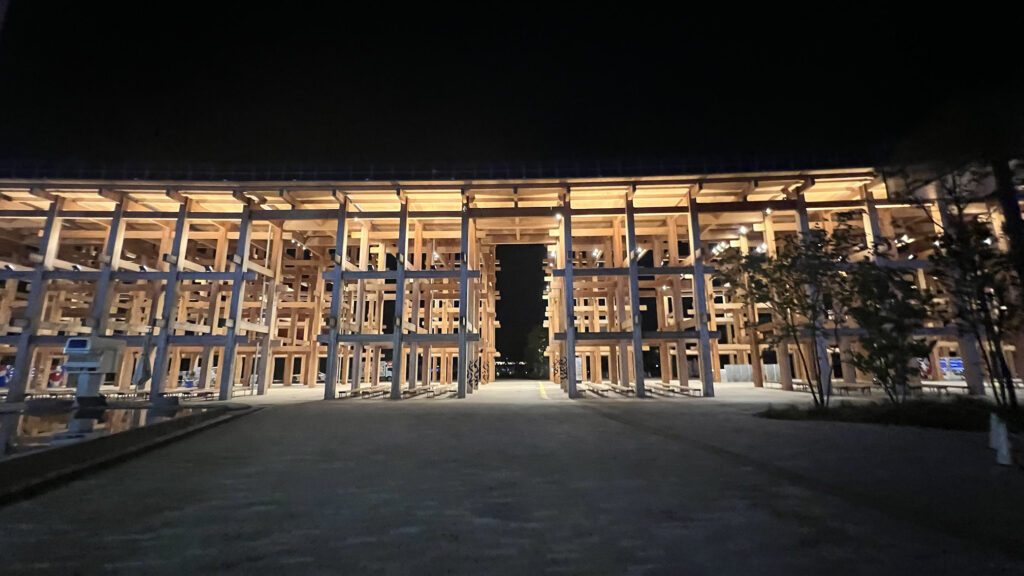
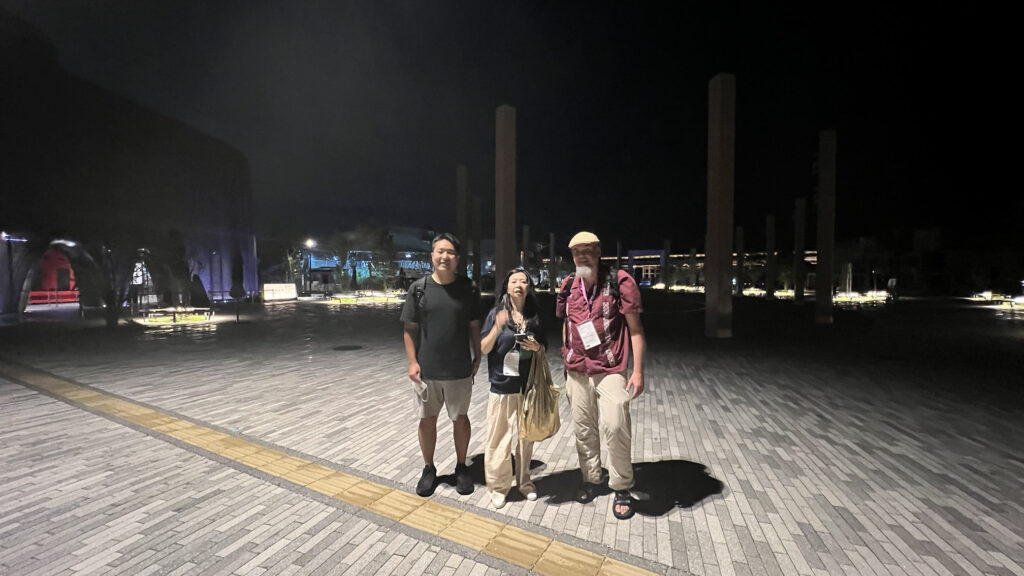
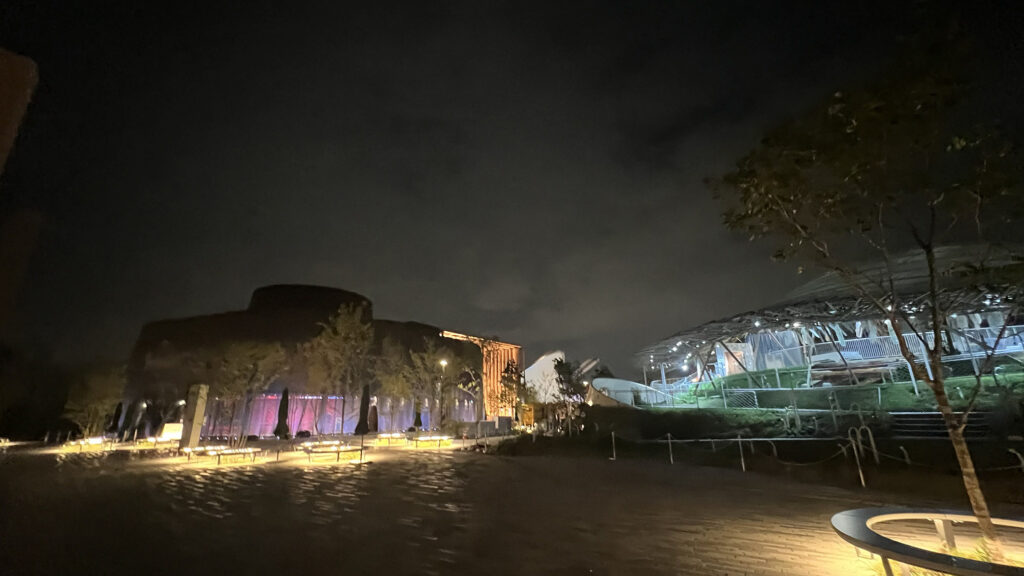
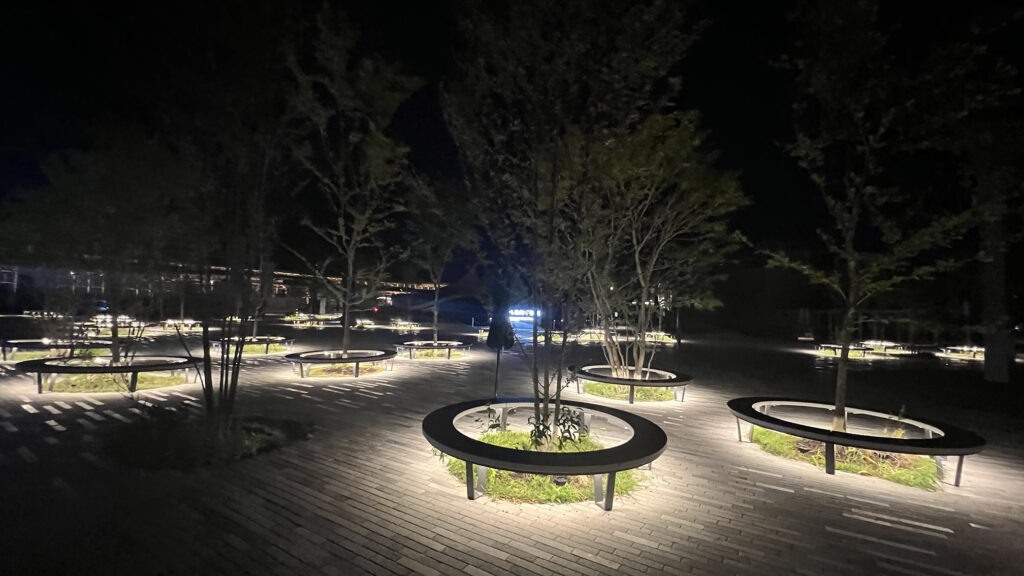
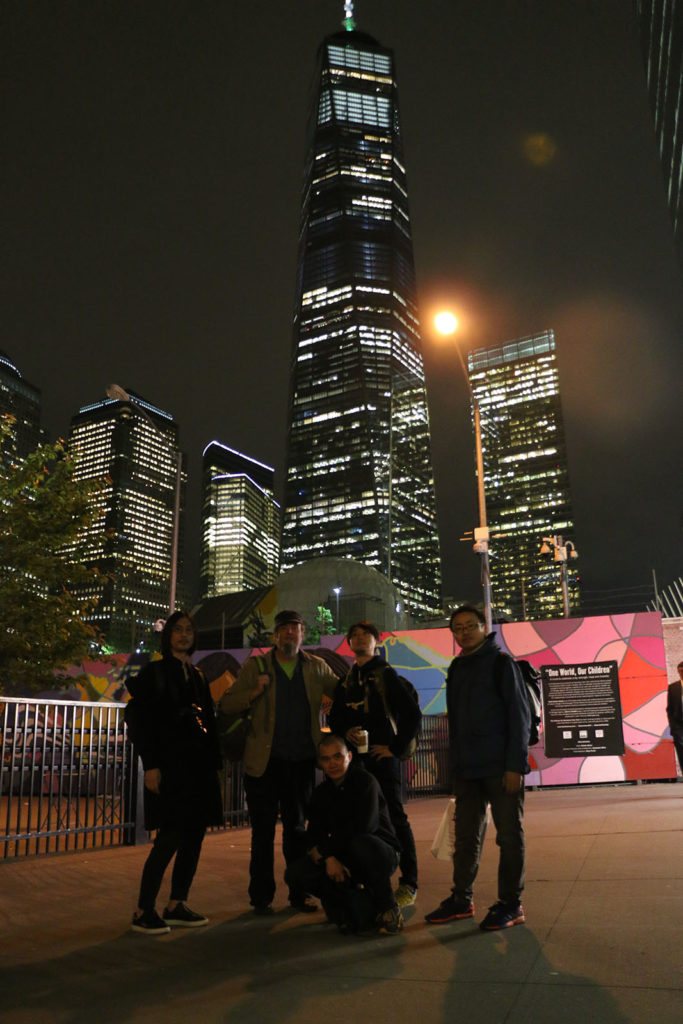
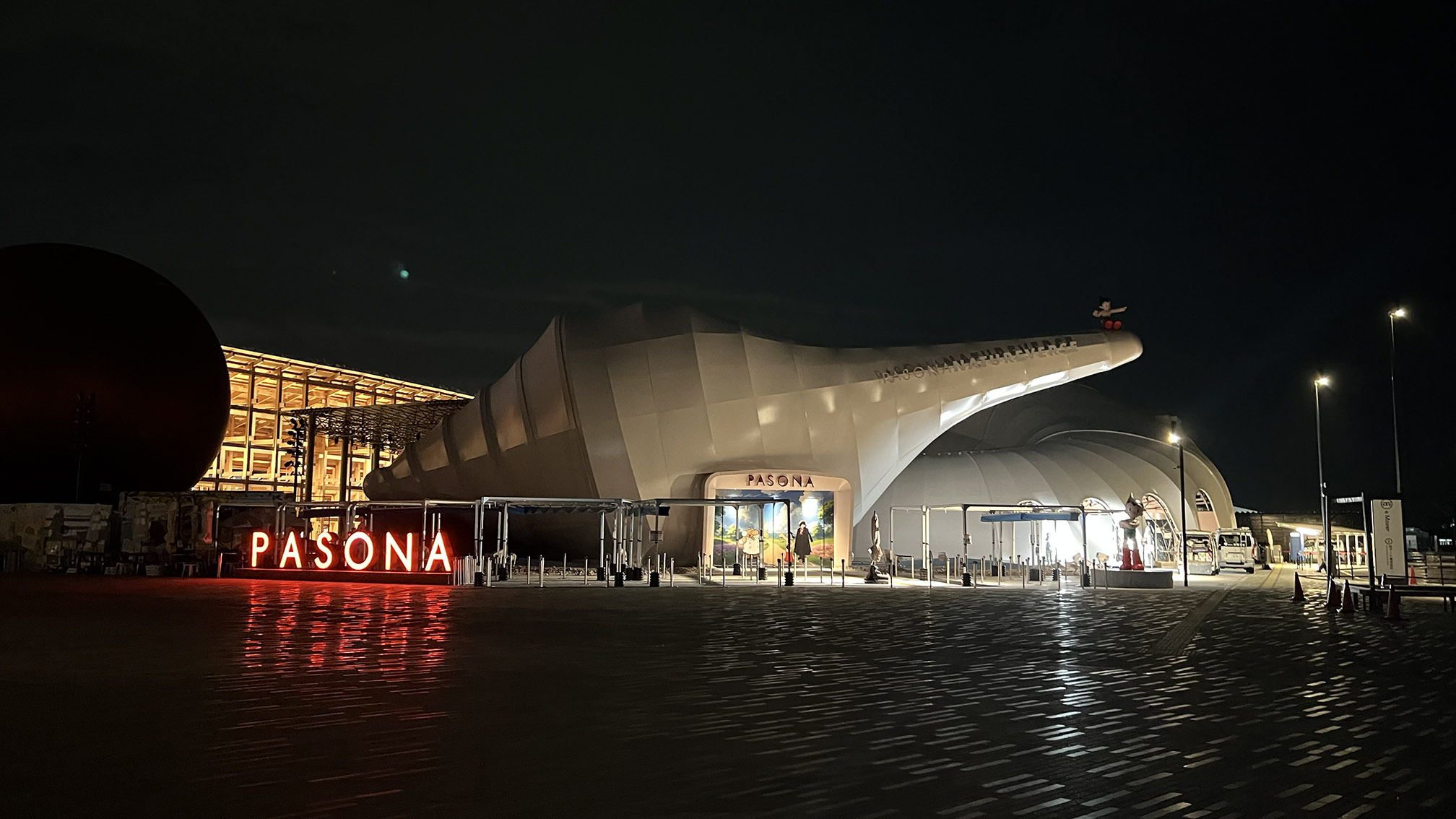
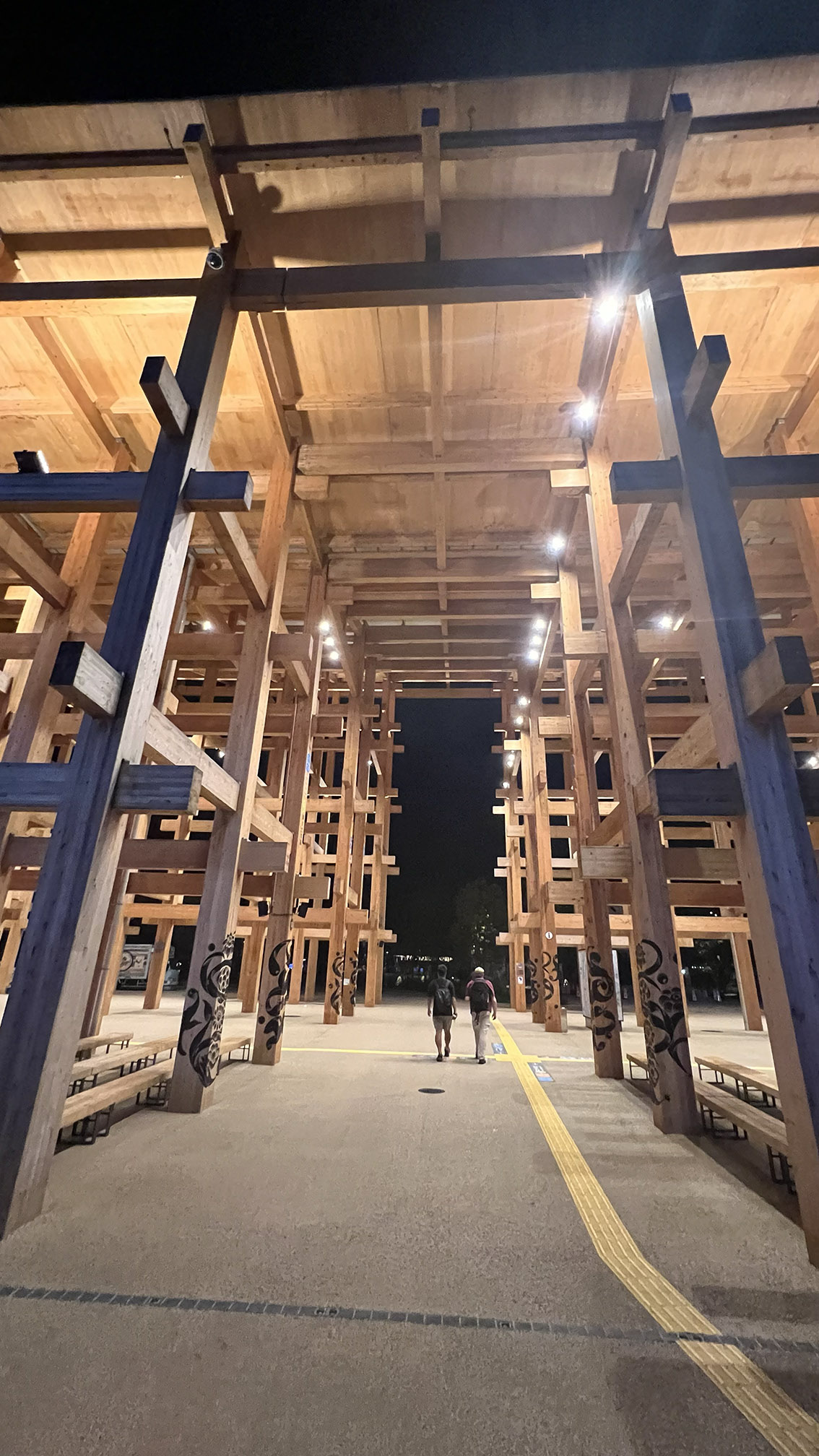
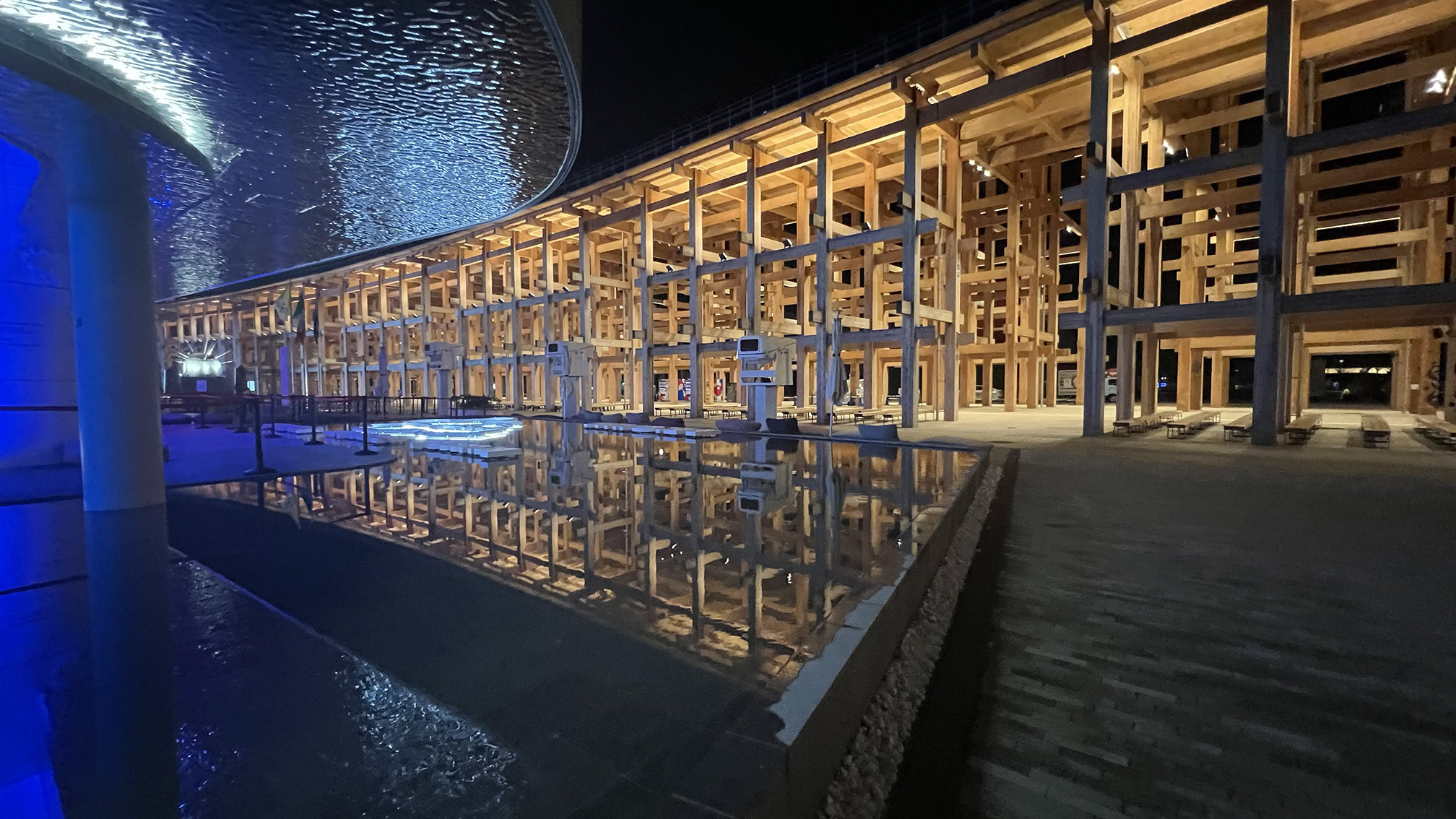
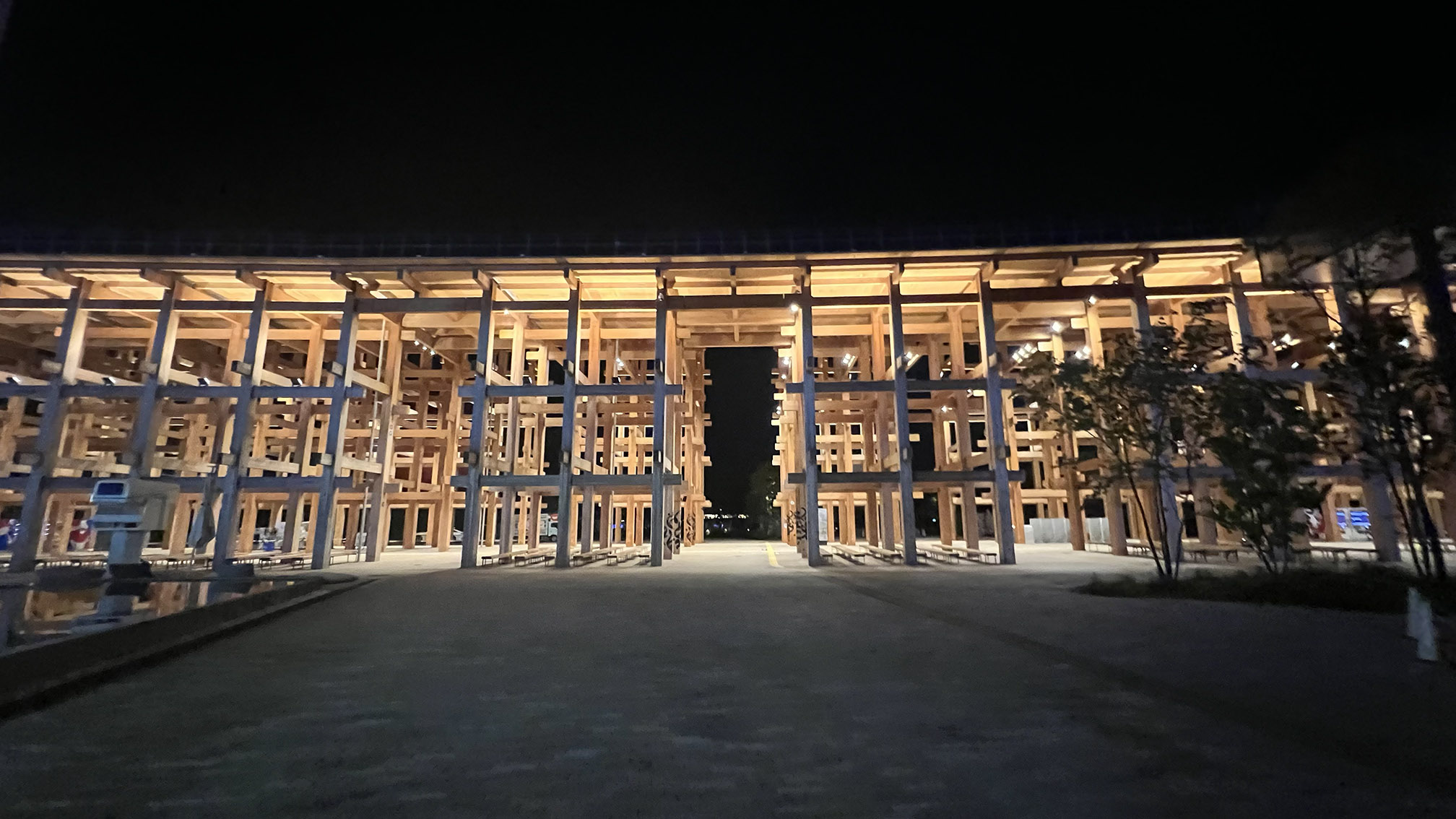
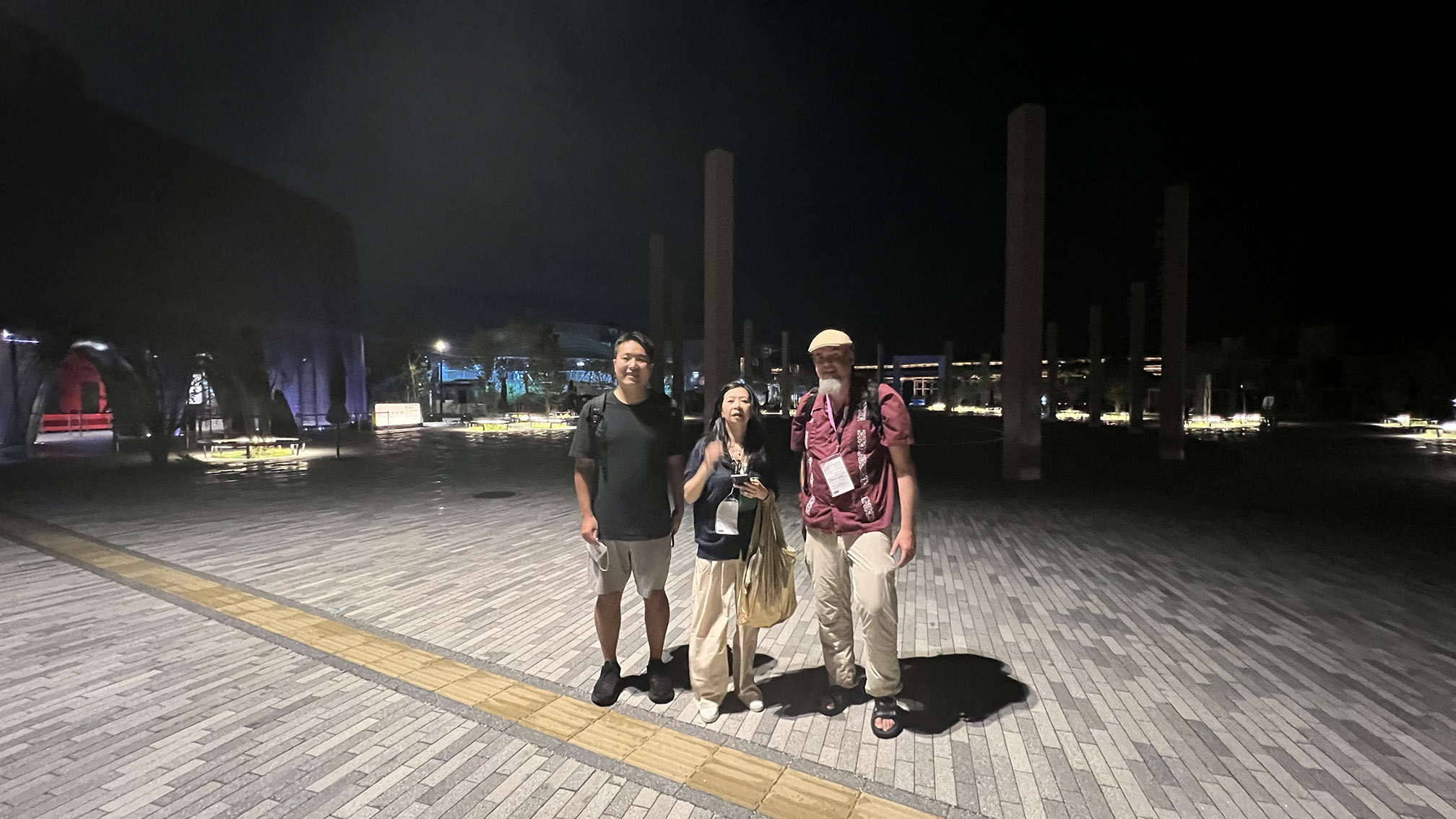
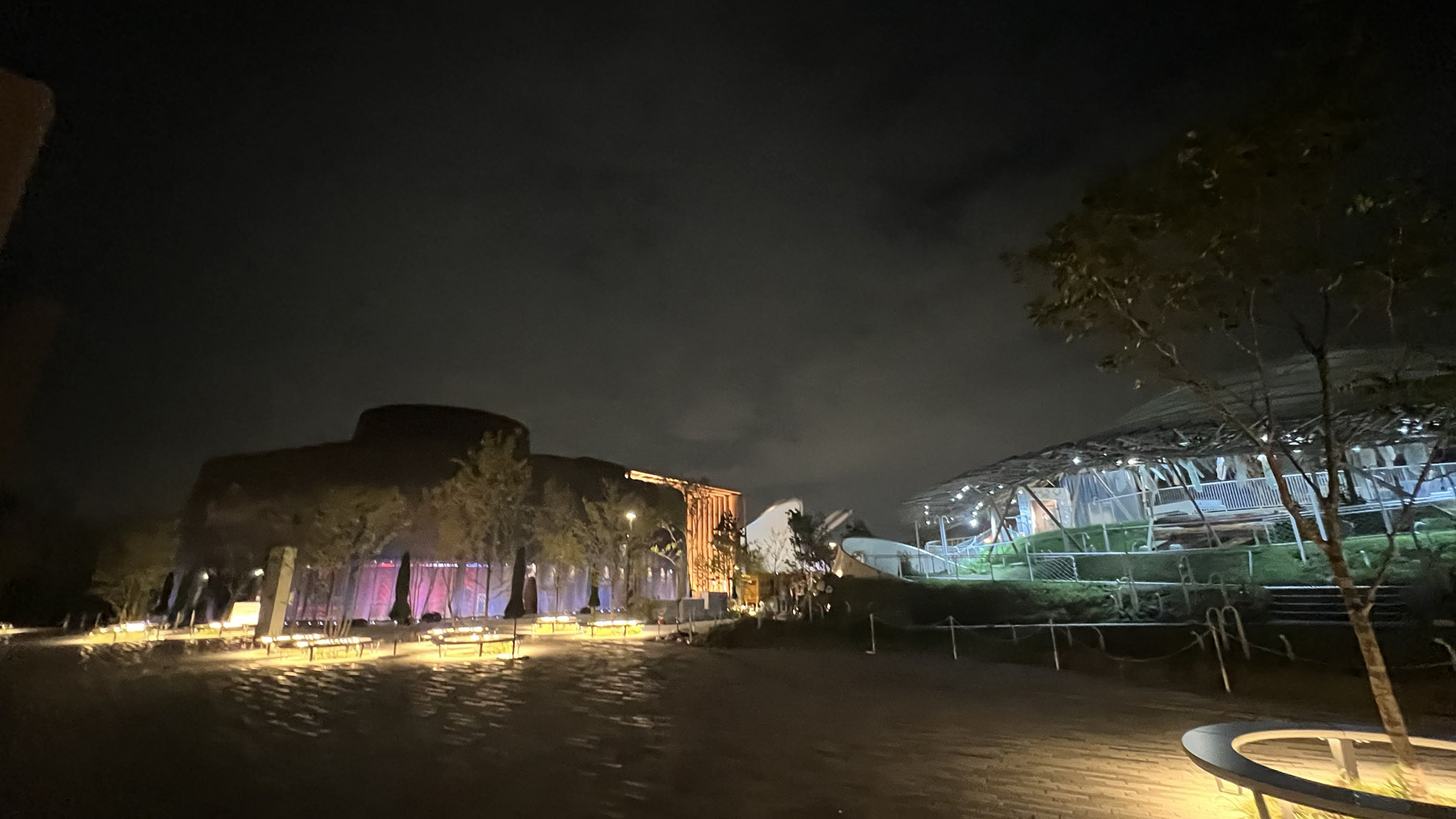
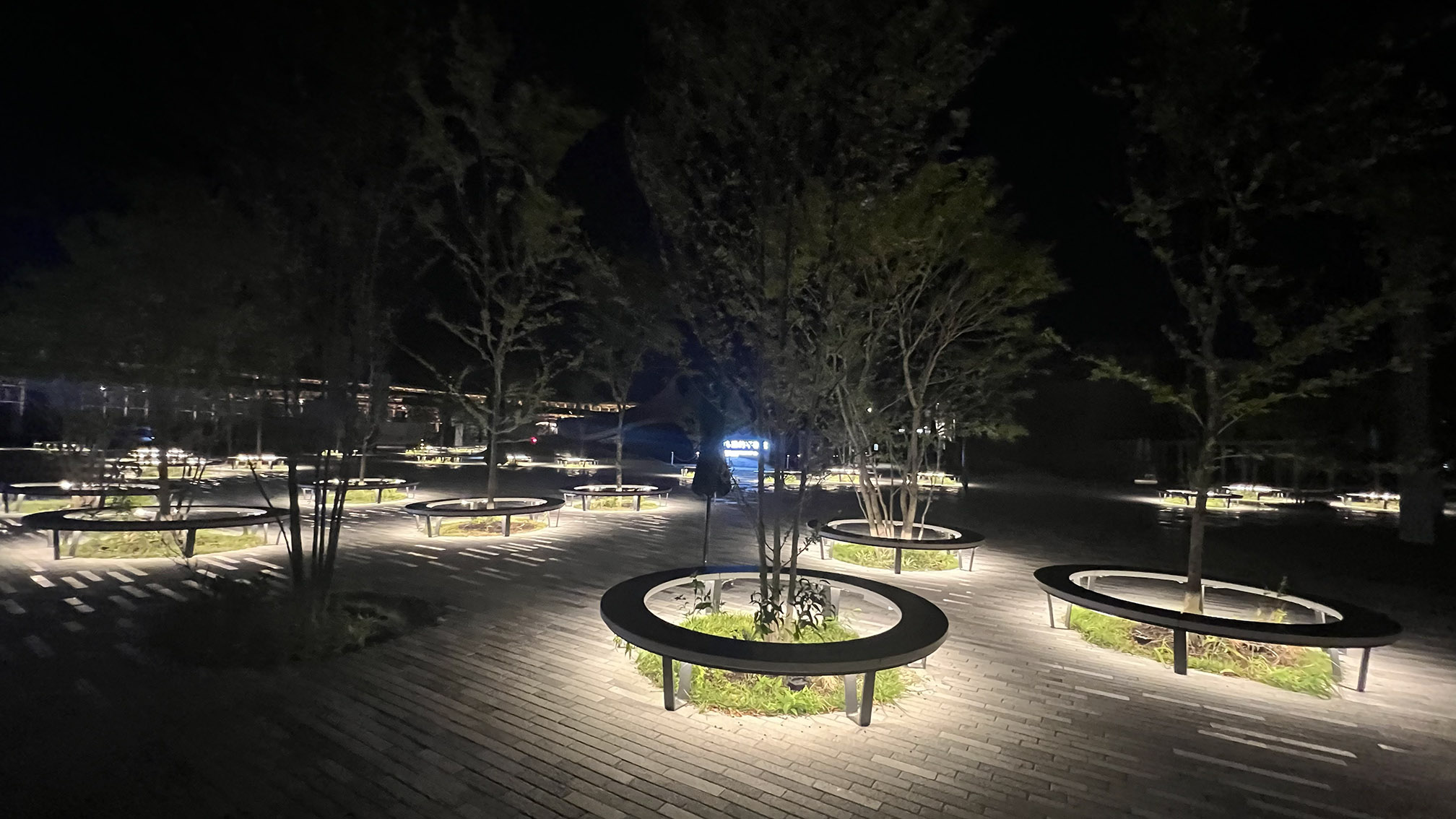
After hanging the show, we took a roundabout tour of the Expo, to the West Gate and then all the way back to the East Gate (the famous wood frame structure, which the expo spilled out from on either side, was a circle with a diameter of at least 1km) to find our way out, and much needed rest.
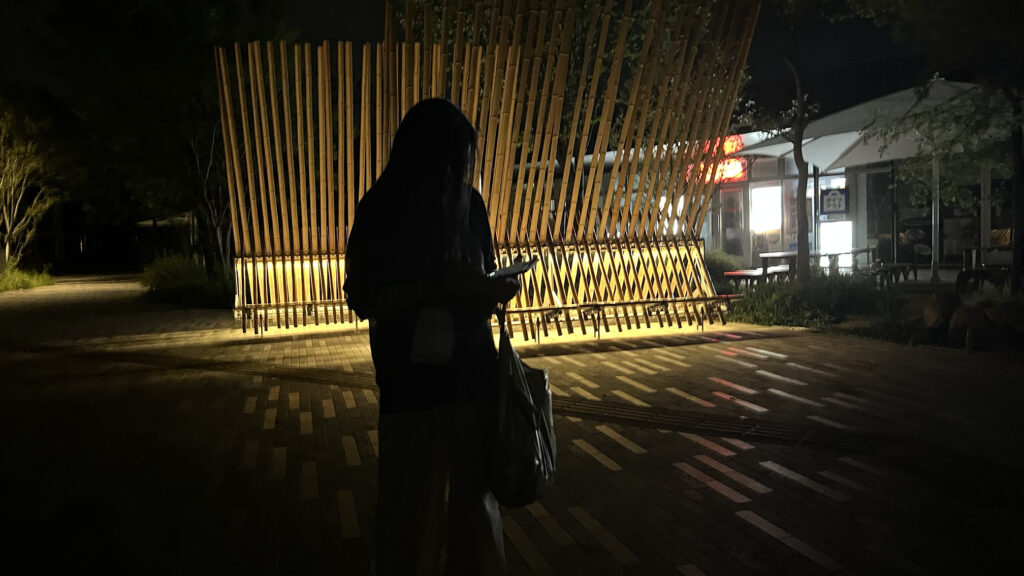
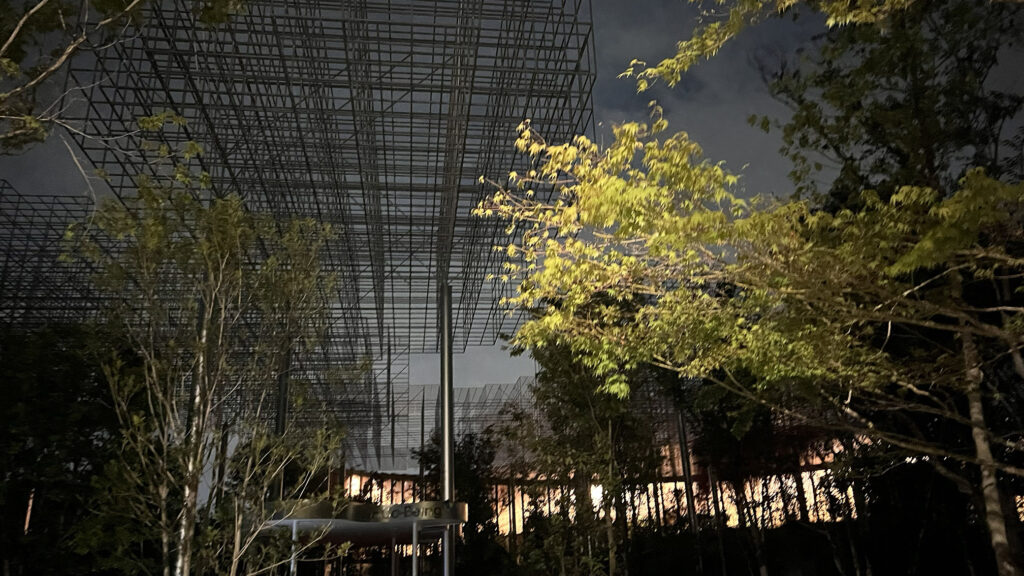
It was really amazing to wander about the Expo, after hours.
My initial interest in creating time-lapse work stemmed from my painting. I found that I wanted to capture the movement of the light. Watching a beat up Samizdat VHS copy of Godfrey Reggio’s Koyaanisqatsi projected on the crumbling wall of a squat in Prague in the 90’s gave me the idea I could do this with film. I started filming on a Minolta Super-8 camera that had an intervalometer built in with Kodachrome and Tri-X film that could be processed in Prague. I created installation loops with super-8 projectors that were nightmares to manage, but looked fantastic. It was not until I was a graduate student at the University of Washington at the end of the previous century that I was able to collect and digitize my super-8 film. With After Effects I could create a collage of the vision I had held in my mind’s eye for some years.
Since then I have continued to shoot time-lapse in film, and then with a procession of digital cameras starting with the Nikon D200. Currently my camera of choice is a D750, with its wicked sensor that has such a smooth dynamic range. I always try to shoot with primes, mostly using a Nikkor 24mm. I have found that as my eye has matured I no longer crave the widest of the crazy wide-angle lenses available, although I do like to play with full spherical fisheyes, and lust after Tilt-shift lenses.
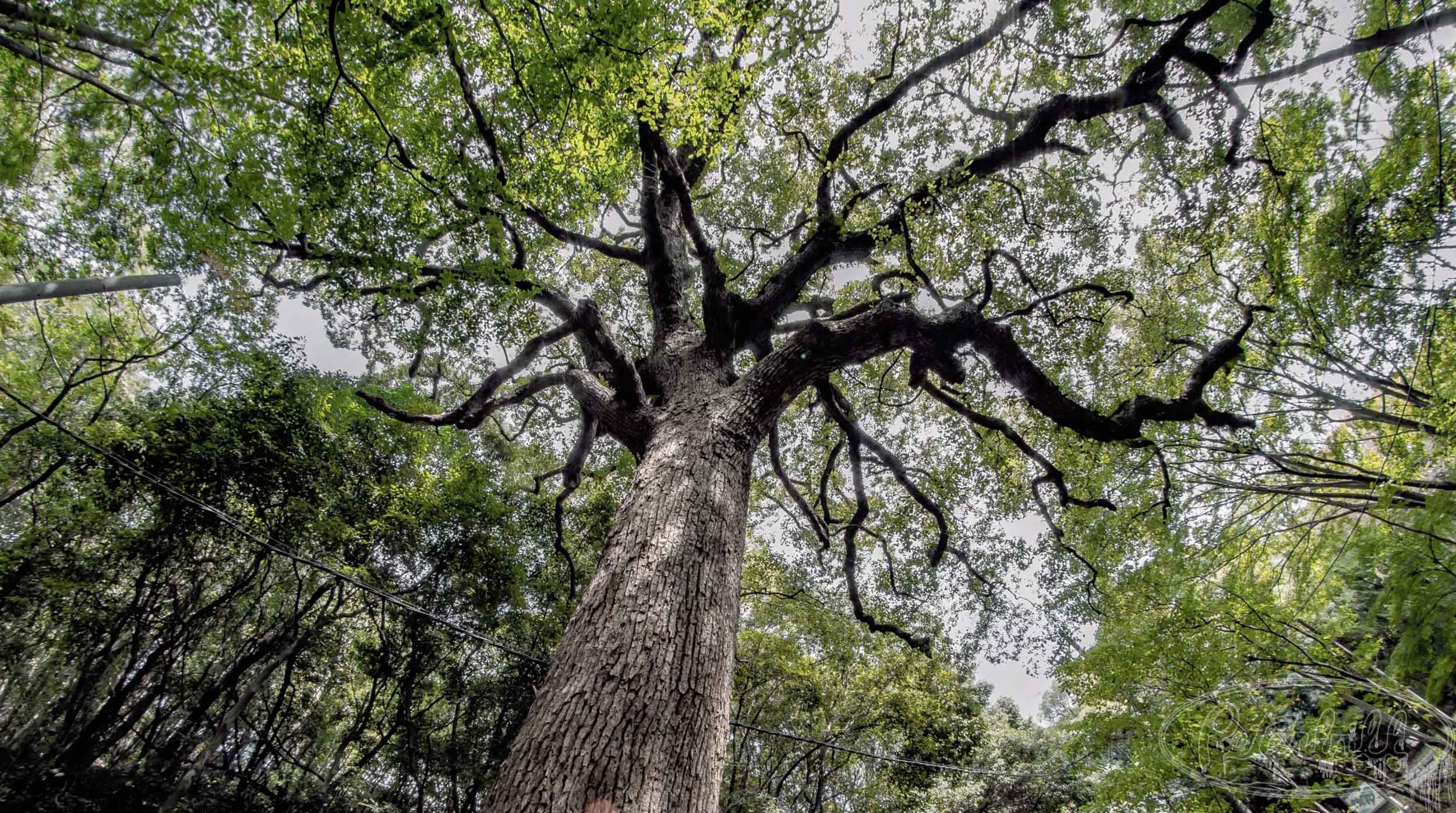
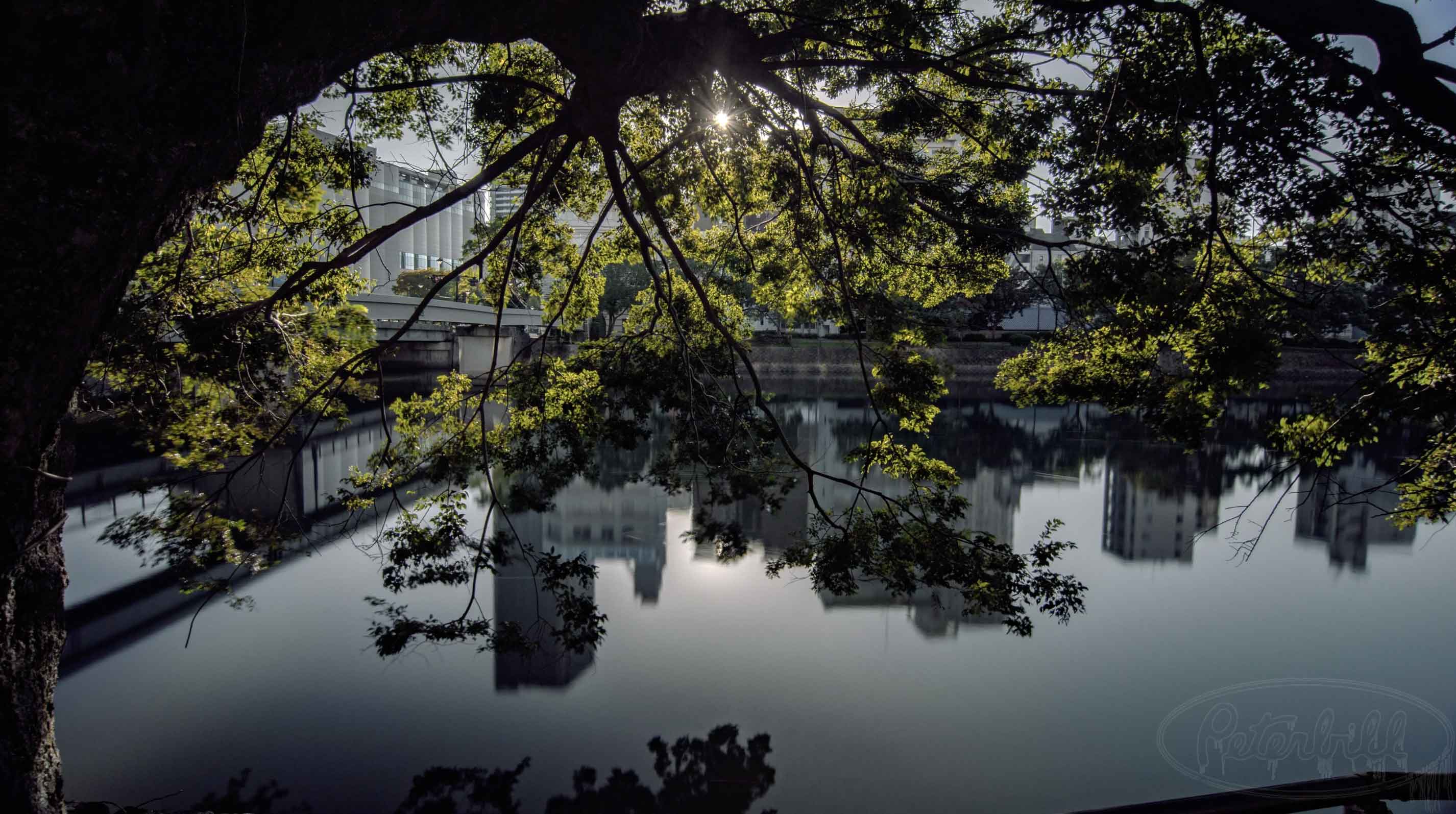
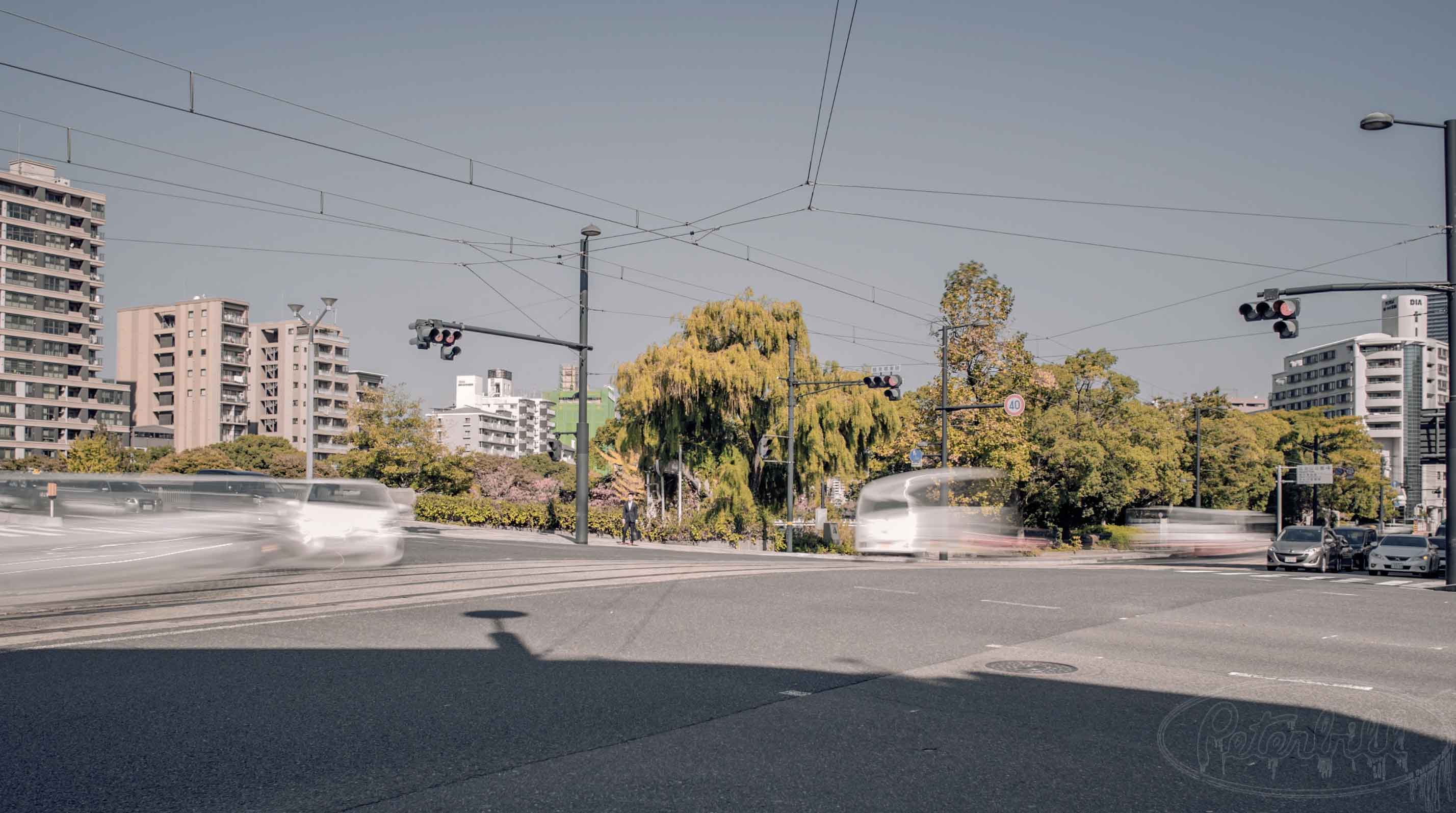
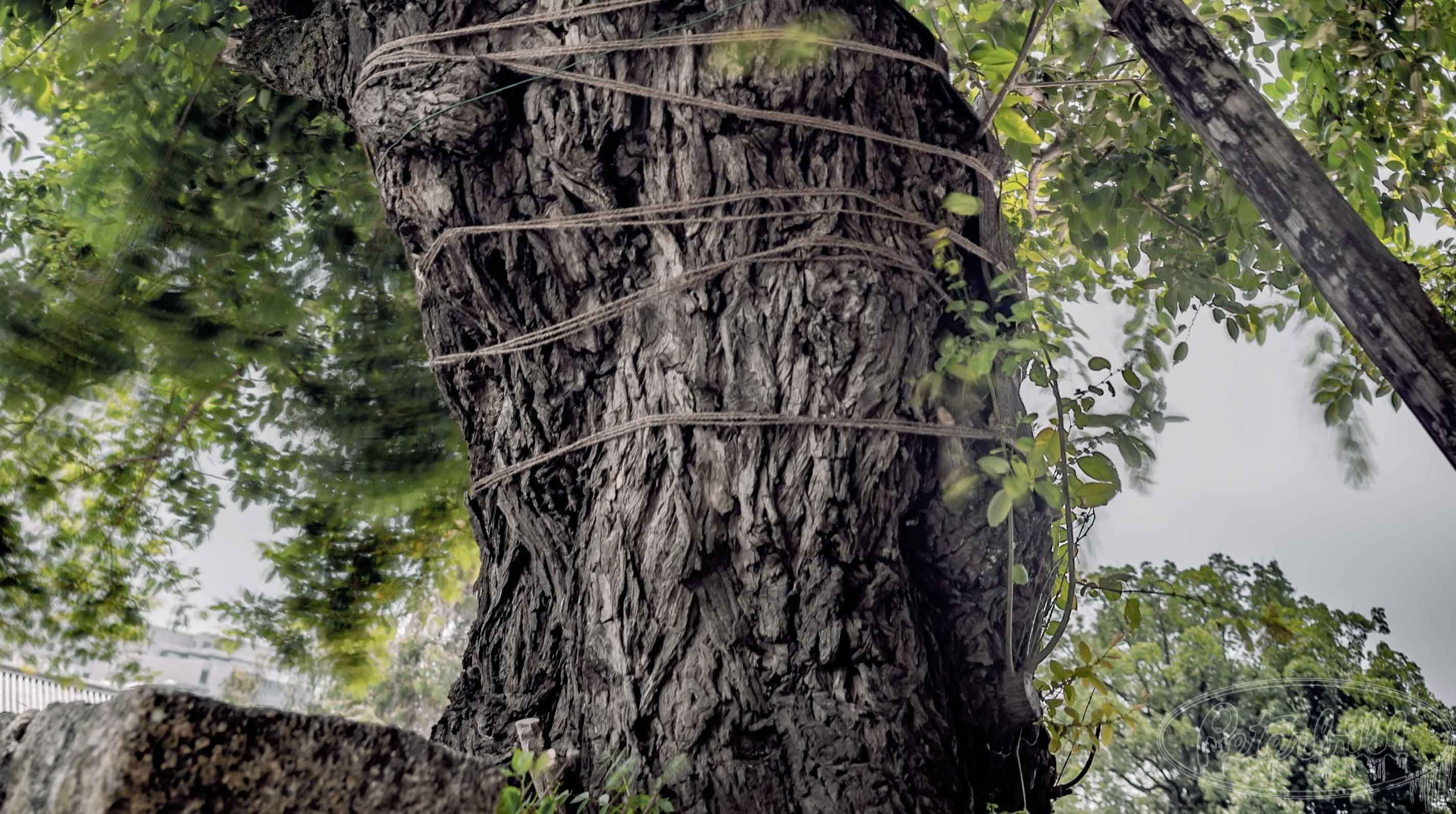
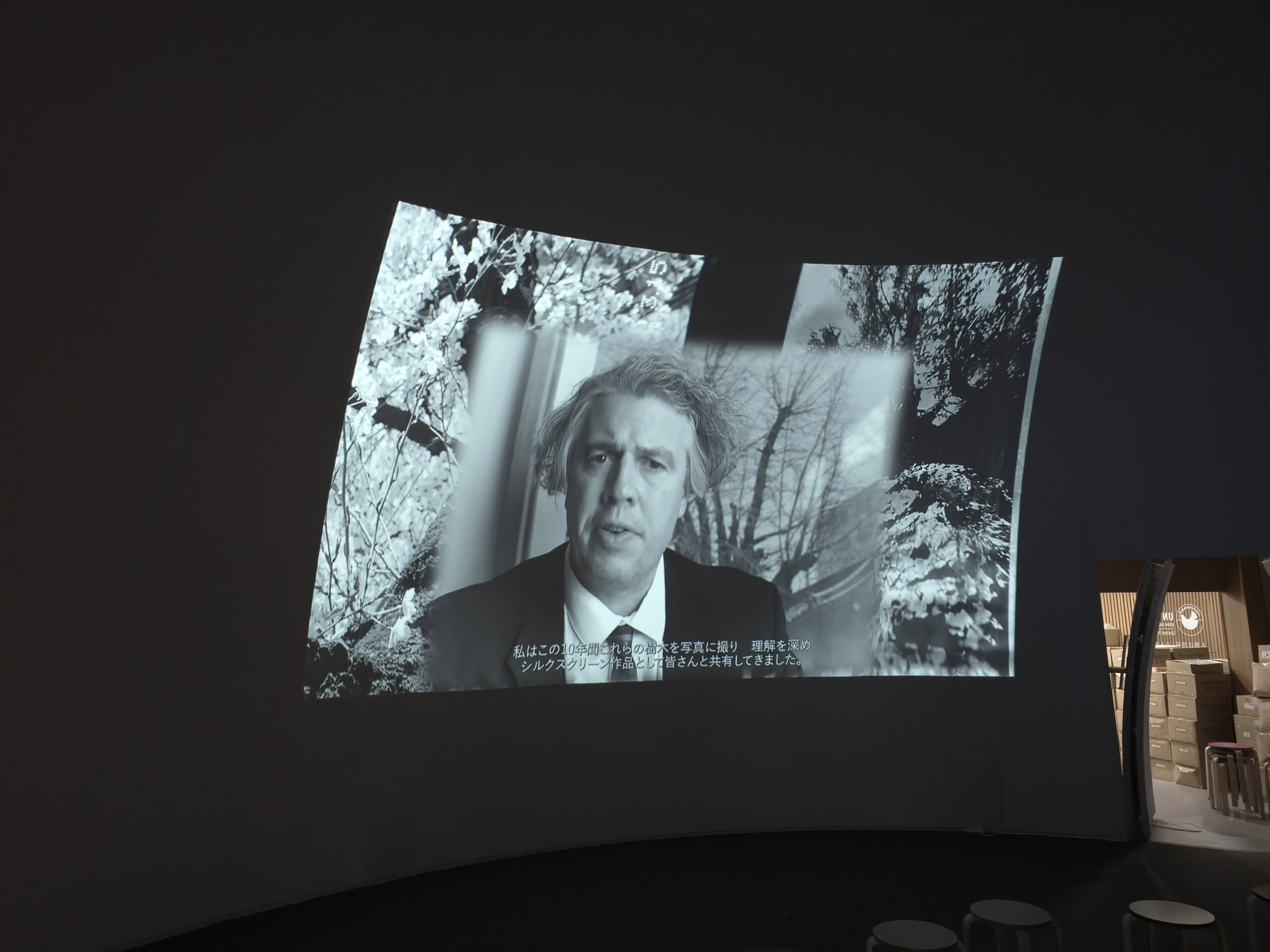
I have been travelling to Hiroshima for the past 4 years to photograph and create time-lapses of the Hibaku Jumoku, or survivor trees of Hiroshima. These trees were burnt down during the atomic bombing of Hiroshima August 6th, 1945. Amazingly for the denuded metropolis, the Hibaku Jumoku brought out new growth in the following years and survive today.
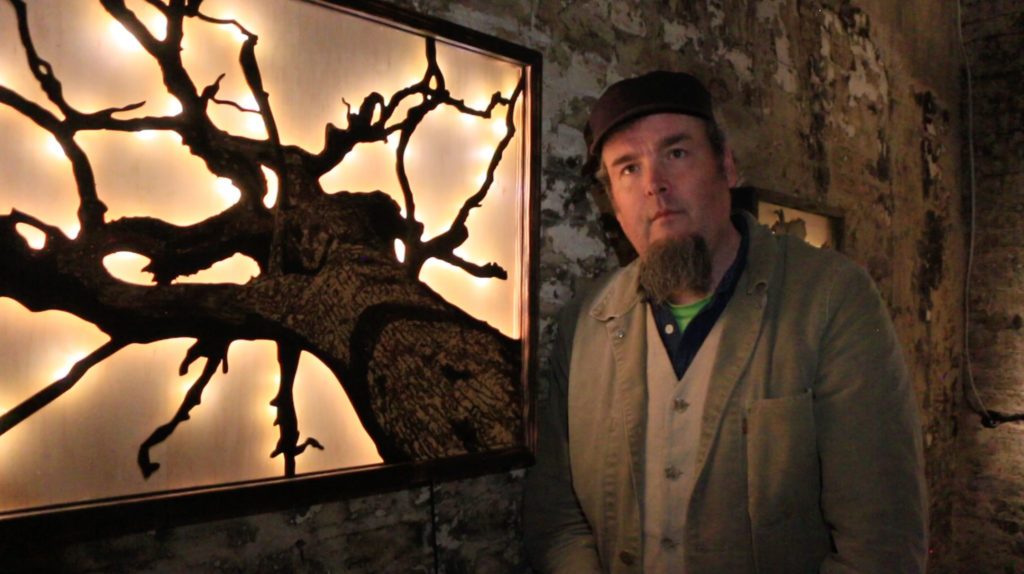
Hackberry tree
When I lived and worked in the Czech Republic I was able to visit many historical sites in Central Europe. Once I was visiting the Czech “model” concentration camp at Terezenstadt. I was watching a film about the terrible history of the place and the young German students who were there with me were twittering nervously. I remember thinking in my schadenfreude, these terrible Germans, what a stain on their history.
For a U.S. citizen, visiting Hiroshima is a direct slap on any notion of being the “exceptional” nation, the necessary leader of the “free” world. What took the Germans several months in Auschwitz and the other death camps, we U.S. Americans could do in an instant: vaporize ~80,000 souls, and leave tens of thousands of others to die slow painful deaths. There is still a great debate over whether the bombing was necessary, if it caused the Japanese to capitulate more quickly or if it was the Soviet Union’s entry into the war that finally brought Japan to surrender.
Willow Tree
Regardless of this there is the horror of the act of A-bombing civilian populations. The thoughtlessness, and the inevitability of the meat grinder that is the Military Industrial complex must wipe away any traditional self-regard for Yanks to be the white hats, or the good guys. We are just as good or evil as anyone else.
I feel that by contemplating these trees we can remember our histories. By basking in the glow of the light as it processes through the time-lapse we can gain resilience as we see the strength and endurance of the trees. We can also receive some humility thinking of the time-scale that some of these trees have lived.
Pussy Willow, within the fortifications of the Samurai Castle.
The last tree in the series is a Willow tree near the Hiroshima Castle that was the headquarters of the Japanese Expeditionary forces that subjugated Korea and much of China during World War 2. After the bomb was dropped, a U.S. POW was tied to the burnt remnants of this tree to die.
We must remember these historical facts. We must not pretend as we continue to use our technology for destruction. We must take responsibility: we must sometimes keep technology from being used. The present possibility of nuclear destruction is the easiest of the technological problems we face as a global civilization.
The trees are witness to the speed with which humankind may destroy. Sit down beside these trees on the 75th year commemoration of their destruction and revival. One thing that will help is to slow down…and think.
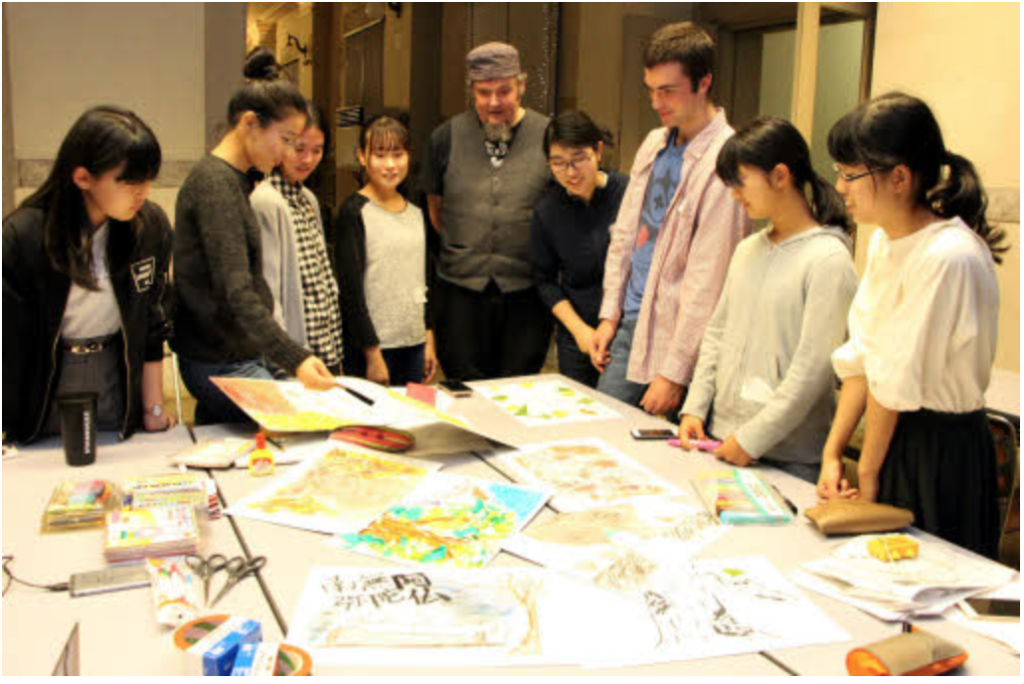
Creating media with Youth Journalists from Chugoku Shimbun, largest newspaper in Hiroshima Prefecture. We met with the Priest Toyooka the first week, and he told our group his story of terrible loss, anger, and forgiveness. The Youth Journalists took vignettes from his life, and the second weekend, we animated them in a simple manner using their own cell phones. Instead of using Pro DSLRs, and stop motion software; we utilized cell phone camera and the time-lapse feature built in to newer mobile phones.
Here is the article, google translated, from the paper:
[Junior writer goes] Telling the world of A-bombed trees
Learning to Tell Stories though animation.
If you walk through the center of Hiroshima, you will encounter the “bombed tree” that survived the disaster of the atomic bomb. The appearance of new shoots and strong growth while scratching (scratching) with blast and heat rays has given citizens hope. The Chinese newspaper junior writer visited the A-bombed trees, thought about the story, and made a picture-story show with American artists. We also participated in the activities of a group that gave seeds and seedlings of A-bombed trees overseas. I would like to know more about the A-bombed trees that contain the feelings of peace for Hiroshima citizens.
Ginkgo Theme Making a Picture-story Show
Working with American artists
Hiroshima City, which had been thinking of the abolition of nuclear weapons, registered about 160 trees that had been exposed before the atomic bombing within 2 kilometers from the hypocenter. This includes ginkgo trees in Anrakuji, Ushida Honmachi, Higashi-ku. It was exposed to the grounds at a distance of 2.1 km from the hypocenter, and part of the trunk burned, but now it has grown up with many leaves.
I visited Anrakuji and heard the story from Koji Toseioka (89), a former resident and an A-bomb survivor. The younger brother Junji-san (12) was burnt and turned black, and died in a temple while suffering. The following year after the atomic bombing, Ginkgo sprouting new buds and encouraging the residents around.
I participated in the workshop of the “Zero Project Hiroshima” peace event that was the former Bank of Japan Hiroshima Branch (Naka Ward), and made a picture-story show with this ginkgo as the main character. The event was organized by an American artist, Canon Hershey (42).
Thinking about the scenario, I drew on 8 drawing papers with crayon and brush pen while imagining the scene of the story. The torn origami gave the leaf a three-dimensional effect, and a real ginkgo leaf was pasted to express the lively state of the tree.
I recorded a narration in the voice of a junior writer who had a video shoot of the work until the picture-story show was completed. Filmmaker Peter Bill (49) made it a 6-minute video work. An English version will also be created and Hershey will be performing in New York next spring. I hope that our desire to “realize a world free of nuclear weapons” will be conveyed to adults and children who are not interested in the atomic bomb.
We were in charge
This interview is Kawagishi Shiori, 17 years old, Felix Walsh, 17 years old, Yui Morimoto, 15 years old, Yurina Yuzuki, 15 years old, Yuna Okajima, 15 years old, Kazuha Katsura, 15 years old, Aiyoshi Hayashida, 15 years old Yuno Nakajima, 13 years old, Chihiro Tsuji, 13 years old, Shino Taguchi, 13 years old, Chihiro Yamase, 13 years old were in charge.
(Posted on the morning of November 25, 2019)
[After the interview]
I participated in the Zero Project Hiroshima workshop for the first time and made a picture-story show with the filmmaker Peter Bill. In making a picture-story show, I was able to learn about the present and the past of the bombed trees. I also expressed the color of the atomic bomb using paints. A picture-story show video will be screened overseas and many people will see it, so I think it would be a good opportunity to get to know Hiroshima’s bombed trees. (
Daiichi Morimoto) I was vowed to revenge in the United States, but while I entered university and studied Buddhism, I thought that “respecting the other person is the basis of peace and touching with a kind heart. I came to think that I had to do it. ” I don’t think it’s easy to change the hate you have vowed once. I would like to convey Tozeoka’s idea that respect for the other party is the basis of peace and Toseioka-san’s experiences of exposure. (Naka 2 Yuu Nakajima)
I participated in Zero Project Hiroshima for the first time this time. I made a picture-story show, and I was able to convey the A-bomb experience to people in countries where I couldn’t understand the language through “pictures”. At the time of the presentation, I thought it would be great if I could understand their ideas even a little by playing a video of the work process. During the discussion, I was nervous because I exchanged opinions with people from many countries, but more than that, I was able to enjoy this meaningful time. I would like to join the next time because I want to interact with people all over the world. (1st middle Chihiro Yamase)
By participating in Zero Project Hiroshima this time, I have come to think about how I can communicate more easily to the other party. I think that different countries, languages, and cultures have different ways of thinking and looking at things. I understood that it was important to express what I wanted to convey after understanding that. I thought that my ideas would turn in a better direction by respecting the other’s opinions and listening to their thoughts. It is difficult to communicate, but I think that is the first step to realizing peace, so I want to challenge a lot. (3) Katsura Ichiha)
I was impressed by the participation of the Green Legacy, Hiroshima, and the initiative to collect seeds of A-bombed trees. Ajimi-san said, “Saving a small place and a big place. It ’s just as important. Mr. Ajimi wanted to save many poor people with this activity. In fact, people from various countries participated in this activity. Everyone went eagerly and happily. I felt that it would be meaningful to save everyone. (Chihiro Tsuji 1)
This time, for the first time, I had the experience of expressing the story I heard from the A-bomb survivors with “pictures” rather than sentences, and using it as a picture-story show. Before starting the picture-story show production, I couldn’t easily figure out which scene to use to express what I was seeing, and took more time than expected. In production, I was able to experience a lot of things different from school art classes, using origami to create a three-dimensional effect and using ginkgo leaves, while being conscious of timelapse. I want many people to see this picture-story show and think about peace (Naka 3 Okajima Yuna)
In this picture-story show, I thought that people from all over the world would feel the same if they had different words. Even though the narration was in Japanese, the people who used English were watching it seriously. I was very happy. I don’t have many opportunities to exchange opinions with non-Japanese people, so I would like to talk about peace and nuclear weapons with foreigners. (Naka 3 Hayashida Ai)
By telling the story of what happened at Anrakuji on August 6 from the perspective of the A-bombed trees, we were able to give weight to the story. At first I thought that I would only make a picture-story show, but Bill completed the picture-story show while creating a movie that combines the sound of making a picture-story show and saying “Let’s make a video!”. It was hard because I made it with limited time, but it was very fun. And since the video of making a picture-story show is included in the video, I was making a picture-story show in a bumping performance. It was fresh and fun to make a picture-story show one by one using various techniques by tearing or sticking origami and mixing colors with crayons. Lastly, the sense of accomplishment when the picture-story show we created turned into a narrated video and played in front of the participants with a large projector is still unforgettable. I think the story in this picture-story show should spread all over the world. From this story, it is clear what people lose by war, and I think it tells me how miserable it is to have a war. (High 2 Felix Walsh)
This time, I participated in the picture-story show production for A-bombed trees. At first I felt uneasy about what would happen. However, when I entered the production, I was able to cooperate with each other and carefully draw pictures one by one, so my anxiety disappeared. The production method was also called a time-lapse function of a mobile phone, and I was surprised by the first experience of shooting and showing the process of making it, but it became fun as I proceeded with the work. I will continue to write articles as a junior writer, and I want to find other ways of sending out little by little. (Takagawa Kawagishi Shiori) Through
this zero project and coverage of A-bombed trees, I was able to find out what Toseioka cherishes in living. Mr. Toseioka’s words “Contact with a gentle heart” were impressive. Hate alone does not solve anything. I felt it was important to convey my thoughts while having compassion at any time. Also, in creating a story for a picture-story show, I was able to realize the connection of life by thinking from the perspective of Ginkgo. I want to live so as not to forget the preciousness of life. In order for the incident of the atomic bombing in Hiroshima not to be weathered, it must be handed down to the next generation. The picture-story show is easy to understand and familiar to everyone. So, from now on, I would like to transmit peace in a way that is transmitted to children like a picture-story show. (High 1 Yurina Yuuki)
I remember Nasleen Ajimi’s words, “When you think about the local area, it will be about the world.” Thinking about the local area and acting on it will reach the world and influence it. It can be a small activity that moves the world. Thinking about the big things in the world and thinking about doing things that are familiar to me, I never thought of the opposite. However, I participated in this activity and thought it was true. A small activity to collect the seeds of A-bombed trees will affect the world. I thought it was wonderful. At the same time, I wanted to know more about these activities. I think that many people who are familiar with small things can have a big impact on the world. I also thought it was our generation to do that. I think we must act with a view to ourselves and the world. We must not only think about peace but also think about things from a broad perspective and take action. I wanted to cherish those things from now on. (Naka 1 Taguchi Shiino)
[vc_row][vc_column][vc_video link=”https://vimeo.com/291332527″ title=”Mirror to History, Confronting War Crimes in Bosnia”][/vc_column][/vc_row][vc_row][vc_column][vc_column_text]I was a bit of the fairy godfather for this documentary film, Mirror to History, confronting war crimes in Bosnia. I had been traveling to Bosnia since 1996, a couple of years after the siege of Sarajevo had lifted. We had been working with cultural organizations to bring art and life back to the war torn region. Despite certain dangers, like wandering off into a mine field, or perhaps being on the wrong stretch of a highway on a dark night: if one was organized it was alright to travel in country. So when Cristian called me, asking about shooting a film there, I could honestly tell him, been there, done that (Weekend in Sarajevo). I was really excited to road trip with Cristian around Bosnia, interviewing all sides on what they thought of the War Crimes Tribunal in The Hague.
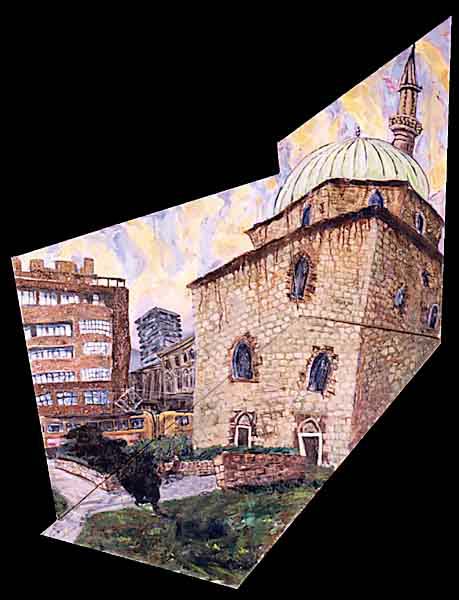
Sarajevo Mosque • oil on linen • 1996
As nationalism returns to the forefront of international affairs, Mirror to History serves as a useful reminder of the dangers of history repeating itself.[/vc_column_text][/vc_column][/vc_row]